
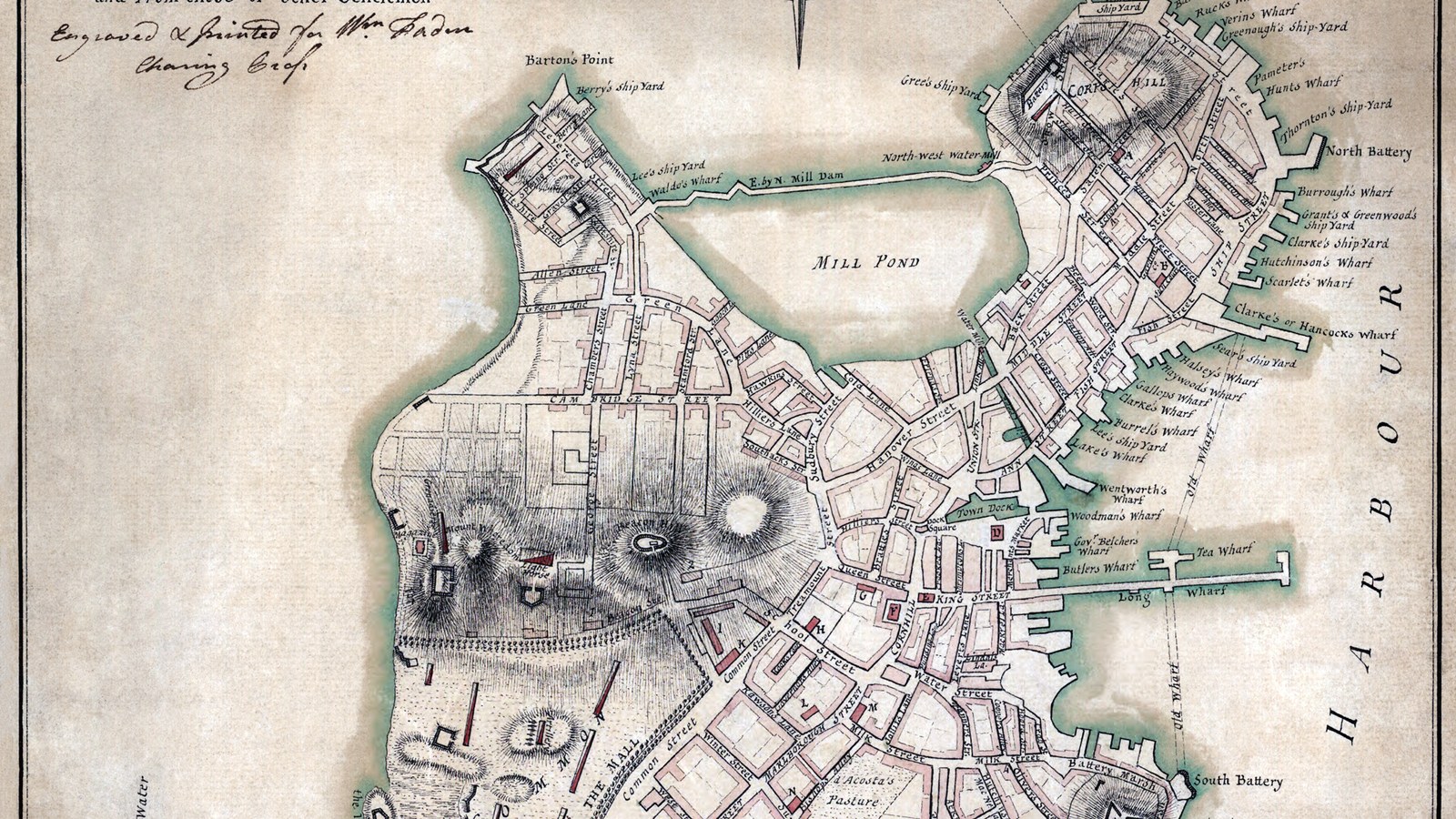
17 September 2026 marks 396 years since the date associated, in the calendar used today, with the naming of the Shawmut Peninsula settlement as Boston. In the Massachusetts Bay Colony records, a Court of Assistants order at Charlestown states that “Trimountaine shall be called Boston”. The document is dated 7 September 1630, Old Style (the Julian calendar still used in England). The Gregorian equivalent, used now, is 17 September 1630.
The City of Boston’s archives guide records the same act: the settlement known as Trimountain was established as Boston by an order of 7 September 1630 (Old Style). The name was taken from Boston in Lincolnshire, England, with which some Puritan settlers of Massachusetts Bay had connections.
This was not the instantaneous founding of a modern city. Settlers had arrived in 1630; the peninsula had been inhabited earlier. The order was an administrative step: renaming the settlement and, in later years, defining bounds that also included harbour islands, Muddy River (Brookline) and other lands.
The harbour favoured maritime trade. In the eighteenth century Boston played a central role in events preceding the American Revolution, including the Boston Massacre and the Boston Tea Party. The naming anniversary should not be confused with those later episodes.
Boston’s own town records begin in 1634; for 1630 the colonial acts are used. The 17 September date in the modern calendar therefore needs the Old Style note; the original document does not itself carry the later Gregorian figure.
Three hundred and ninety-six years later, the link between Boston, Massachusetts, and Boston in Lincolnshire remains written into the American city’s name.
Image: Thomas Hyde Page, map of Boston, 1775. Public domain. Not a 1630 document. Cropped to 16:9.
Source consulted: City of Boston — Guide to the Town of Boston records.




0 Comments
No comments on this article yet. Be the first!