
On 19 September 1941 German troops entered Kiev, today Kyiv, after the encirclement of Soviet forces in the region. The capture followed a vast operation; the Red Army suffered enormous losses, and a very large number of soldiers were taken prisoner. Estimates vary and should be attributed to the sources that use them.
For residents, occupation meant hunger, forced labour, arrests and executions. The city’s Jewish community became a target of Nazi extermination, carried out by German units and local collaborators. Responsibility for the crimes does not transfer onto an entire population.
On 29 and 30 September 1941 more than 33,000 Jews were shot at the Babyn Yar ravine, according to German records cited by memorial institutions. Other victims, including Roma, Soviet prisoners of war and civilians, were later killed at the same site.
The occupation lasted more than two years. Soviet forces retook the city on 6 November 1943. Destruction, deportations and mass murder had left deep marks on people and on the urban fabric.
The anniversary requires a distinction between documented history, wartime propaganda and the political use of the past. Victims’ names, testimony and archives remain the basis, not the slogan.
This article uses “Kiev” where historical sources name the occupied city and “Kyiv” for the capital today. It does not relativise the Holocaust or fill gaps with forced analogies.
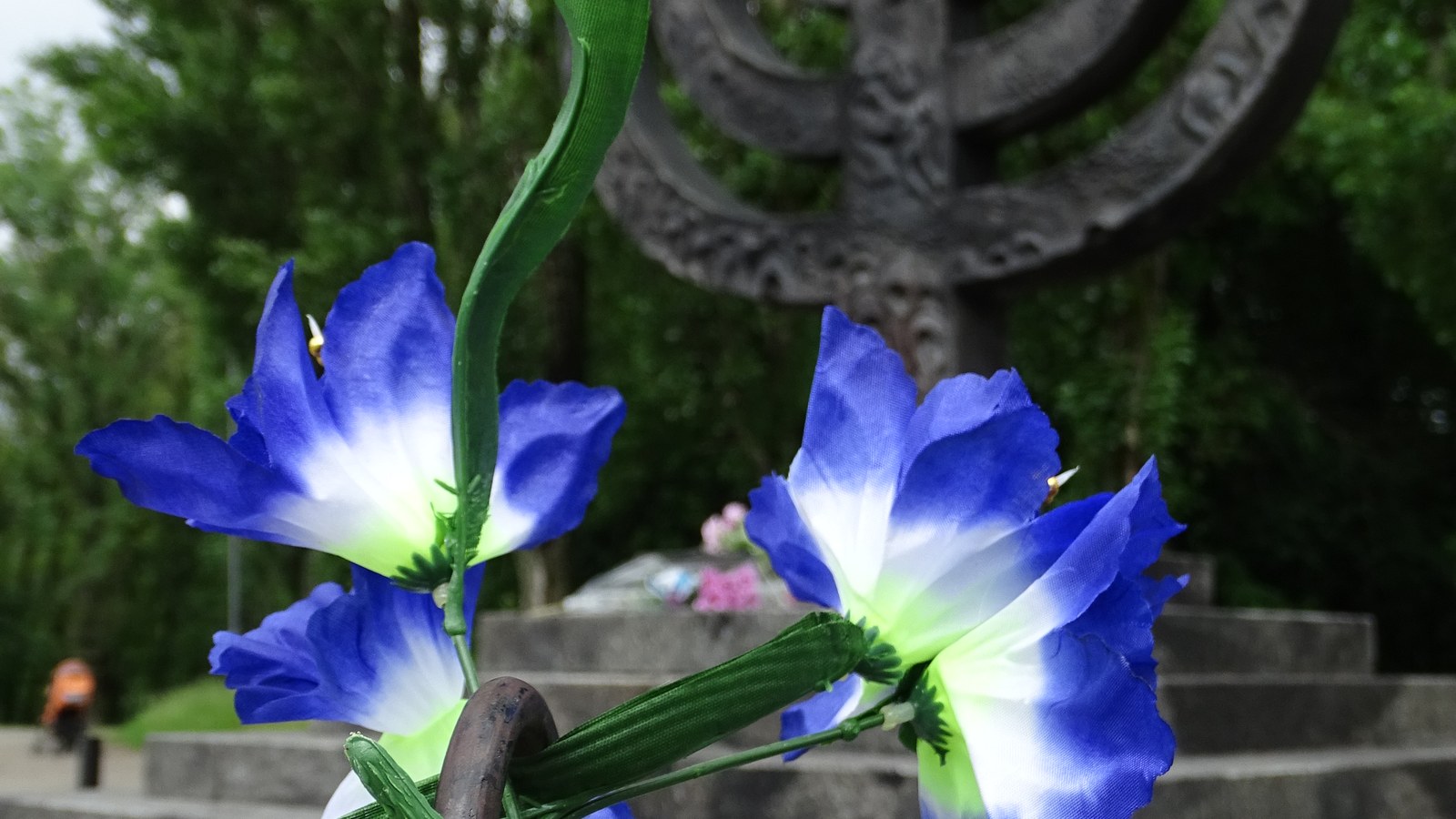
Image: the menorah memorial at Babyn Yar, Kyiv / Wikimedia Commons. A commemorative site, with no photographs of the killings. Cropped to 16:9.
Source consulted: Kyiv and Babyn Yar | United States Holocaust Memorial Museum; The murder of the Jews of Kyiv at Babyn Yar | Yad Vashem.





0 Comments
No comments on this article yet. Be the first!