
17 September 2026 marks 87 years since Finland’s Taisto Mäki became the first athlete to complete 10,000 metres in under 30 minutes. The performance took place in Helsinki on 17 September 1939, in 29 minutes and 52.6 seconds.
Mäki improved his own world record, set the previous year. Breaking the 30-minute threshold made the result a landmark comparable to other celebrated barriers in athletics. He belonged to the generation of Finnish runners known as the Flying Finns, a tradition built by athletes including Hannes Kolehmainen, Paavo Nurmi and Ville Ritola.
He came from a rural background and was known as the “Rekola shepherd boy”. He held world records at 5,000 metres, 10,000 metres and two miles. Historical events limited his career: the record came less than three weeks after the beginning of the Second World War, and Finland entered the Winter War in November 1939.
The Olympic Games scheduled for Helsinki in 1940 were cancelled. Mäki therefore lost the chance to turn his peak years into an Olympic appearance on home soil. The 10,000 metres world record was improved in 1944 by another Finn, Viljo Heino.
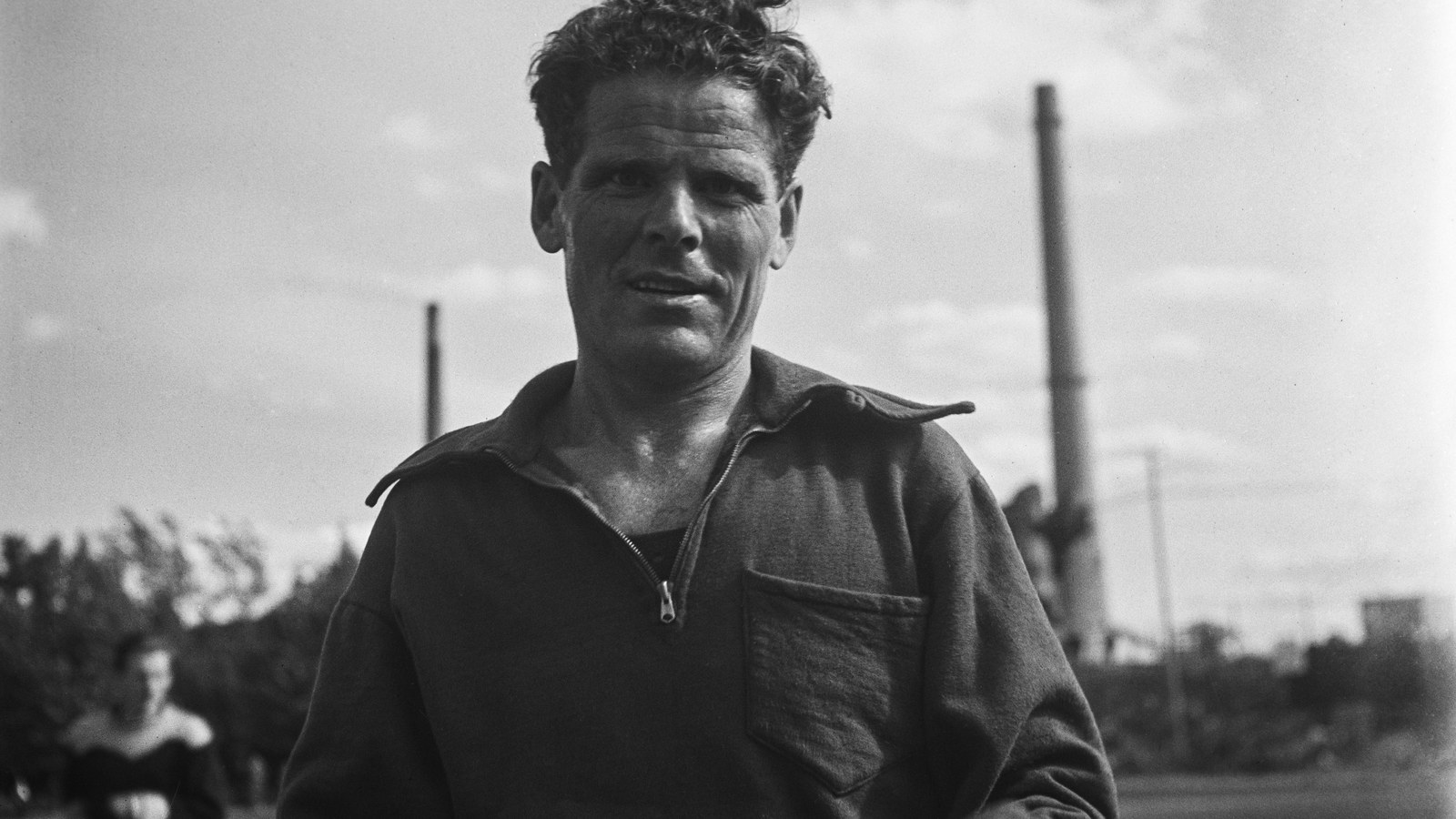
The cover photograph shows Mäki in Helsinki in 1948, not on the day of the 1939 record. The portrait documents the athlete after the war, in the city where he had broken the 30-minute barrier.
Modern records are considerably faster because of training, surfaces, equipment and competition. The historical value of the 1939 race lies in opening new territory for long-distance running, not in a direct comparison with today’s times.
Photo: Vilho Uomala / Finnish Heritage Agency, JOKA collection. Taisto Mäki in Helsinki, 13 June 1948 (not the 1939 record day). CC BY 4.0. Cropped to 16:9.
Source consulted: Taisto Mäki | Olympedia; Taisto Mäki | World Athletics; CC BY 4.0.








0 Comments
No comments on this article yet. Be the first!