


Brian Mulroney, Prime Minister of Canada, and George Bush, President of the United States, signed at Ottawa, on 13 March 1991, the Agreement between the Government of Canada and the Government of the United States of America on Air Quality, with annexes. Two copies, English and French equally authentic. Canada Treaty Series 1991/3; UNTS No. 31532. Article XVI: it enters into force upon signature. The talks followed the 1980 Memorandum of Intent and the 1986 Joint Report of the Special Envoys on Acid Rain.
The preamble restates Principle 21 of the Stockholm Declaration, the 1909 Boundary Waters Treaty, the Trail Smelter award, the Great Lakes Water Quality Agreement and the 1979 ECE Convention on Long-Range Transboundary Air Pollution. Global issues (climate change, stratospheric ozone) remain for other fora. Article I defines air pollution and transboundary air pollution (origin in one Party, adverse effects, other than of a global nature, in the other). Article II: a practical instrument for shared concerns.
Article III: control of transboundary air pollution through specific objectives, impact assessment, cooperative science and institutional arrangements. Article IV and Annex 1: sulphur dioxide and nitrogen oxides caps — precursors of acidic deposition. The United States ties them to Title IV of the Clean Air Act (cuts from 1980 levels, a national utility cap); Canada, to a cap in the seven easternmost provinces, then a national cap. This is not an emissions-trading handbook.
Article V: assessment, prior notification and, on request, consultations on projects likely to cause significant transboundary air pollution, plus avoidance or mitigation. Article VI and Annex 2: scientific, technical and economic research; the International Joint Commission may be asked about monitoring. Article VII: regular exchange of data on emissions, monitoring and effects, without release of proprietary information without consent.
Article VIII: a bilateral Air Quality Committee, with progress reports at least every two years, made public. Article IX: a reference to the International Joint Commission for public comment on each report. Article X: a comprehensive review in the fifth year and every five years thereafter. Article XI: consultations within thirty days. Articles XII–XIII: referral to a third party, then negotiation and, at the Parties’ option, the Joint Commission or another mechanism.
Article XIV: the obligations are subject to appropriated funds; the Parties seek the cooperation of provinces and states. Article XV: it does not diminish the Boundary Waters Treaty or the Great Lakes Agreement. Termination on one year’s notice. The tropospheric ozone annex of 7 December 2000 is a later amendment, not the 1991 text.
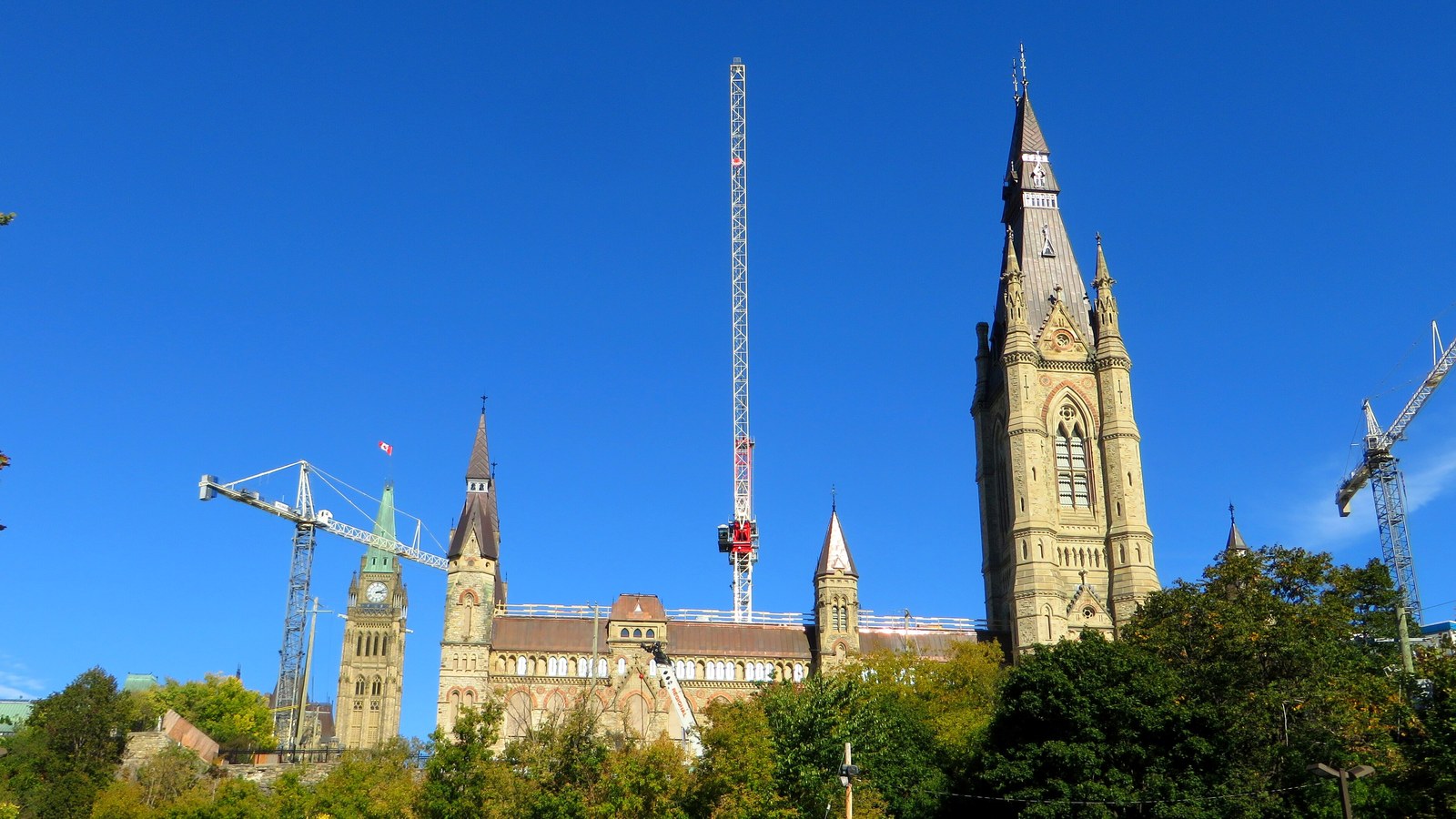
Cover: the Centre Block on Parliament Hill in Ottawa, the capital of signature, not the plenipotentiaries’ table. Wikimedia Commons, free licence.
Sources consulted: U.S.–Canada Air Quality Agreement; Agreement on air quality (UNTS 31532).










0 Comments
No comments on this article yet. Be the first!