


On 18 December 1979 the United Nations General Assembly, meeting in New York, adopted by resolution 34/180 the Convention on the Elimination of All Forms of Discrimination against Women. The Convention was opened for signature at United Nations Headquarters on 1 March 1980. The authentic texts are Arabic, Chinese, English, French, Russian and Spanish. The depositary is the Secretary-General.
Article 1 defines discrimination against women as any distinction, exclusion or restriction made on the basis of sex which has the effect or purpose of impairing or nullifying the recognition, enjoyment or exercise by women, irrespective of their marital status, of human rights and fundamental freedoms in the political, economic, social, cultural, civil or any other field, on a basis of equality of men and women. Article 2 requires condemnation of discrimination and a policy of eliminating it, including through the constitution, legislation, sanctions, the abolition of discriminatory practices and the repeal of national penal provisions which constitute discrimination. Article 3 requires measures in all fields, including legislation, for the full development of women. Article 4 permits temporary special measures aimed at accelerating de facto equality and measures protecting maternity. Article 5 requires modification of social and cultural patterns which are based on the idea of the inferiority or the superiority of either of the sexes, and family education that recognizes maternity as a social function and the common responsibility of men and women in the upbringing of children.
Article 6 requires the suppression of all forms of traffic in women and exploitation of prostitution of women. Article 7 ensures the right to vote, to be eligible for election, to participate in the formulation of government policy and in non-governmental organizations. Article 8 requires the opportunity to represent the government at the international level. Article 9 requires equal rights with respect to the nationality of women and of their children. Article 10 requires equality in education, including the same curricula, examinations, teaching staff qualifications, scholarships and the reduction of female student drop-out rates. Article 11 requires equality in employment: the right to work, the same employment opportunities, free choice of profession, promotion, training, equal remuneration, social security, protection of health and prohibition of dismissal on the grounds of pregnancy or of maternity leave. Article 12 requires equality in health care, including family planning, and appropriate services in connection with pregnancy, confinement and the post-natal period, free where necessary. Article 13 requires equality in family benefits, credit and cultural and recreational life. Article 14 requires measures for rural women. Article 15 requires equality before the law, identical legal capacity and freedom to choose residence. Article 16 requires equality in marriage and family, including free consent, the same rights during marriage and at its dissolution, in respect of children, name and property; the betrothal and the marriage of a child shall have no legal effect.
Article 17 establishes the Committee on the Elimination of Discrimination against Women, of eighteen experts at entry into force and twenty-three after the thirty-fifth State Party, elected for four years, serving in their personal capacity. Article 18 requires reports within one year after entry into force for the State concerned, and thereafter at least every four years. Article 20 provides, as a rule, for a meeting of not more than two weeks annually. Article 21 requires an annual report to the General Assembly, through the Economic and Social Council. Article 23 leaves unaffected more favourable national or international provisions. Article 24 requires national measures for the full realization of the recognized rights.
Article 25 opens the Convention for signature and accession by all States. Article 26 allows a request for revision, on which the General Assembly shall decide. Article 27 provides that the Convention shall enter into force on the thirtieth day after the deposit of the twentieth instrument of ratification or accession. Those conditions were later met; the Convention entered into force on 3 September 1981. Article 28 prohibits reservations incompatible with the object and purpose of the Convention. Article 29 refers disputes not settled by negotiation to arbitration and then, if need be, to the International Court of Justice, with the possibility of not considering oneself bound by that paragraph.
It is not the 1967 Declaration on the Elimination of Discrimination against Women. It is not the Optional Protocol of 6 October 1999, which opens individual communications to the Committee.
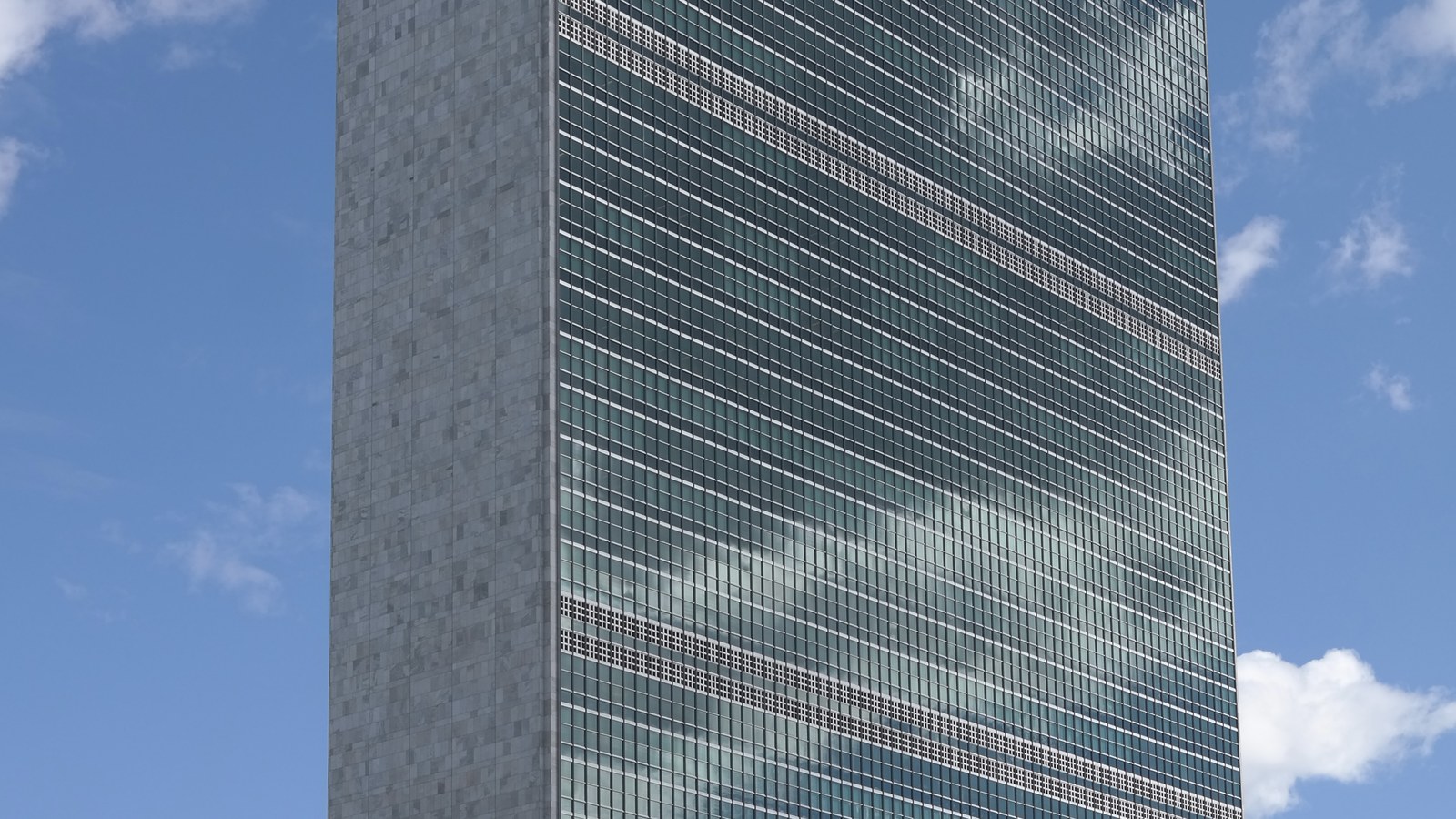
Image: United Nations Secretariat Building, New York; Choinowski, 27 April 2015; CC BY-SA 4.0, Wikimedia Commons. Cropped to 16:9.
Source consulted: Convention on the Elimination of All Forms of Discrimination Against Women. Treaty text: Convention on the Elimination of All Forms of Discrimination against Women, New York, 18 December 1979.











0 Comments
No comments on this article yet. Be the first!