


On 18 December 1990 the United Nations General Assembly, meeting in New York, adopted by resolution 45/158 the International Convention on the Protection of the Rights of All Migrant Workers and Members of Their Families. The Convention is open for signature by all States, under article 86. The authentic texts are Arabic, Chinese, English, French, Russian and Spanish. The depositary is the Secretary-General. The instrument has ninety-three articles.
Article 1 applies the Convention to all migrant workers and members of their families, without distinction, throughout the entire migration process: preparation, departure, transit, stay and return. Article 2 defines the migrant worker and the categories of frontier, seasonal, seafarer, worker on an offshore installation, itinerant, project-tied, specified-employment and self-employed worker. Article 3 excludes, among others, persons sent by international organizations, investors, refugees and stateless persons (unless covered under national law), students and trainees. Article 5 distinguishes documented or in a regular situation from non-documented or in an irregular situation. Article 7 requires respect for the recognized rights without distinction of any kind such as sex, race, colour, language, religion, opinion, origin, nationality, age, economic position, property, marital status, birth or other status.
Part III (articles 8 to 35) applies to all migrant workers and members of their families, irrespective of status. Article 8 recognizes the right to leave any State, including the State of origin, and to enter and remain in the State of origin. Article 9 protects the right to life. Article 10 prohibits torture. Article 11 prohibits slavery, servitude and forced labour. Article 16 protects liberty and security of person and requires that arrest not be arbitrary. Article 22 prohibits collective expulsion and requires an individual decision, with reasons and a possibility of review, except where a final decision has been pronounced by a judicial authority. Article 25 requires equality of treatment with nationals in respect of remuneration and other conditions of work. Article 26 recognizes the right to join trade unions. Article 28 requires emergency medical care, which shall not be refused by reason of any irregularity of stay. Article 29 recognizes the right of the child to a name, to registration of birth and to a nationality. Article 30 requires access of children to education on the basis of equality of treatment with nationals, independent of the regular situation of the parents.
Part IV (articles 36 to 56) adds rights for documented persons: article 40 the right to form associations and trade unions; article 41 political rights in the State of origin; article 43 equality of treatment in access to educational institutions, housing and social services; article 49 the link between residence authorization and work authorization; article 52, after a period of wage-earning, a measure of freedom to choose remunerated activity. Part VI (articles 64 to 71) requires consultation for sound, equitable and humane conditions of migration and measures against clandestine movements, misleading information, trafficking and the employment of persons without documents.
Article 72 establishes the Committee on the Protection of the Rights of All Migrant Workers and Members of Their Families, of ten experts at entry into force and fourteen after the forty-first State Party, elected for four years, serving in their personal capacity. Article 73 requires reports within one year and thereafter every five years. Articles 76 and 77 optionally open inter-State and individual communications, each after ten declarations. Article 87 provides that the Convention shall enter into force on the first day of the month following a period of three months after the date of the deposit of the twentieth instrument of ratification or accession. Those conditions were later met; the Convention entered into force on 1 July 2003. Article 89 permits denunciation, which takes effect on the first day of the month following the expiration of a period of twelve months after receipt of the notification. Article 91 prohibits reservations incompatible with the object and purpose of the Convention. Article 92 refers disputes not settled by negotiation to arbitration and then, if need be, to the International Court of Justice, with the possibility of not considering oneself bound by that paragraph.
It is not ILO Convention No. 97 on Migration for Employment, of 1949. It is not ILO Convention No. 143 on migrant workers, of 1975.
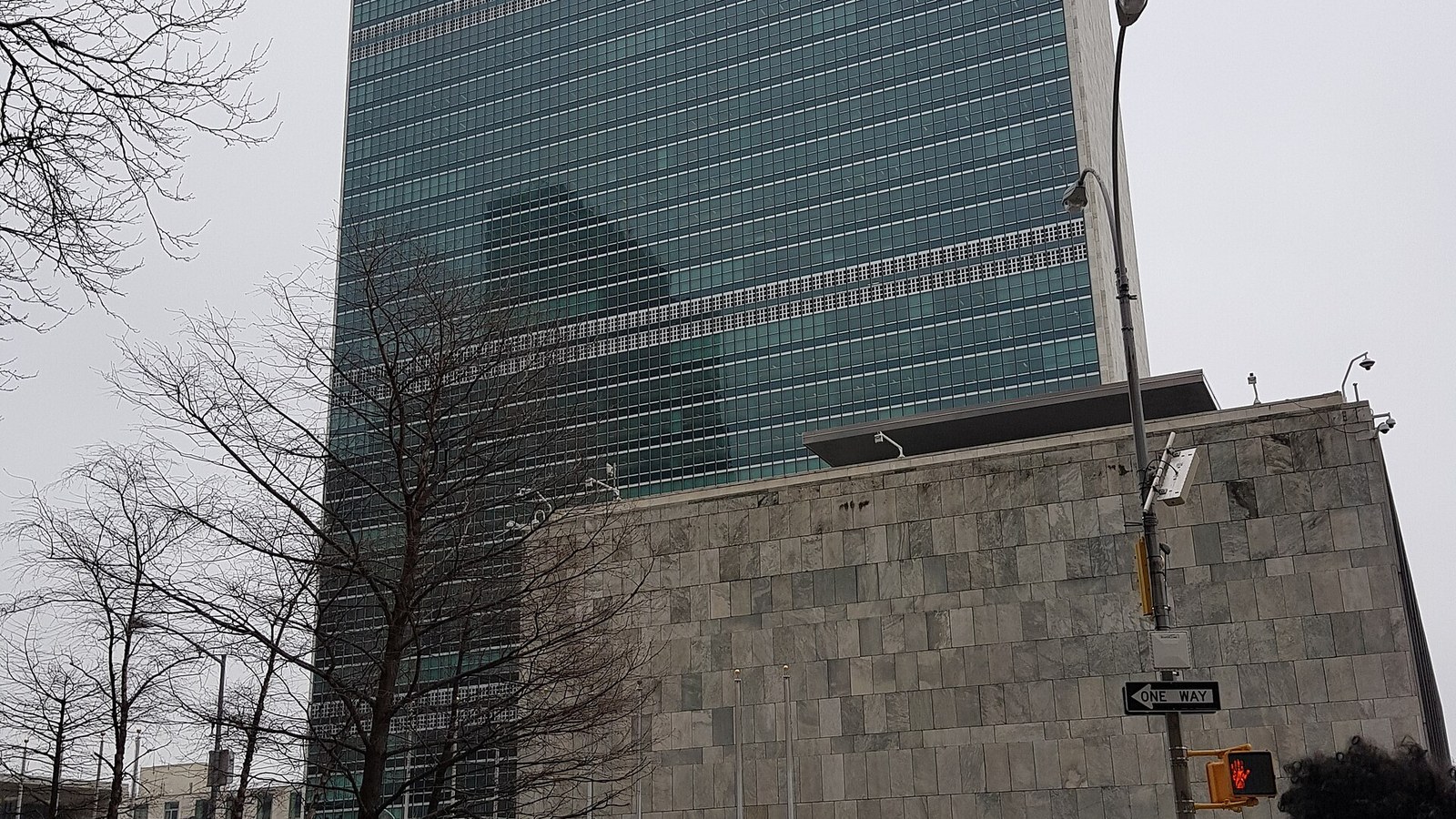
Image: Headquarters of the United Nations, New York; Dan Winkler, 29 March 2018; CC BY-SA 4.0, Wikimedia Commons. Cropped to 16:9.
Source consulted: Migrant Workers Convention. Treaty text: International Convention on the Protection of the Rights of All Migrant Workers and Members of Their Families, New York, 18 December 1990.











0 Comments
No comments on this article yet. Be the first!