


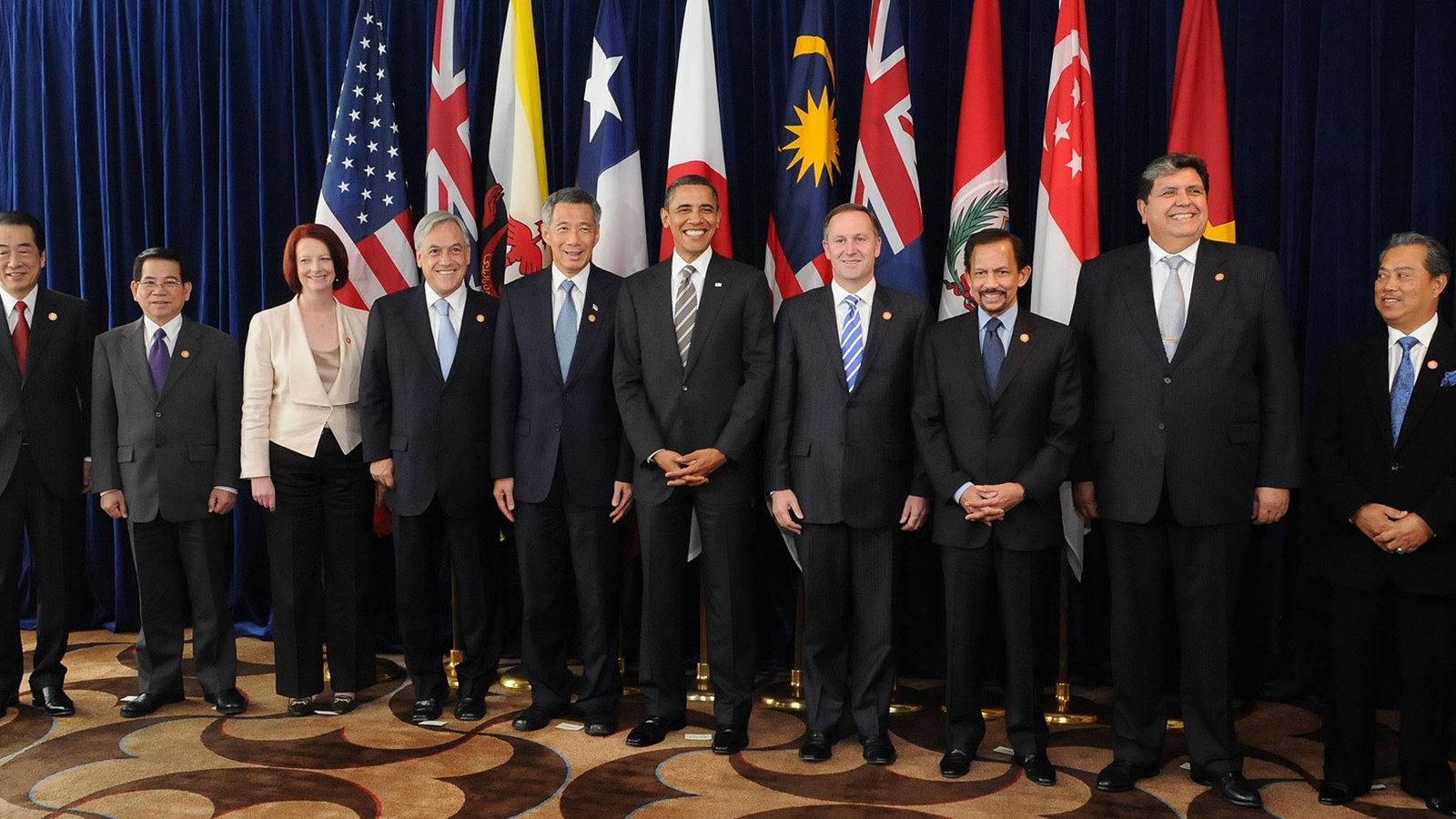
In Santiago, Chile, on 8 March 2018, eleven states sign the Comprehensive and Progressive Agreement for Trans-Pacific Partnership (CPTPP): Australia, Brunei, Canada, Chile, Japan, Malaysia, Mexico, New Zealand, Peru, Singapore and Vietnam. The depositary is the Government of New Zealand; the authentic languages are English, French and Spanish. The ceremony follows the sealing of the text on 23 January 2018.
CPTPP largely revives the Trans-Pacific Partnership (TPP) signed on 4 February 2016 after the United States withdrew. Roughly two-thirds of TPP provisions remain; 22 U.S.-favoured measures contested by other signatories are suspended. The entry-into-force threshold is lowered: 60 days after ratification by at least half the signatories (six of eleven), without requiring U.S. accession.
The agreement spans 30 chapters: national treatment and market access for goods, rules of origin, SPS, TBT, investment, services, telecommunications, government procurement, intellectual property, labour, environment, state-owned enterprises and dispute settlement. Relative to TPP, investment and IP chapters are amended: copyright and patent terms are shortened versus TPP, some digital IP standards are dropped, and ISDS for certain investment agreements and authorisations is curtailed.
Post-2017 rescue talks were widely led by Japan. At the APEC meetings in Vietnam (November 2017) Canada delayed agreement in principle over culture and automotive rules; in January 2018 Ottawa agreed after culture side letters and bilateral deals with Japan, Malaysia and Australia.
Australia became the sixth ratifier on 31 October 2018; CPTPP entered into force for the initial six on 30 December 2018. The United Kingdom later acceded. The area covers nearly 600 million people and about 14% of world GDP.
The agreement signed in Santiago on 8 March 2018 remains the Pacific Rim’s major multilateral free-trade framework without the United States, built on the revised TPP text.
Image: leaders of TPP member states; Wikimedia Commons. Cropped to 16:9.
Source consulted: Comprehensive and Progressive Agreement for Trans-Pacific Partnership. Treaty text: Comprehensive and Progressive Agreement for Trans-Pacific Partnership (DONE at Santiago, 8 March 2018).











0 Comments
No comments on this article yet. Be the first!