


On 10 December 1976, the UN General Assembly adopted the Convention on the Prohibition of Military or Any Other Hostile Use of Environmental Modification Techniques, by resolution 31/72, which referred the text to all States for consideration, signature and ratification. The UNTC records it as New York, on that date. It is not a treaty signed in a bloc on the day of adoption. Under Article IX and the closing formula, the Convention was opened for signature at Geneva on 18 May 1977; then, until 4 October 1978, at New York. Six authentic texts: English, Arabic, Chinese, French, Russian and Spanish; depositary, the Secretary-General (Article X). Entry into force: upon the deposit of instruments of ratification by twenty Governments (Article IX(3)). The date of force: 5 October 1978. Registration ex officio: UNTS I-17119, volume 1108. Unlimited duration (Article VII).
The preamble: consolidating peace, halting the arms race, general and complete disarmament; scientific and technical advances may open new possibilities with respect to modification of the environment; the Stockholm Declaration of 16 June 1972; peaceful use could improve the interrelationship of man and nature; military or other hostile use could have effects extremely harmful to human welfare. Article I(1): each State Party undertakes not to engage in military or any other hostile use of environmental modification techniques having widespread, long-lasting or severe effects as the means of destruction, damage or injury to any other State Party. Article I(2): not to assist, encourage or induce any State, group of States or international organization to engage in activities contrary to Article I(1).
Article II: “environmental modification techniques” means any technique for changing — through the deliberate manipulation of natural processes — the dynamics, composition or structure of the Earth, including its biota, lithosphere, hydrosphere and atmosphere, or of outer space. Article III: the provisions shall not hinder use for peaceful purposes and shall be without prejudice to generally recognized principles of international law concerning such use; the fullest possible exchange of scientific and technological information, with due consideration for the needs of the developing areas of the world. The text is not a guide to hostile application.
Article IV: each Party undertakes to take any measures it considers necessary in accordance with its constitutional processes to prohibit and prevent any activity in violation of the Convention anywhere under its jurisdiction or control. Article V: consultation and co-operation, including through UN procedures; within one month of a request, the Depositary shall convene a Consultative Committee of Experts, whose statute is the annex, an integral part of the Convention. Any Party which has reason to believe that another is in breach may lodge a complaint with the Security Council, with relevant information and possible evidence; the Parties undertake to co-operate in any investigation; assistance if the Council decides that a Party has been harmed or is likely to be harmed. Article VI: amendments, in force for those which have accepted them upon acceptance by a majority of the Parties.
Article VIII: five years after entry into force, a review conference at Geneva; thereafter, at intervals of not less than five years, at the request of a majority; if no conference has been convened within ten years, the Depositary shall solicit views — one third or ten of the Parties, whichever is less, suffices for convening. The annex: the Committee makes findings of fact, with no voting on matters of substance; the Depositary or his representative serves as Chairman. This is not an absolute ban on any environmental modification: the threshold is hostile use having widespread, long-lasting or severe effects, as between Parties.
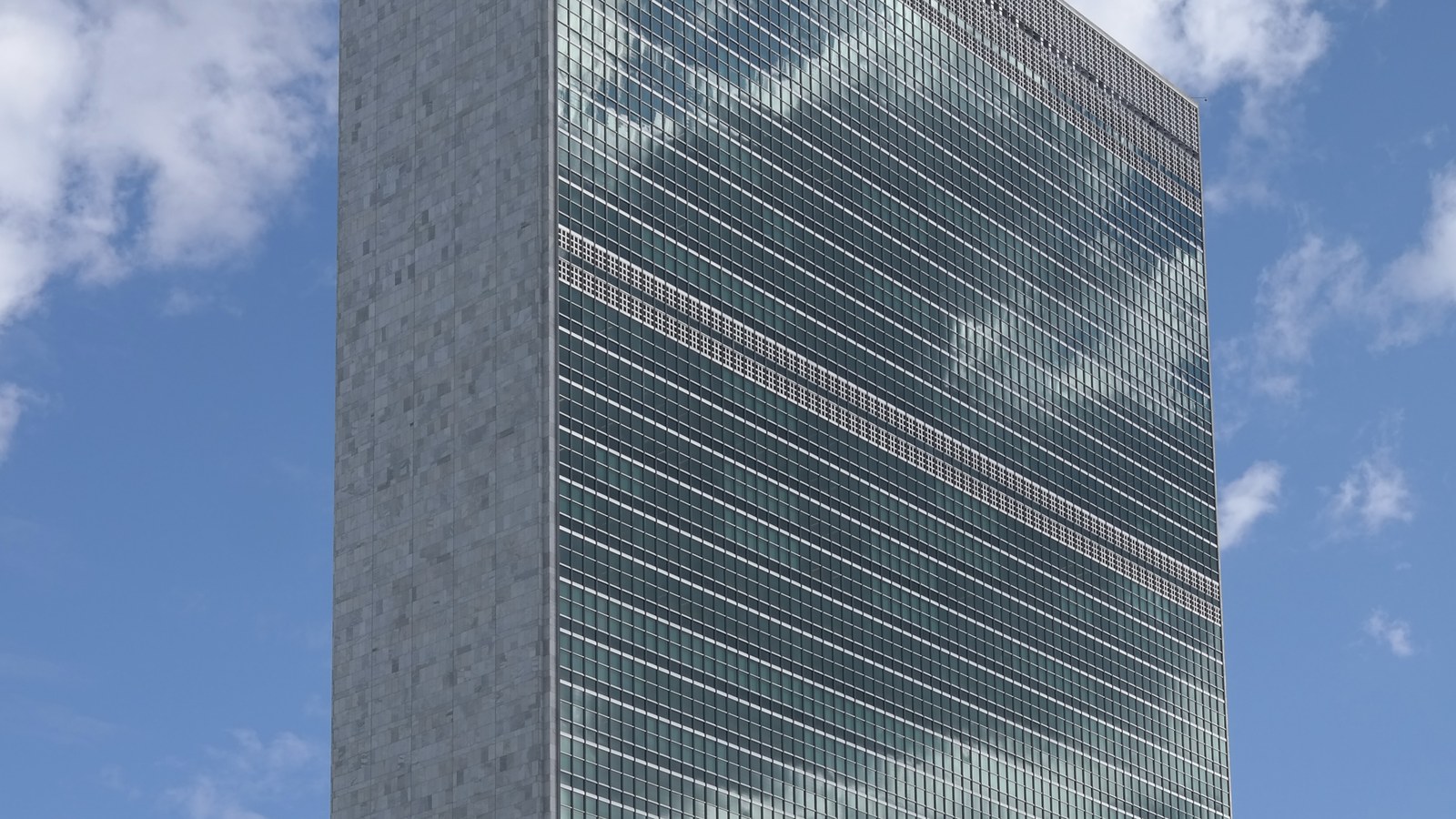
The United Nations Secretariat Building, New York, the place of adoption by the Assembly. The opening for signature, at Geneva, came later. The city of adoption, not the signing room. Wikimedia Commons, free licence.
For context: United Nations General Assembly Resolution 31/72. The text: UNTS, Convention on the Prohibition of Military or Any Other Hostile Use of Environmental Modification Techniques, vol. 1108, I-17119.











0 Comments
No comments on this article yet. Be the first!