


The Treaty to Avoid or Prevent Conflicts between the American States, known as the Gondra Treaty, was signed at Santiago de Chile on 3 May 1923, at the Fifth International Conference of American States. Authentic texts: Spanish, English, Portuguese and French. The original is deposited with the Ministry of Foreign Affairs of the Republic of Chile. The signing formula is not transcribed. It is not the 1928 Kellogg–Briand Pact.
The preamble records that the governments represented wish to strengthen the principles of justice and mutual respect, to keep a steadfast peace among themselves and with other nations, and condemn armed peace that inflates military and naval forces beyond the needs of internal security, sovereignty and independence. The purpose is to promote all means that avoid or prevent conflicts that may arise among them.
Article I: any question arising between two or more of the High Contracting Parties that has not been settled by diplomacy or referred to arbitration under existing treaties shall be submitted to investigation and report by a commission constituted as provided in Article IV. In case of conflict the Parties undertake not to begin mobilizations, concentrations of troops on the frontier of the other party, or any hostile act or preparation of hostilities, from the convocation of the investigating commission until after its report or the period in Article VII. The stipulation does not abrogate existing arbitration conventions. A military regulation is not transcribed.
Articles II–III: questions are referred to the commission when negotiations have failed or an armed conflict is imminent; either government directly interested may request convocation by notifying the other party and one of the two Permanent Commissions, seated in Washington and in Montevideo, formed of the three most senior American diplomatic agents accredited in those capitals. Their function is to receive the request and to notify it. Article IV: the commission of inquiry has five members, all nationals of American States; each government names two, of whom only one may be of its own nationality; the fifth, the president, is chosen by common agreement and may not be of a nationality already represented. Decisions are taken by majority. A hearing protocol is not transcribed.
Article V: the parties shall supply the information needed for the investigation; the report is due within one year from installation, extendable by six months if the parties so agree. Article VI: the commission’s resolutions are reports on the questions investigated and do not have the force of judicial or arbitral awards. Article VII: after the report is transmitted, the governments have six months to seek a settlement in the light of its conclusions; if they still cannot reach a friendly solution, they recover full freedom of action as to the matter investigated. Article VIII leaves analogous conventions already in force unaffected.
Article IX: ratification follows the respective constitutional procedures; instruments are deposited with the Ministry of Foreign Affairs of Chile, which communicates them through the diplomatic channel to the other signatory governments; the Treaty enters into force between the Contracting Parties as they ratify it. For the OAS, 8 October 1924. Denunciation is addressed to the Government of Chile and takes effect one year later, only as to the denouncing party. Article X allows American States not represented at the Fifth Conference to adhere, again through Chile. It was registered in the League of Nations Treaty Series, volume 33.
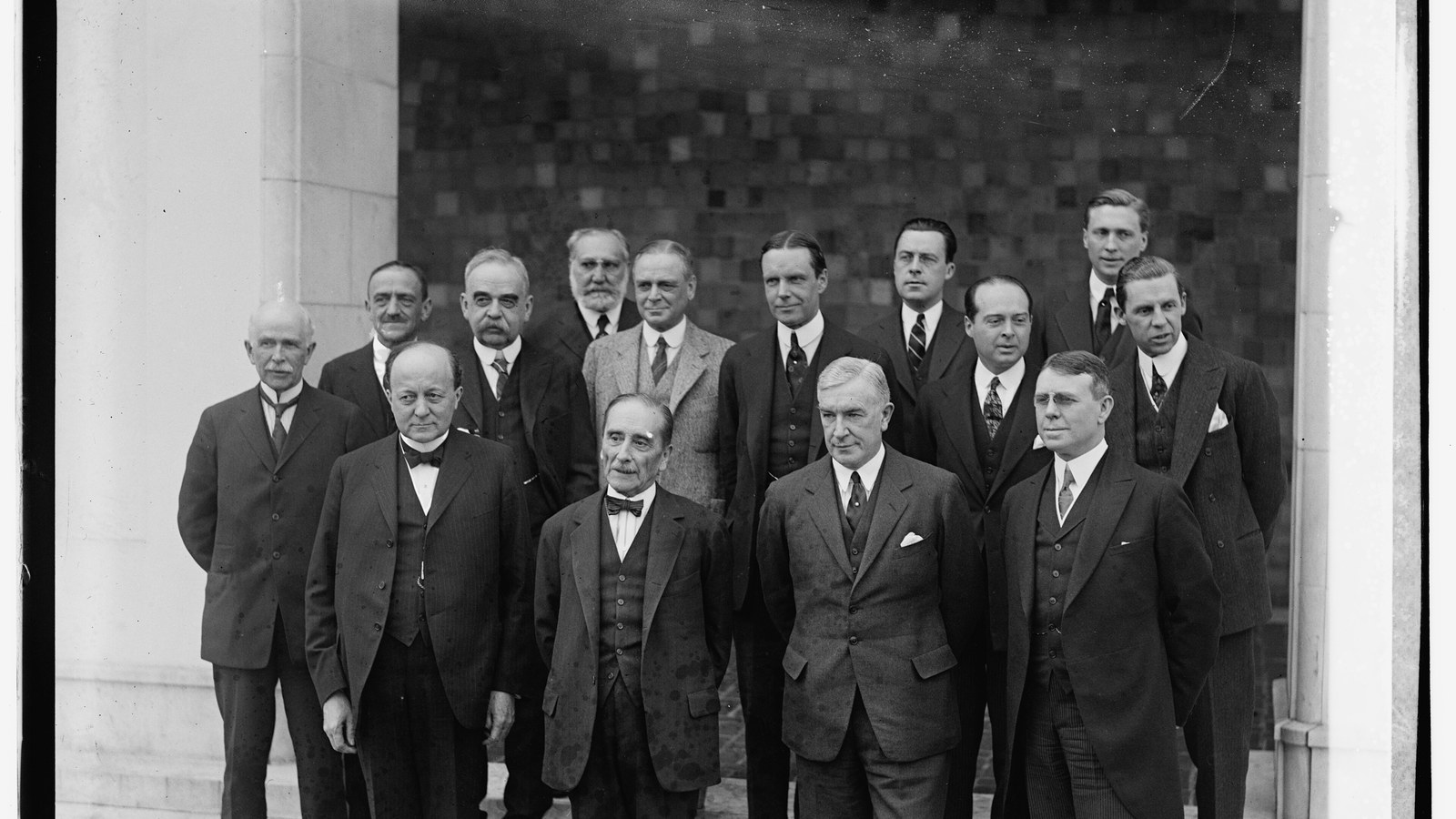
Cover: American delegates at the Fifth International Conference of American States, Santiago; no claim is made to the hall of signature. Wikimedia Commons, free licence.
Sources consulted: Pan-American Treaty (1923); Tratado para evitar o prevenir conflictos entre los Estados Americanos (Tratado Gondra).










0 Comments
No comments on this article yet. Be the first!