
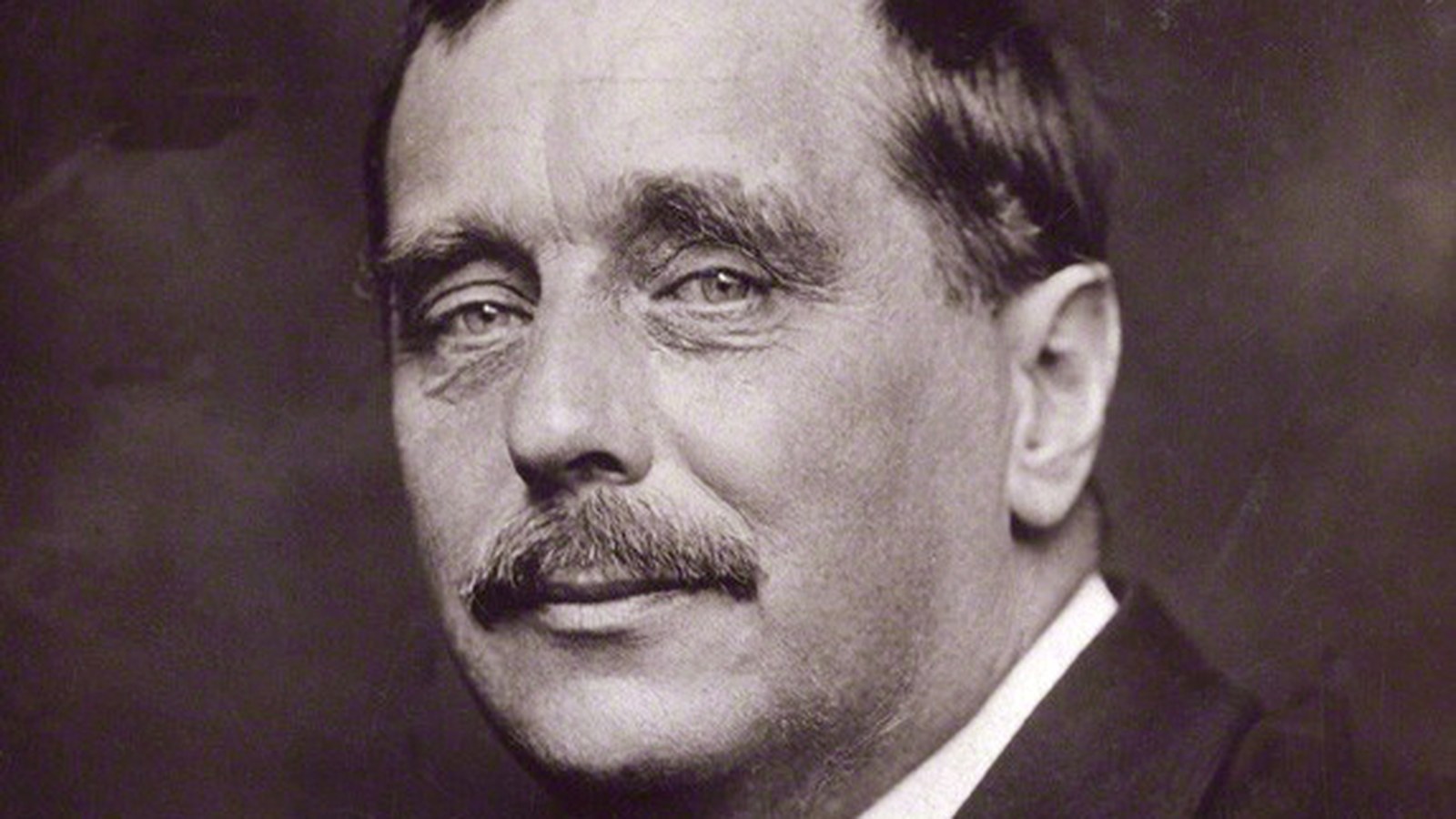
21 September 2026 marks 160 years since the birth of Herbert George Wells in Bromley, Kent. The son of small shopkeepers, he grew up under the threat of poverty, was apprenticed to a draper and, at 18, won a scholarship to study biology at London’s Normal School of Science, where T.H. Huxley was among his teachers.
He graduated from London University in 1888 and worked as a science teacher. His first published book was a biology textbook in 1893. The novel The Time Machine, issued in 1895, made time travel a major theme of popular fiction and opened a run of books that established his reputation.
The Island of Doctor Moreau (1896), The Invisible Man (1897) and The War of the Worlds (1898) followed. In these volumes scientific ideas are not mere adventure props: they serve to examine inequality, evolution, war and social responsibility.
Wells also wrote comic novels of lower middle-class life, including Kipps and The History of Mr. Polly, as well as popular history, essays and political works. The Outline of History, published in 1920, was one of his projects of education for a wide public.
His influence can be traced through literature, radio, cinema, television and games. Adaptations, however, introduce characters, scenes and tones absent from the original books and should be treated as separate interpretations, not as summaries of the novels.
After the First World War his optimism about social progress receded. In later works, including Mind at the End of Its Tether (1945), his view of humanity’s prospects grew bleaker.
Wells died in London on 13 August 1946. His books continue to be republished; quotations and illustrations must stay within the rights that apply to the edition consulted.
Image: George Charles Beresford, H.G. Wells portrait, public domain, Wikimedia Commons.
Source consulted: H.G. Wells — Encyclopaedia Britannica.









0 Comments
No comments on this article yet. Be the first!