


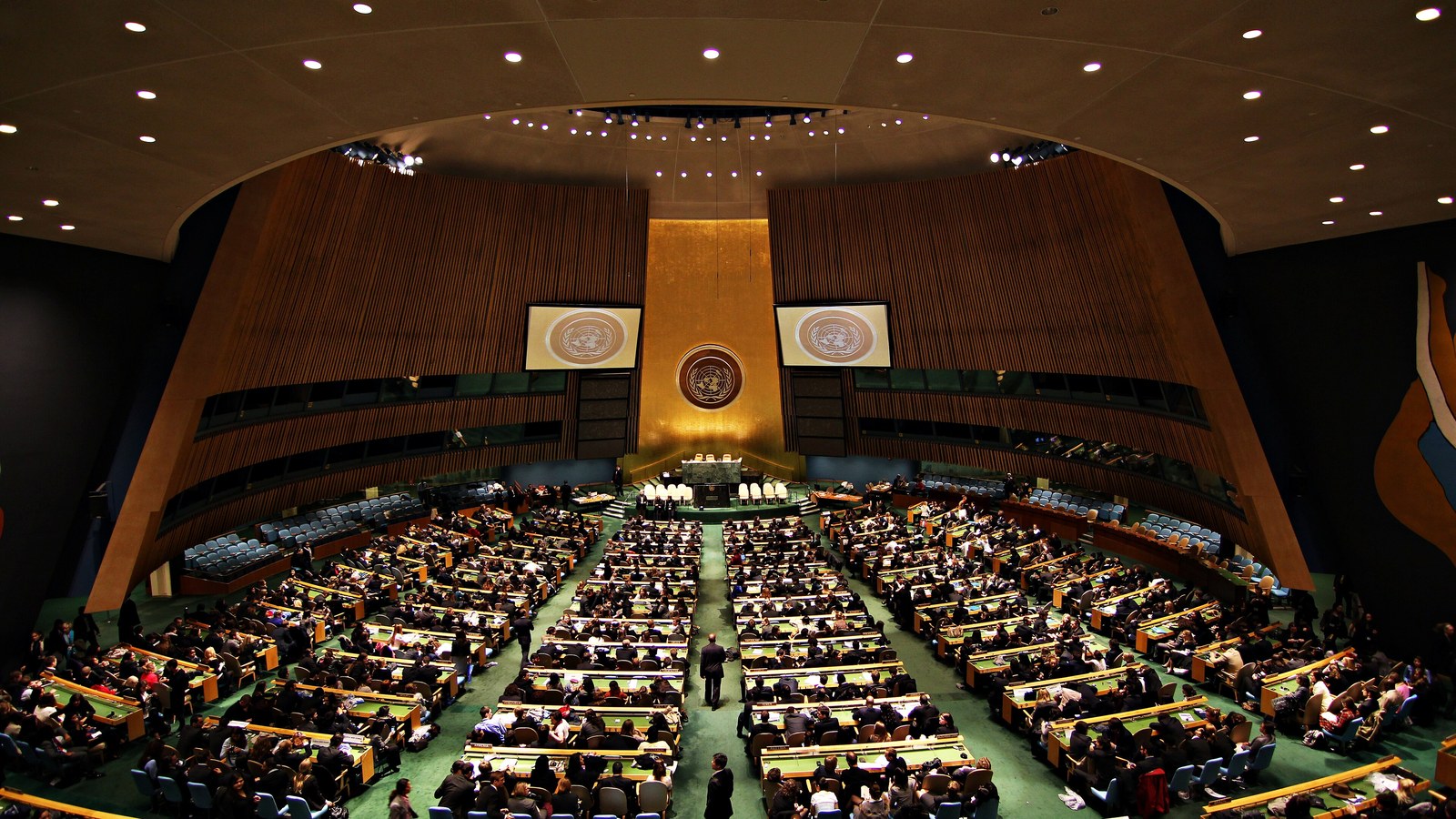
On 16 December 1966, in New York, the General Assembly adopted, by resolution 2200 A (XXI), the International Covenant on Civil and Political Rights, at the 1496th plenary meeting, by a vote of 104–0–0. It was not signed that day. Article 48: open for signature by Members of the United Nations, members of the specialised agencies, parties to the Statute of the ICJ, and other States invited by the Assembly; subject to ratification; depositary the Secretary-General. It was opened for signature on 19 December 1966, also in New York. Five authentic texts: Chinese, English, French, Russian and Spanish (Article 53). Registration: UNTS 14668, volume 999, p. 171.
Article 1: all peoples have the right of self-determination. Article 2(1): each Party undertakes to respect and to ensure to all individuals within its territory and subject to its jurisdiction the rights recognised in the Covenant, without distinction of any kind, such as race, colour, sex, language, religion, political or other opinion, national or social origin, property, birth or other status. Article 2(3): an effective remedy. Article 3: the equal right of men and women. Article 4: derogation in time of public emergency which threatens the life of the nation and is officially proclaimed, to the extent strictly required; not involving discrimination solely on the ground of race, colour, sex, language, religion or social origin. Article 4(2): no derogation from articles 6, 7, 8(1)–(2), 11, 15, 16 and 18.
Article 6(1): every human being has the inherent right to life, protected by law; no one shall be arbitrarily deprived of his life. Article 7: no one shall be subjected to torture or to cruel, inhuman or degrading treatment or punishment. Article 9: liberty and security of person; no one shall be subjected to arbitrary arrest or detention. Article 14: equality before the courts; a fair and public hearing. Article 18: freedom of thought, conscience and religion. Article 19: freedom of opinion and expression. Article 25: political participation. Article 26: equality before the law. Article 27: rights of ethnic, religious or linguistic minorities. This is a catalogue of legal obligations, not a handbook of violations.
Article 28: a Human Rights Committee is established, of eighteen members, elected to serve in their personal capacity. Article 40: reports by the Parties. Article 41: declarations of competence for inter-State communications, with a separate entry into force (28 March 1979). The Optional Protocol in the same resolution is a separate instrument, likewise opened on 19 December.
Article 49(1): the Covenant shall enter into force three months after the deposit of the thirty-fifth instrument of ratification or accession. Entry into force: 23 March 1976, except for Article 41. Article 50: the provisions extend to all parts of federal States. Article 51: amendments, with a conference if at least one third of the Parties so request, then approval by the Assembly and acceptance by a two-thirds majority. The ICESCR, adopted in the same resolution, is a separate covenant.
The General Assembly Hall, United Nations Headquarters, New York, the place of adoption, not a signing room. Wikimedia Commons, free licence.
For context: International Covenant on Civil and Political Rights. The text: International Covenant on Civil and Political Rights.











0 Comments
No comments on this article yet. Be the first!