


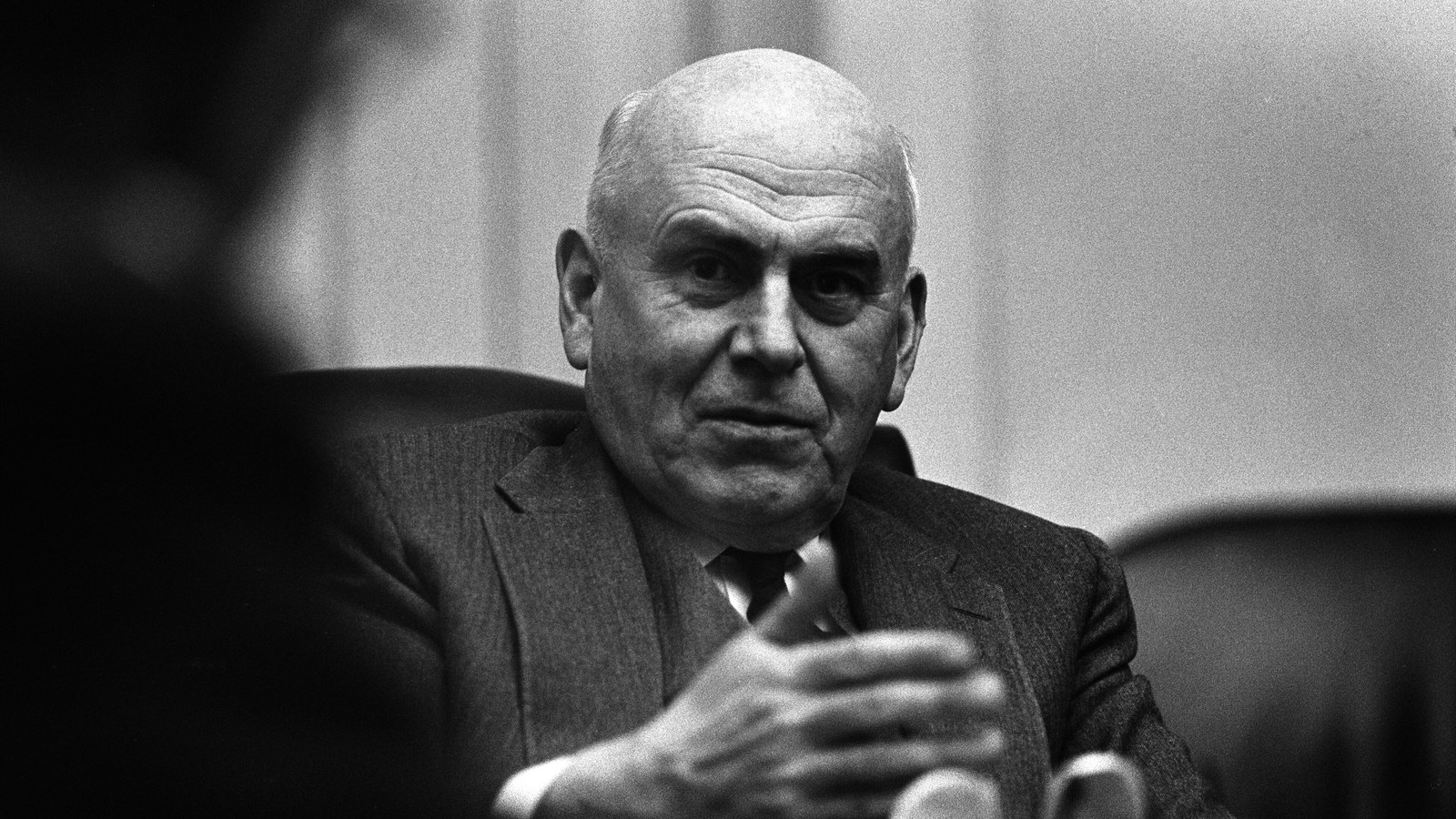
On 20 December 1961 the United Nations General Assembly, meeting in New York, welcomes by resolution 1722 (XVI) the Joint Statement of Agreed Principles for Disarmament Negotiations submitted by the United States and the Soviet Union. The text, known as the McCloy–Zorin Accords, had been transmitted to the Secretary-General on 20 September. The resolution recommends that negotiations resume as a matter of urgency on the basis of those principles.
Paragraph 1 sets the goal: a programme of general and complete disarmament so that war is no longer an instrument for settling international problems, accompanied by reliable procedures for the peaceful settlement of disputes and effective arrangements for the maintenance of peace in accordance with the Charter of the United Nations. Paragraph 2 provides that, at the end of the programme, States shall have at their disposal only such non-nuclear armaments, forces and establishments as are agreed to be necessary to maintain internal order and protect the personal security of citizens, and shall provide agreed manpower for a United Nations peace force.
Paragraph 3 requires the programme to contain, with respect to the military establishment of every nation: disbanding of armed forces; dismantling of military establishments, including bases; cessation of the production of armaments and their liquidation or conversion to peaceful uses; elimination of all stockpiles of nuclear, chemical, bacteriological and other weapons of mass destruction and cessation of the production of such weapons; elimination of all means of delivery of those weapons; abolition of the organizations and institutions designed to organize the military effort of States, cessation of military training and closing of military training institutions; discontinuance of military expenditures.
Paragraph 4 requires implementation in agreed stages, within specified time-limits, with transition to the next stage only after verification that the measures of the preceding stage have been implemented. Paragraph 5 requires that all measures be implemented from beginning to end under strict and effective international control. An International Disarmament Organization shall be created within the framework of the United Nations, including, as appropriate, inspectors having unrestricted access without veto to all places as necessary for effective verification.
Paragraph 6 requires that during and after implementation States refrain, in accordance with the Charter, from the threat or use of force. Paragraph 7 links progress in disarmament to the strengthening of institutions for maintaining peace; States undertake to place at the disposal of the United Nations agreed manpower for an international peace force, equipped with agreed types of armaments, so that the United Nations can effectively deter or suppress any threat or use of arms in violation of the purposes and principles of the Charter. Paragraph 8 requires the widest possible agreement at the earliest possible date, without interruption until the total programme is achieved, and that partial measures facilitate that programme and form part of it.
The same resolution enlarges the Ten-Nation Committee on Disarmament to eighteen members, by adding Brazil, Burma, Ethiopia, India, Mexico, Nigeria, Sweden and the United Arab Republic, and requests it to undertake negotiations as a matter of urgency and to report to the Disarmament Commission and to the General Assembly.
It is not the 1963 Treaty Banning Nuclear Weapon Tests in the Atmosphere, in Outer Space and Under Water. It is not the 1968 Treaty on the Non-Proliferation of Nuclear Weapons.
Image: John J. McCloy; Yoichi R. Okamoto, 28 January 1966; public domain, Wikimedia Commons. Cropped to 16:9.
Source consulted: McCloy-Zorin Accords. Treaty text: General Assembly resolution 1722 (XVI), New York, 20 December 1961.











0 Comments
No comments on this article yet. Be the first!