


In Paris, on 20 May 1875, seventeen states signed the Metre Convention, to assure the international unification and improvement of the metric system. The plenipotentiaries — among them Prince Hohenlohe-Schillingsfürst, Count Apponyi, Baron Beyens, the Viscount of Itajubá, Elihu B. Washburne, the Duc Decazes, the Vicomte de Meaux, Jean-Baptiste Dumas, Costantino Nigra, Carlos Ibáñez de Ibero, Jean-Conrad Kern, Husny Bey and Eliseo Acosta — affixed their seals of arms to an instrument of fourteen articles, with annexed regulations. Great Britain and the Netherlands did not sign then.
The convention is not the 1799 metre of the Archives, nor the International Metre Commission of 1870–1872, which resolved to reproduce the existing prototypes, nor the amendment signed at Sèvres on 6 October 1921, nor the International System of Units of 1960.
Article 1 binds the parties to found and maintain, at common expense, a scientific and permanent International Bureau of Weights and Measures, with its seat in Paris. Article 3 places it under the exclusive direction of an International Committee for Weights and Measures, itself under the authority of a General Conference of delegates of all the contracting governments. Article 4 gives the presidency of the Conference to the serving president of the Paris Academy of Sciences.
Article 6 charges the Bureau with comparisons and verifications of the new prototypes of the metre and the kilogram, custody of the international prototypes, periodic comparisons of national standards, of standard thermometers, of the prototypes with non-metric fundamental standards, calibration of geodetic bars, and verifications requested by governments, learned societies or men of science. Article 8: the prototypes and their witnesses remain deposited at the Bureau; access to the deposit is reserved to the Committee.
The annexed regulations, twenty-two articles, cap the building and fittings at 400,000 francs. The Committee has fourteen members from different states; at the outset they are twelve from the former permanent committee of the 1872 commission, plus two delegates. The Conference meets in Paris at least once every six years, votes by state, one vote each, and renews half the Committee. Article 9 of the convention covers costs by contributions scaled to population; the sums are paid, at the beginning of each year, through the French Foreign Ministry to the Caisse des dépôts et consignations.
Article 13 allows denunciation after twelve years, with one year’s notice; the withdrawing state loses coproprietorship of the prototypes and of the Bureau. Article 14: ratifications are exchanged in Paris within six months, or sooner if possible, and the convention is put into execution from 1 January 1876. The Paris signing is not that date of execution.
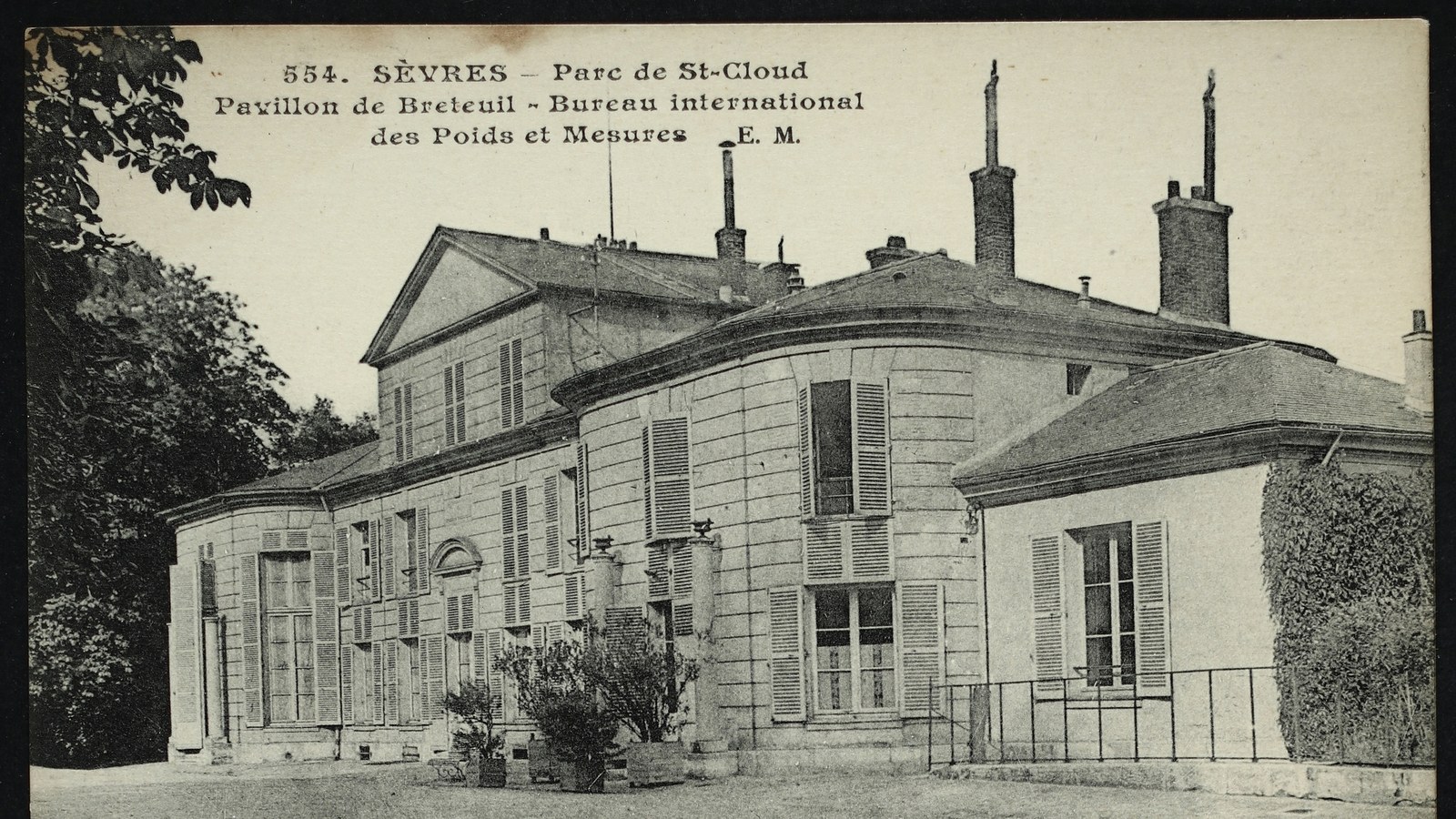
The French government undertook, by Article 2, to facilitate the purchase or construction of the building provided for in the regulations. The Pavillon de Breteuil, in the park of Saint-Cloud, became the Bureau’s seat; the 1875 signature was in Paris, not there. The authentic language of the treaty is French.
Image: Pavillon de Breteuil, postcard circa 1900; Archives départementales des Hauts-de-Seine, Licence Ouverte, Wikimedia Commons. Cropped to 16:9.
Source consulted: Metre Convention. Treaty text: Diplomatic documents of the Metre Conference, Paris 1875.











0 Comments
No comments on this article yet. Be the first!