


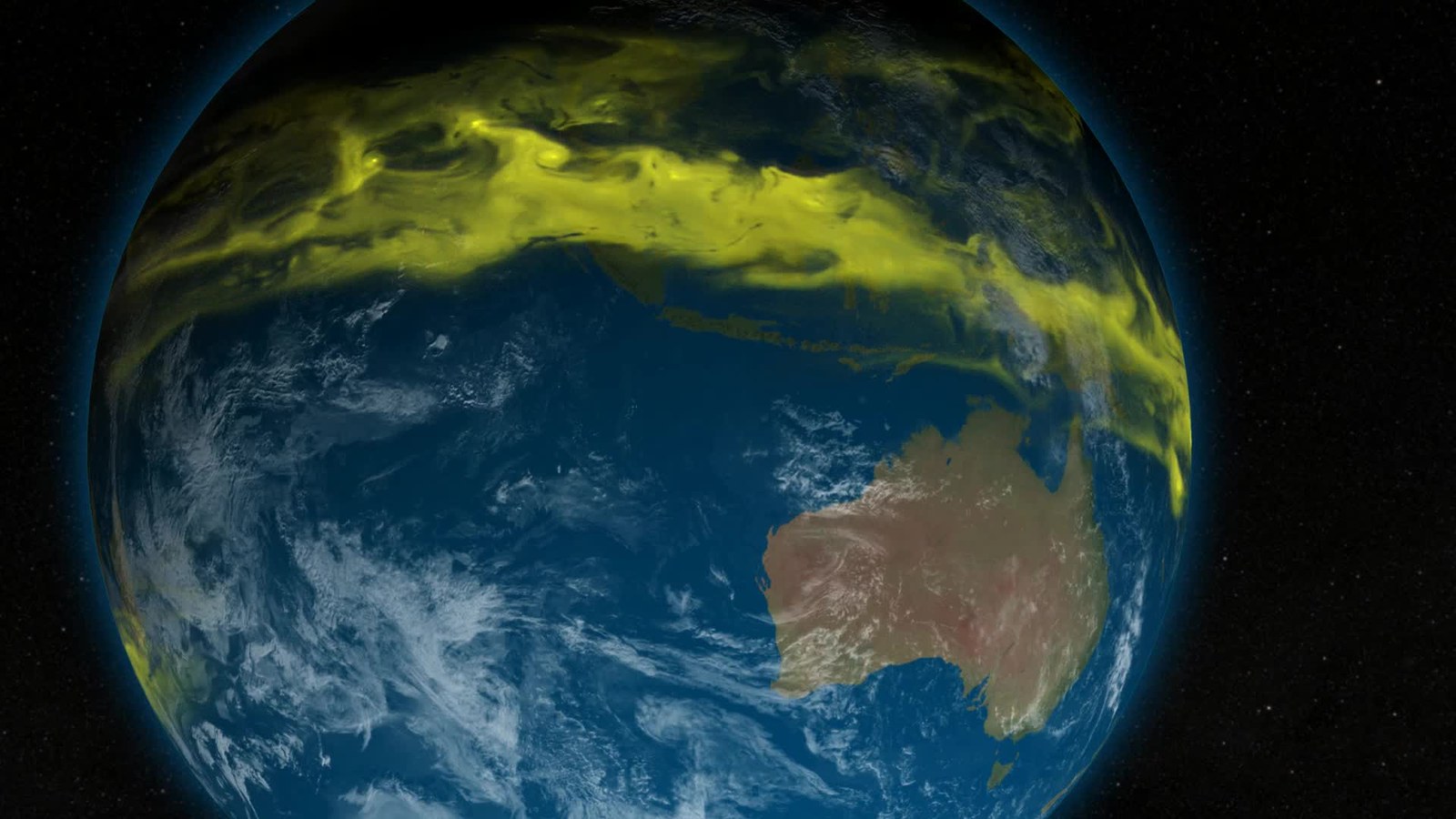
At the headquarters of the International Civil Aviation Organization in Montreal, the conference of plenipotentiaries adopts the Protocol on Substances that Deplete the Ozone Layer. The date of the instrument is 16 September 1987. It is not the Vienna Convention of 22 March 1985, the framework to which the protocol is tied, and it is not the Kigali Amendment of 2016.
Mostafa K. Tolba, executive director of UNEP, opens the meeting; Tom McMillan, Canada’s minister of the environment, welcomes the delegations. The president of the conference is Ambassador W. Lang of Austria. For the United States, Richard E. Benedick negotiates. The protocol is signed in Montreal that day, then in Ottawa until 16 January 1988 and in New York until 15 September 1988.
Annex A, Group I: CFC-11, CFC-12, CFC-113, CFC-114, CFC-115. Article 2 freezes them, from the seventh month after entry into force, at the 1986 level of consumption; production may rise by no more than 10 per cent, for the basic domestic needs of Article 5 parties. From 1 July 1993, consumption falls to 80 per cent of 1986; from 1 July 1998, to 50 per cent, unless the parties decide otherwise by two thirds.
Group II: halons 1211, 1301 and 2402. The freeze at 1986 begins from the 37th month after entry into force. Article 5: a developing country whose annual consumption is less than 0.3 kilograms per capita may delay compliance with the Article 2 measures by ten years, without exceeding that ceiling.
Article 4: within one year of entry into force, imports of controlled substances from non-parties are banned. From 1993, Article 5 parties no longer export to non-parties. Article 6 requires a scientific, technical and economic assessment beginning in 1990, then at least every four years.
Article 16: the protocol enters into force on 1 January 1989, if at least eleven instruments of ratification have been deposited by states or organizations representing at least two thirds of estimated 1986 global consumption, and if Article 17(1) of the Vienna Convention has been fulfilled. The conditions were met; the text entered into force on that date. Depositary: the Secretary-General of the United Nations. Authentic texts: Arabic, Chinese, English, French, Russian, Spanish.
The later adjustments and amendments — London 1990, Copenhagen 1992, Montreal 1997, Beijing 1999, Kigali 2016 — are not this instrument. The 1987 text does not require a total phase-out of CFCs by 1996; that comes from later adjustments.
It is not Vienna 1985 and it is not Kigali. The signatures at Montreal are the plenipotentiaries’, on a text that states that the ultimate objective is elimination, on the basis of scientific knowledge.
Image: ozone-depleting chemicals, conceptual animation; NASA Goddard Space Flight Center, 2015; public domain, Wikimedia Commons. Cropped to 16:9.
Source consulted: Montreal Protocol. Treaty text: Montreal Protocol on Substances that Deplete the Ozone Layer, 16 September 1987 (UNTS 1522).










0 Comments
No comments on this article yet. Be the first!