


On 18 December 1979, at United Nations Headquarters in New York, the Agreement Governing the Activities of States on the Moon and Other Celestial Bodies is opened for signature. The General Assembly had commended it by resolution 34/68, adopted on 5 December. The Agreement has twenty-one articles. The authentic texts are Arabic, Chinese, English, French, Russian and Spanish. The depositary is the Secretary-General.
Article 1 applies the provisions also to other celestial bodies within the solar system, other than the Earth, and includes orbits around or trajectories to or around the Moon; extraterrestrial materials which reach the Earth by natural means are excluded. Article 2 requires that all activities on the Moon be carried out in accordance with international law, in particular the Charter of the United Nations. Article 3 reserves the Moon exclusively for peaceful purposes: it prohibits any threat or use of force, the placing of nuclear weapons or other weapons of mass destruction in orbit around the Moon or on the Moon, military bases, the testing of weapons and military manoeuvres; military personnel for scientific research or other peaceful purposes are not prohibited.
Article 4 proclaims that the exploration and use of the Moon shall be the province of all mankind and shall be carried out for the benefit of all countries. Article 5 requires States Parties to inform the Secretary-General, the public and the international scientific community of missions, including, for missions lasting more than sixty days, reports at thirty-day intervals, and of phenomena which could endanger life and of any indication of organic life. Article 6 guarantees freedom of scientific investigation, the right to collect mineral samples, which remain at the disposal of the State which collected them, and the use of lunar substances in quantities appropriate for the support of the mission. Article 7 requires measures to prevent disruption of the lunar environment and harmful contamination of the Earth; areas of special scientific interest may be designated international scientific preserves.
Article 8 permits activities anywhere on or below the surface, including landing and launching space objects, without interfering with the activities of other parties. Article 9 permits manned and unmanned stations, using only the area required, with immediate notice to the Secretary-General and thereafter annually, without impeding free access by other parties. Article 10 requires practicable measures to safeguard the life and health of persons on the Moon, who shall be regarded as astronauts, and shelter in installations for persons in distress.
Article 11 proclaims the Moon and its natural resources the common heritage of mankind. The Moon is not subject to national appropriation. Neither the surface nor the subsurface, nor natural resources in place, shall become the property of any State, organization or person; the placement of personnel or installations shall not create a right of ownership. The parties undertake to establish an international regime to govern the exploitation of natural resources as such exploitation is about to become feasible, including orderly development, rational management, expansion of opportunities for use and an equitable sharing of benefits, with special consideration for developing countries and for the efforts of those which have contributed to exploration. Article 12 retains jurisdiction and control over personnel, vehicles and installations, whose ownership is not affected by their presence on the Moon.
Article 14 places on the parties international responsibility for national activities, including those of non-governmental entities, which shall engage in activities on the Moon only under the authority and continuing supervision of the State. Article 15 opens vehicles, installations and stations to visits by other parties, with reasonable advance notice, and provides for consultations and then other peaceful means, including the assistance of the Secretary-General. Article 18 provides for review ten years after entry into force, or a conference after five years at the request of one third of the parties with the concurrence of the majority. Article 19 opens the Agreement for signature by all States at United Nations Headquarters in New York; it shall enter into force on the thirtieth day following the deposit of the fifth instrument of ratification. Those conditions were later met; the Agreement entered into force on 11 July 1984. Article 20 permits withdrawal, which takes effect one year from receipt of the notification.
It is not the 1967 Treaty on Principles Governing the Activities of States in the Exploration and Use of Outer Space, including the Moon and Other Celestial Bodies. It is not the International Convention against the Taking of Hostages, adopted in New York on the same day.
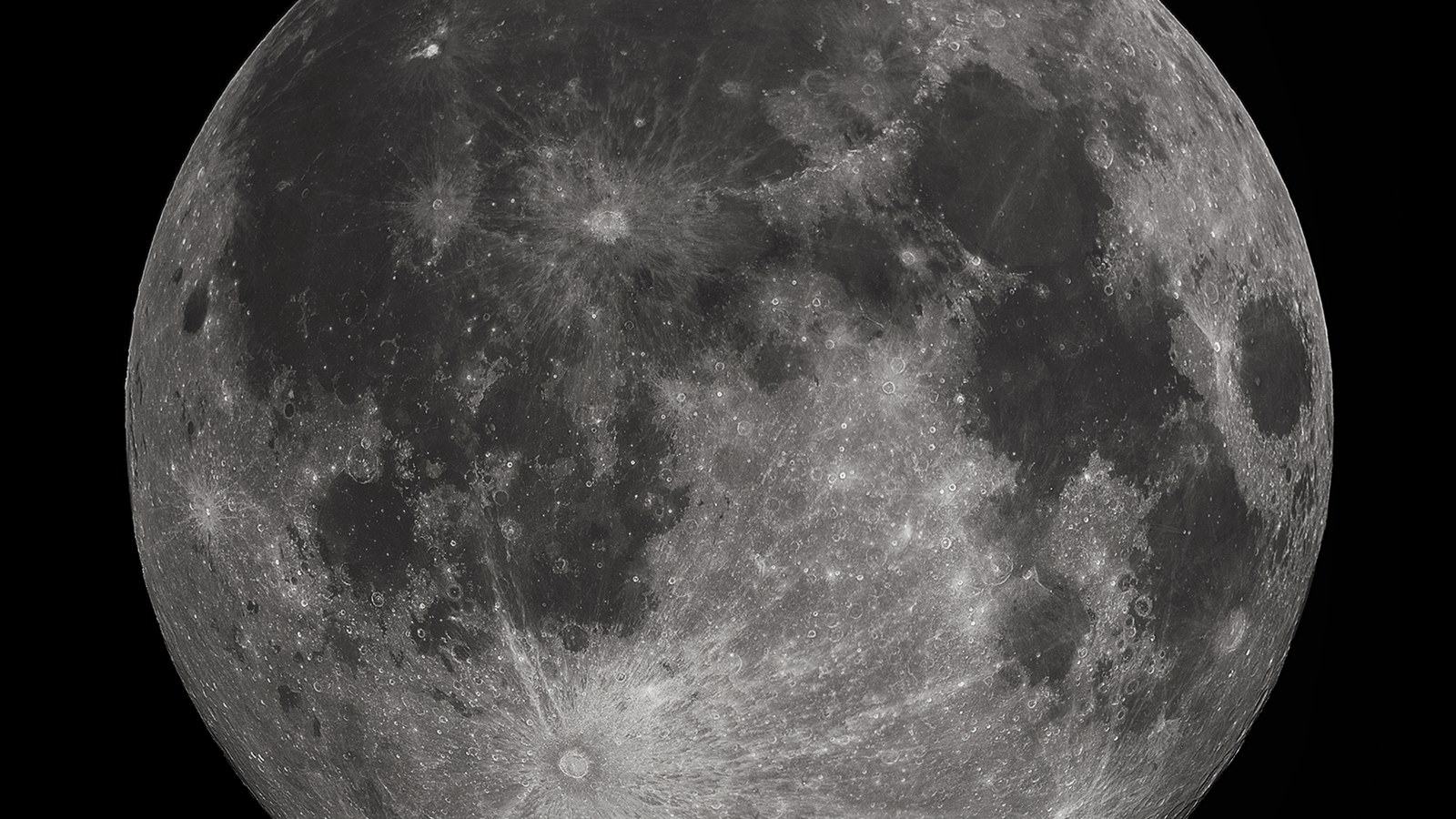
Image: Full Moon; Gregory H. Revera, 22 October 2010; CC BY-SA 3.0, Wikimedia Commons. Cropped to 16:9.
Source consulted: Moon Treaty. Treaty text: Agreement Governing the Activities of States on the Moon and Other Celestial Bodies, New York, 18 December 1979.











0 Comments
No comments on this article yet. Be the first!