


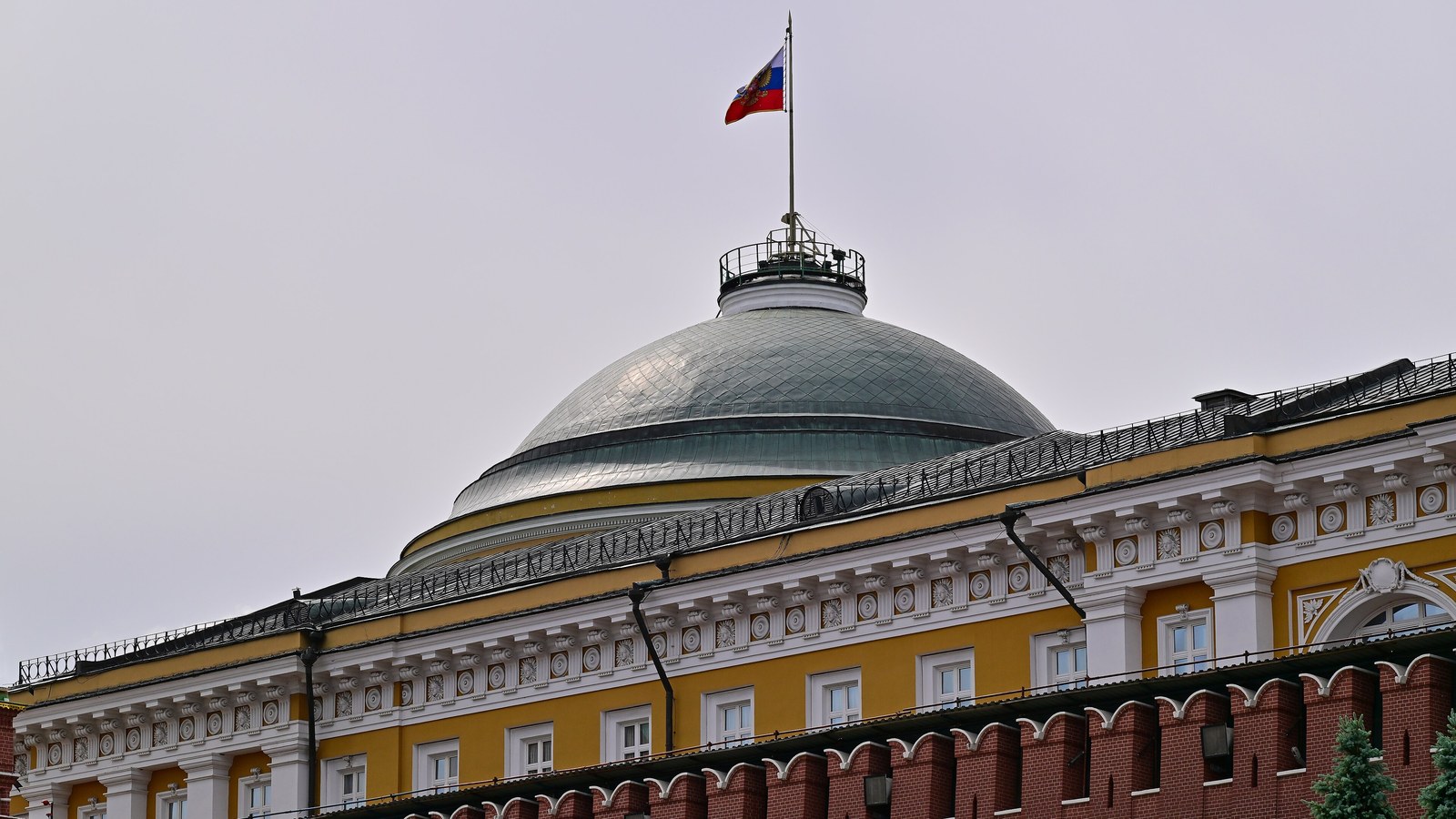
The Memorandum on the Bases for Normalization of Relations between the Republic of Moldova and Transdniestria was signed in Moscow on 8 May 1997 by President Petru Lucinschi for the Republic of Moldova and Igor Smirnov for Transdniestria. Boris Yeltsin signed for the Russian Federation and Leonid Kuchma for Ukraine, as guarantor States, in the presence of the OSCE Chairman-in-Office, Niels Helveg Petersen. It is not the 2003 Kozak memorandum. The text is reproduced by United Nations Peacemaker; the OSCE Mission to Moldova dates the same instrument as its own document.
The leadership of the two parties, through the mediation of the Russian Federation, Ukraine and the OSCE Mission, starts from the need to settle relations exclusively by peaceful political means. They reaffirm the principles of the UN, the OSCE and generally recognised norms of international law, and previous agreements between them. They give prime importance to basic human rights and freedoms, without distinction of ethnic origin, religious belief, political tenets or place of residence. No status-recognition playbook is transcribed.
Point 1: the Parties reaffirm their commitment not to resort to the use of force or the threat of force; differences shall be resolved exclusively by peaceful means, through negotiations and consultations with the assistance and mediation of Russia and Ukraine as guarantor States, of the OSCE, and with the assistance of the CIS. Point 2: they shall continue to establish state-legal relations; the document defining those relations, including the status of Transdniestria, shall be based on mutually agreed decisions, including the division and delegation of competencies and mutually assured guarantees. Elaboration is to begin immediately after signature, taking account of earlier principled agreements, including those of 17 June 1996.
Point 3: Transdniestria shall participate in the conduct of the foreign policy of the Republic of Moldova — a subject of international law — on questions touching its interests; such questions are to be decided by agreement of the Parties. Transdniestria has the right to establish and maintain international contacts unilaterally in the economic, scientific-technical and cultural spheres, and in other spheres by agreement of the Parties. No catalogue of external representation is transcribed.
Points 4 to 8 ask Russia, Ukraine and the OSCE to continue mediating; Moldova and Transdniestria act as mutual guarantors of full and unconditional fulfilment of the agreements; they welcome the Russian and Ukrainian declaration of readiness to act as Guarantor States; they ask the OSCE to continue assisting compliance; and they declare the need for a mechanism of guarantees by all participants in the negotiating process.
Point 9 reaffirms that peace-maintenance activities of the Joint Peace-keeping forces in the Security Zone continue under the 21 July 1992 agreement between the presidents of the Republic of Moldova and the Russian Federation; no operational deployment is transcribed. Point 10: in the event of a violation, the Parties may address the Guarantors for consultations. Point 11: the Parties shall build their relations in the framework of a common state within the borders of the Moldavian SSR as of January 1990. The Yeltsin–Kuchma joint statement, signed then, says the Memorandum's provisions cannot contradict generally accepted norms of international law and will not be interpreted against the sovereignty and territorial integrity of the Republic of Moldova, also recognised in the Joint Declaration of 19 January 1996.
Cover: the Kremlin Senate Palace, the presidential residence in the city of signature; we do not claim the signing room. Wikimedia Commons, free licence.
Sources consulted: 1997 Moscow memorandum; Memorandum on the Bases for Normalization of Relations Between the Republic of Moldova and Transdneistria.









0 Comments
No comments on this article yet. Be the first!