


On 11 February 1982, at Nauru, the Nauru Agreement Concerning Cooperation in the Management of Fisheries of Common Interest was signed. The FAO preamble names seven States: the Federated States of Micronesia, Kiribati, the Marshall Islands, Nauru, Palau, Papua New Guinea and Solomon Islands. Tuvalu and Tokelau, sometimes placed in the Wikipedia infobox among the parties, are not in the 1982 text. Depositary: the Government of Solomon Islands, which registers the agreement with the United Nations. Reservations are not permitted. The instruments DONE formula is not copied.
Article X: open for signature by the States named in the preamble; ratification; entry into force thirty days after the fifth instrument. Wikipedia gives 4 December 1982. Thereafter, thirty days after ratification or accession. Later accession requires the concurrence of all the Parties. Article XI: a binding international agreement; withdrawal on one year’s notice; amendments only by unanimity. Secretariat: the South Pacific Forum Fisheries Agency, with an annual meeting next to the Forum Fisheries Committee session. The PNA Office in Majuro, opened in 2010, is later.
Article I: the Parties shall seek, without any derogation of their sovereign rights, to coordinate and harmonise the management of common stocks within the Fisheries Zones, for the benefit of their peoples. The zones are EEZs or fisheries zones of up to 200 nautical miles, in the sense of the work of the Third United Nations Conference on the Law of the Sea. The 1979 Forum Fisheries Agency Convention remains a distinct framework; Article VIII says this agreement does not derogate from it.
Article II: a coordinated approach to foreign fishing vessels, including priority for the Parties’ vessels and minimum uniform licence conditions — a permit, observers, a log book, movement reports, identification. Other conditions may include an access fee and catch data. This is not a fishing-operations handbook. Article III: standardised licensing procedures and, if possible, a centralised system, without prejudice to sovereignty.
Article IV: Forum Agency assistance for the exchange of statistical data. Article VI: cooperation in monitoring foreign fishing through rapid exchange of information and, if feasible, joint surveillance — without routes or procedures. Article VII: coordinated procedures to facilitate enforcement, including examination of a reciprocal-enforcement regime, still at the level of principle. Article IX: implementing arrangements, lodged with the depositary; the Palau Arrangement and later vessel-day schemes are distinct instruments, not this agreement.
The FAO text we follow is in English. The Third United Nations Conference on the Law of the Sea was still open; UNCLOS would be signed at Montego Bay in December of the same year, another instrument. We do not transpose here the 2010 measures on aggregation devices or MSC certification: they are later.
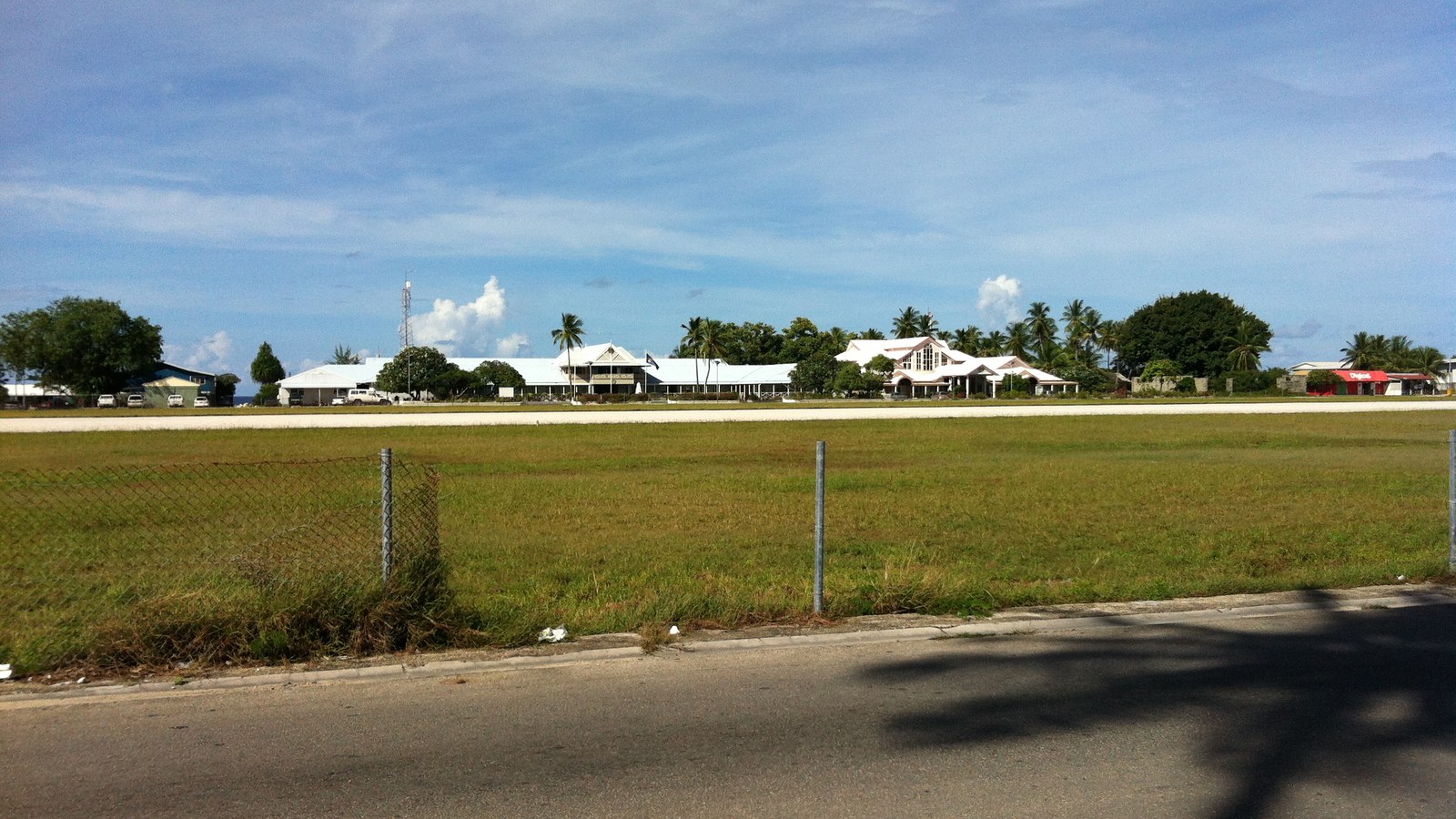
Cover: the Parliament and courthouse in Yaren, on the island of signature — the photograph is of the buildings, not the table. Wikimedia Commons, free licence.
For context: Nauru Agreement. The text: Nauru Agreement Concerning Cooperation in the Management of Fisheries of Common Interest.











0 Comments
No comments on this article yet. Be the first!