


On 18 December 2002, the United Nations General Assembly, at its fifty-seventh session, adopted by resolution 57/199 the Optional Protocol to the Convention against Torture and Other Cruel, Inhuman or Degrading Treatment or Punishment. It was not signed that day. Article 27: it is open for signature by any State that has signed the 1984 Convention; the UNTC records the opening on 4 February 2003, at United Nations Headquarters in New York. Depositary: the Secretary-General. The Arabic, Chinese, English, French, Russian and Spanish texts are equally authentic (Article 37).
The objective, Article 1, is a system of regular visits undertaken by independent international and national bodies to places where people are deprived of their liberty, in order to prevent torture and the prohibited treatment. This is not a handbook of detention and does not describe methods. Article 2: a Subcommittee on Prevention, within the Committee against Torture, guided by the Charter and by the principles of confidentiality, impartiality, non-selectivity, universality and objectivity. Article 3: each State Party shall set up, designate or maintain one or several national preventive mechanisms. Article 4: places under its jurisdiction and control where persons are or may be deprived of their liberty by virtue of an order of a public authority or at its instigation or with its consent or acquiescence; deprivation of liberty includes placement in a public or private custodial setting which that person is not permitted to leave at will.
Article 5: ten members of the Subcommittee, twenty-five after the fiftieth ratification or accession; persons of proven professional experience, serving in their individual capacity, independent. Article 11: the mandate includes visits, advice to national preventive mechanisms and cooperation with United Nations bodies. Article 16: recommendations and observations communicated confidentially to the State Party; a public annual report to the Committee against Torture; no personal data shall be published without the express consent of the person concerned. Article 17: the national preventive mechanism at the latest one year after entry into force of the Protocol or of ratification or accession. Article 18: functional independence and resources. Article 19: regular examination of treatment, recommendations, and observations on legislation.
Article 24: upon ratification, a declaration may postpone Part III or Part IV for a maximum of three years, with a possible further two years after consultation with the Subcommittee. Article 28(1): the Protocol enters into force on the thirtieth day after deposit of the twentieth instrument of ratification or accession. Entry into force: 22 June 2006. Article 30: no reservations. Article 31: it shall not affect regional conventions instituting a system of visits. Article 32: it shall not affect the Geneva Conventions of 1949 and the 1977 Protocols, nor the opportunity to authorize the ICRC. Article 33: denunciation takes effect one year after notification.
The parent Convention remains that of 10 December 1984. The 1987 European Convention for the Prevention of Torture is a separate regional instrument, recalled in the preamble as a model, not as the text of this Protocol.
The Wikipedia infobox that gives it as signed on the day of adoption is false against Article 27 and the UNTC note.
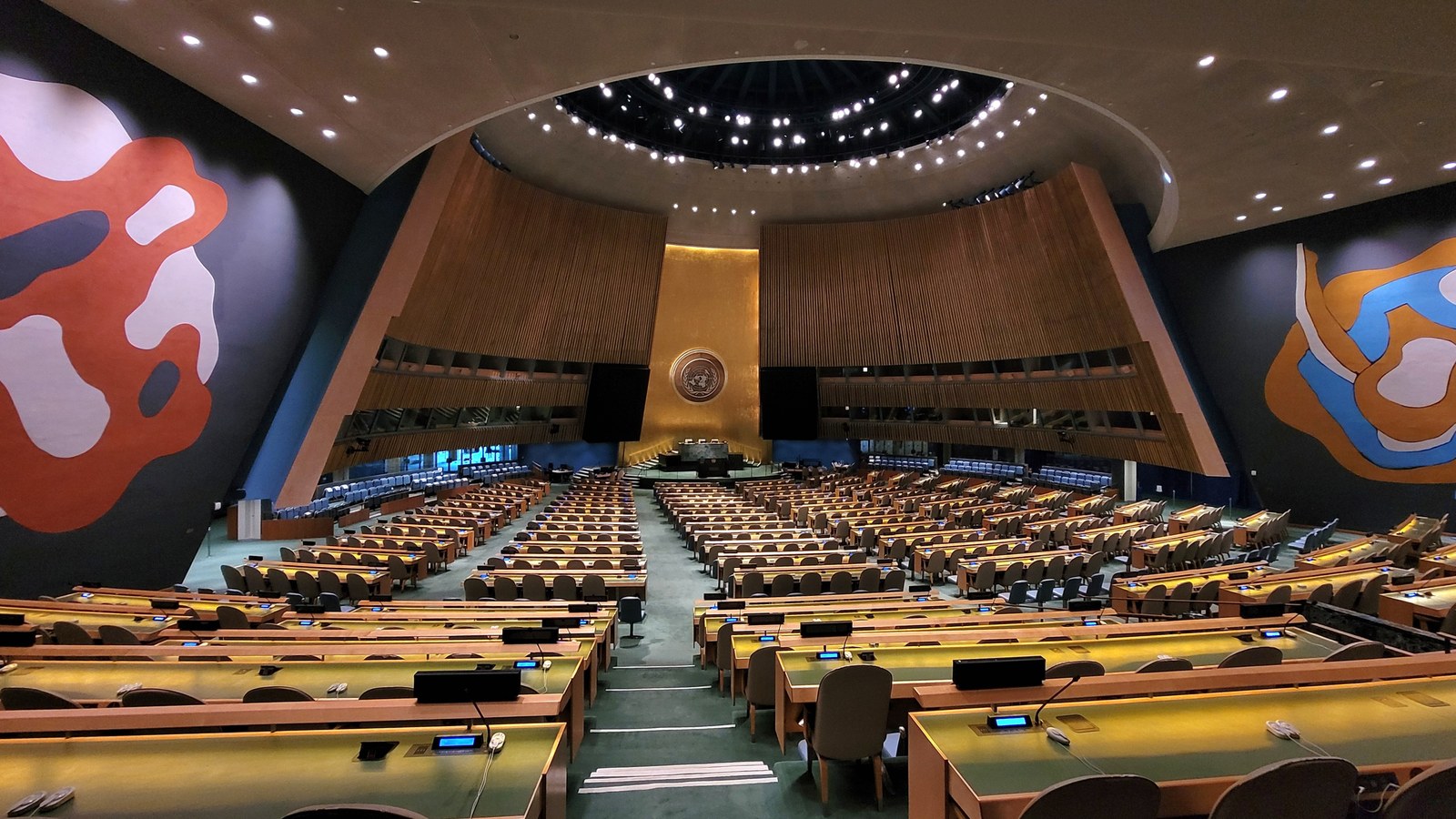
The General Assembly Hall, United Nations Headquarters, New York, the place of adoption, not a signing ceremony. Wikimedia Commons, free licence.
For context: Optional Protocol to the Convention Against Torture. The text: Optional Protocol to the Convention against Torture (OHCHR).











0 Comments
No comments on this article yet. Be the first!