


On 24 October 1956, in a villa on rue Emanuel Girot in Sèvres, near Paris, David Ben-Gurion, the Israeli prime minister, Christian Pineau, the French foreign minister, and Patrick Dean, an assistant under-secretary at the Foreign Office, signed in French, in three copies, the Protocol of Sèvres. Selwyn Lloyd had attended on 22 October; on the 23rd Pineau went to London to see Anthony Eden. It is not the 1920 Treaty of Sèvres, which partitioned the Ottoman Empire.
The text has no preamble. The first line says only that these are the results of the conversations held at Sèvres from 22 to 24 October between representatives of the United Kingdom, the State of Israel and France. The plan, put forward by General Maurice Challe on 14 October, used an Israeli attack in Sinai as the pretext for an Anglo-French intervention on the Suez Canal after Gamal Abdel Nasser’s nationalisation of the Canal Company on 26 July. The overthrow of Nasser is not written into the seven articles; it sits in the talks around the table.
Article 1: Israeli forces launch, on the evening of 29 October, a large-scale attack on Egyptian forces, aiming to reach the Canal Zone the following day. Article 2: on 30 October London and Paris simultaneously address two “appeals”. Egypt is told to halt hostilities, withdraw its troops ten miles from the Canal and accept temporary occupation of key positions by Anglo-French forces. Israel is told only to halt fire and withdraw ten miles east of the Canal. If either government does not consent within twelve hours, Anglo-French forces intervene.
Point C of Article 2 provides that Israel is not required to meet the appeal if Egypt rejects it. Article 3: if Cairo does not agree in time, Anglo-French operations against Egyptian forces begin in the early hours of 31 October. No military action against Israel, already a signatory, is envisaged.
Article 4: Israel will send forces to occupy the western shore of the Gulf of Aqaba and the islands of Tiran and Sanafir, to secure navigation. London and Paris did not undertake to support the occupation, nor did they oppose it. Article 5: Israel undertakes not to attack Jordan during the operations against Egypt; if Jordan attacks Israel, the British government undertakes not to come to Amman’s aid, that is, not to apply the Anglo-Jordanian treaty.
Article 6 requires the arrangements to remain strictly secret. Article 7 brings the protocol into force after the agreement of the three governments. Guy Mollet confirmed France on 25 October; Ben-Gurion confirmed Israel on 26 October. Eden wrote to Mollet that Her Majesty’s Government would take the action described, without naming the protocol, and ordered the copies destroyed; Pineau refused, and the Israeli copy had already left. An annex signed by Maurice Bourgès-Maunoury promised a squadron of Mystère IV As and two French ships in Israel from 29 to 31 October; it is not one of the seven articles.
On 29 October Israel attacked Sinai, on the Article 1 timetable. The appeals and the Anglo-French landing followed Articles 2–3. Talks at Sèvres about a reactor in the Negev are not in the protocol.
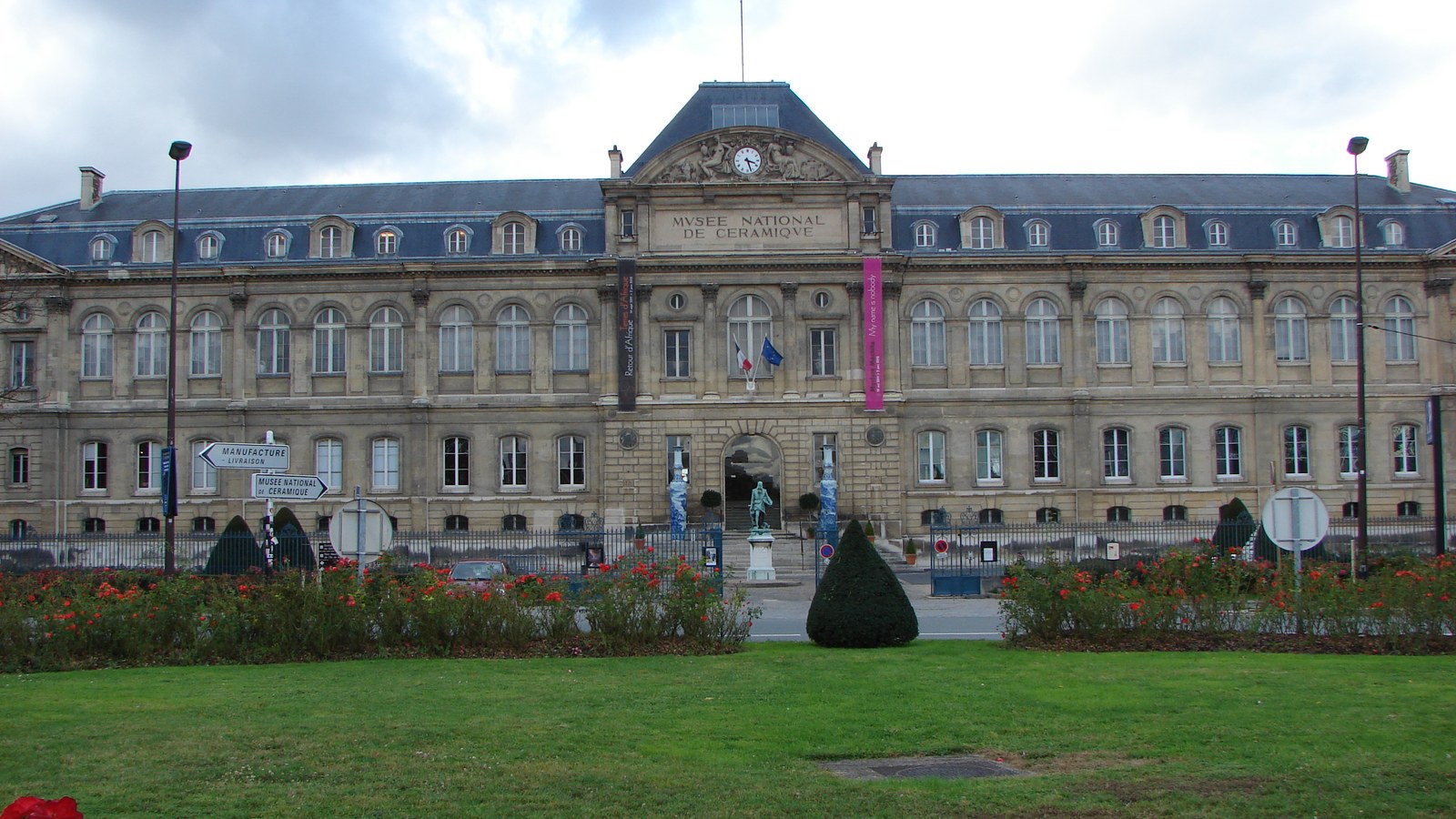
Image: Manufacture nationale de Sèvres, landmark of the commune, not the villa on rue Emanuel Girot; Copyleft, 2011; CC BY-SA 3.0, Wikimedia Commons. Cropped to 16:9.
Source consulted: Protocol of Sèvres. Treaty text: Protocol of Sèvres, 24 October 1956 (text in Avi Shlaim, International Affairs).










0 Comments
No comments on this article yet. Be the first!