


In Moscow, on 7 April 1934, the Soviet Union and Finland extend the Soviet–Finnish Non-Aggression Pact to 31 December 1945. The signatories are Finnish Foreign Minister Aarno Yrjö-Koskinen and Maxim Litvinov. The original pact had been signed in Helsinki on 21/22 January 1932 (Maisky and Yrjö-Koskinen) and ratified by Finland’s parliament in July 1932.
Both parties undertake to respect each other’s borders, stay neutral in each other’s conflicts and settle disputes peacefully. The ten-year extension is proposed by Moscow in spring 1934; Finland, Estonia, Latvia and Lithuania are asked for a joint reply — Finland signs last.
The context is securing Soviet borders during Japan’s invasion of Manchuria. Talks with Finland start last but finish first among European neighbours.
The USSR unilaterally renounces the pact on 28 November 1939, two days before invading, citing the false Mainila shelling. Finland calls for the joint commission under Article 5; Moscow refuses.
The 1932 text and the 1934 extension belong to the series of non-aggression pacts Moscow signed with its European neighbours in the 1930s.
The extension of 7 April 1934 remains the act that set the pact’s validity to 1945 — broken early by the Winter War.
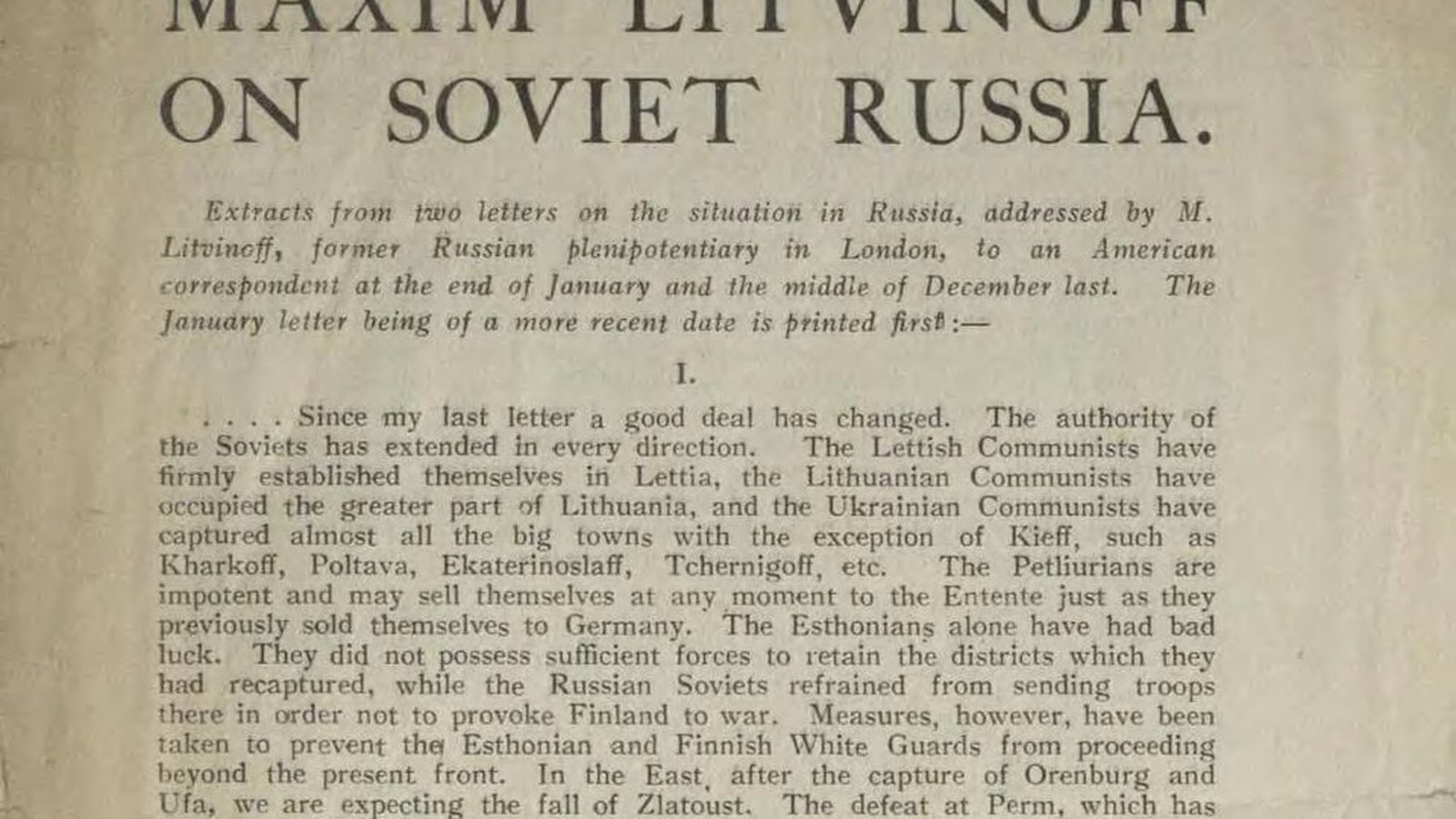
Image: Litvinov / period; Wikimedia Commons. Cropped to 16:9.
Source consulted: Soviet–Finnish Non-Aggression Pact. Treaty text: The Soviet decision for war against Finland (Soviet Studies / Vihavainen).











0 Comments
No comments on this article yet. Be the first!