


On 9 February 1920, at Paris, the Treaty concerning the Archipelago of Spitsbergen, including Bear Island, is signed. Authentic texts: French and English. One copy for the King of Norway, one in the archives of the French Republic. Among the signatories: Alexandre Millerand, Baron Wedel Jarlsberg, Hugh Campbell Wallace, the Earl of Derby. Original parties: the United States, the British Empire (with the overseas dominions), Denmark, France, Italy, Japan, the Netherlands, Norway, Sweden. Depositary: the French Government. Registration in LNTS, volume 2. Japan, last of the original signatories, ratifies on 2 April 1925. The treaty, with the mining regulations, takes effect from 14 August 1925.
The preamble: recognition of Norway’s sovereignty over the archipelago, an equitable regime, development and peaceful utilisation. Article 1: the parties undertake to recognise, subject to the stipulations of the treaty, the full and absolute sovereignty of Norway over all the islands between 10° and 35° longitude east of Greenwich and 74° and 81° latitude north, especially West Spitsbergen, North-East Land, Barents Island, Edge Island, the Wiche Islands, Hope Island and Prince Charles Foreland, with all islands and rocks appertaining thereto, plus Bear Island. The map is annexed.
Article 2: ships and nationals of all the parties enjoy equally the rights of fishing and hunting in the territories specified in Article 1 and in their territorial waters. Norway may take measures to preserve the fauna and flora, always applied equally, without exemption or favour. Occupiers of land recognised under Articles 6 and 7 hunt exclusively near their habitations and within a radius of 10 kilometres from the headquarters of their works, subject to Norwegian regulations. Article 3: equal liberty of access to the waters, fjords and ports; maritime, industrial, mining and commercial operations on a footing of absolute equality; no monopoly. Ships of the parties going to or coming from the archipelago may put into Norwegian ports. Most-favoured-nation treatment; Norwegian nationals, ships and goods not treated more favourably. No export charge more onerous to one party than to another.
Article 4: public wireless telegraphy stations open on a footing of absolute equality to ships of all flags. Owners of landed property may establish stations for their own purposes, including ships and aircraft, subject to obligations arising out of a state of war. Article 5: the utility of an international meteorological station, by a later convention; likewise scientific investigations. Article 6: acquired rights; claims from taking possession or occupation before signature, in accordance with the Annex. Article 7: methods of acquisition and mineral rights on a basis of complete equality; expropriation only on grounds of public utility and on payment of proper compensation.
Article 8: mining regulations which exclude privileges, monopolies or favours for the State or for the nationals of any one party, including Norway, and which guarantee remuneration and protection for the paid staff. Taxes, dues and duties shall be devoted exclusively to the said territories and shall not exceed what is required. On the exportation of minerals, an export duty not exceeding 1 per cent of the maximum value up to 100,000 tons, and beyond that quantity proportionately diminished; the value fixed at the end of the navigation season by the average free-on-board price. The draft regulations, three months before they come into force, to the other Powers; objections to a commission of one representative of each, majority, three months. Article 9: subject to the rights and duties resulting from Norway’s admission to the League of Nations, Norway undertakes not to create nor to allow any naval base and not to construct any fortification; the territories may never be used for warlike purposes.
Article 10: until recognition of a Russian Government, Russian nationals and companies enjoy the same rights; their claims through the Danish Government. Ratifications deposited at Paris. Powers whose seat of government is outside Europe may notify ratification through their diplomatic representative at Paris. Article 8 from the date of ratification by all the signatory Powers; the rest on the same date as the mining regulations. Third Powers invited by France to adhere. The Annex: a Danish commissioner, a judge or jurisconsult, examines land claims; a map of not less than 1/1,000,000; one penny per acre; an arbitral tribunal at Copenhagen, English the language, where the commissioner does not recognise a claim at once.
In 1925 Norway renames the archipelago Svalbard and makes it part of the kingdom. Romania accedes on 10 July 1925. The Soviet Union, on 7 May 1935; Russia continues mining at Barentsburg. The dispute after 1977: whether the equality in Articles 2 and 3 stops at the territorial waters or covers the 200-mile zone as well.
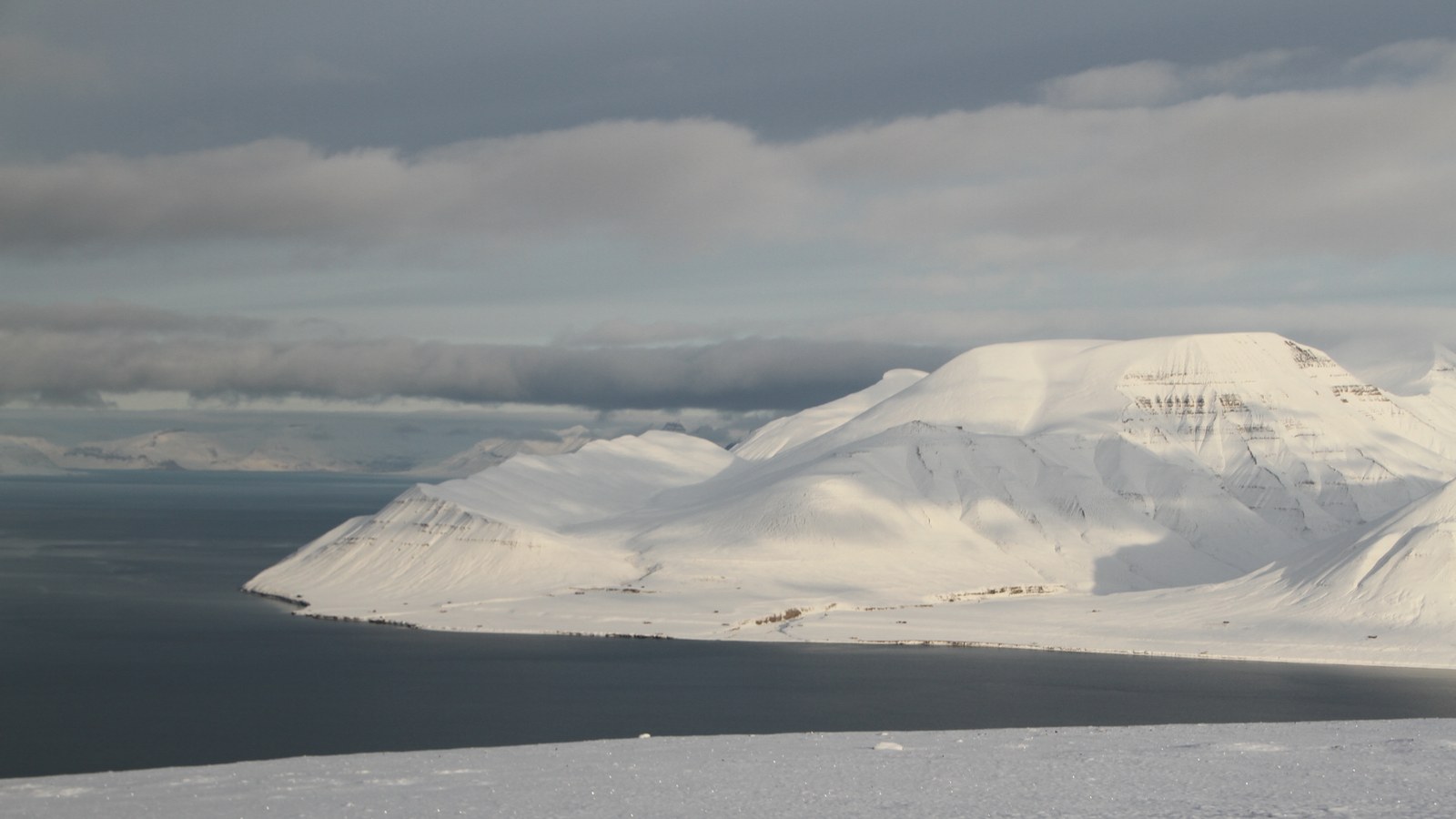
Image: Bjoertvedt, Adventfjorden from Platåberget, Longyearbyen, Spitsbergen, 27 September 2012, CC BY-SA 3.0, Wikimedia Commons. Cropped to 16:9. Not the treaty signing.
Source consulted: Svalbard Treaty. Treaty text: Treaty concerning the Archipelago of Spitsbergen, Paris, 9 February 1920 (LNTS vol. 2).










0 Comments
No comments on this article yet. Be the first!