


On 9 December 1999, in New York, the UN General Assembly adopted the International Convention for the Suppression of the Financing of Terrorism, by resolution 54/109, at the 76th plenary meeting. The text is annexed to the resolution. The Secretary-General is requested to open it for signature at United Nations Headquarters from 10 January 2000 to 31 December 2001 (Article 25). It is not a treaty signed in a bloc on the day of adoption. Six authentic texts: Arabic, Chinese, English, French, Russian and Spanish; the original is deposited with the Secretary-General (Article 28). Entry into force: the thirtieth day after the deposit of the twenty-second instrument of ratification, acceptance, approval or accession (Article 26). The date of force: 10 April 2002. Registration ex officio: UNTS I-38349, volume 2178. Denunciation: one year after notification (Article 27).
The preamble: the UN Charter, peace and security; concern at the worldwide escalation of acts of terrorism; resolutions 49/60 (9 December 1994), 51/210 (17 December 1996), 52/165 and 53/108; the Ad Hoc Committee established by 51/210 was to elaborate a draft to supplement existing instruments. Financing is a matter of grave concern; existing multilateral legal instruments do not expressly address it. Article 1: “funds” means assets of every kind, tangible or intangible, movable or immovable, and legal documents or instruments in any form, including electronic or digital, evidencing title to or interest in such assets; “State or governmental facility”; “proceeds” means any funds derived from or obtained, directly or indirectly, through an offence set forth in Article 2.
Article 2(1): a person commits an offence if that person by any means, directly or indirectly, unlawfully and wilfully, provides or collects funds with the intention that they should be used or in the knowledge that they are to be used, in full or in part, in order to carry out: (a) an act which constitutes an offence within the scope of and as defined in one of the treaties listed in the annex; or (b) any other act intended to cause death or serious bodily injury to a civilian, or to any other person not taking an active part in the hostilities in a situation of armed conflict, when the purpose of such act, by its nature or context, is to intimidate a population, or to compel a government or an international organization to do or to abstain from doing any act. It is not necessary that the funds were actually used (Article 2(3)). Attempt, participation as an accomplice, organizing or directing others, and contribution by a group acting with a common purpose are offences (Article 2(4)–(5)). The annex lists treaties already in force (The Hague 1970, Montreal 1971, internationally protected persons 1973, hostages 1979, nuclear material 1980 and others). Article 3: the Convention shall not apply where the offence is committed within a single State, the alleged offender is a national of that State and is present in its territory, and no other State has a basis under Article 7 to exercise jurisdiction, except that Articles 12 to 18 shall, as appropriate, apply.
Article 4: establish the offences under domestic law, with penalties that take into account their grave nature. Article 5: liability of legal entities, criminal, civil or administrative, without prejudice to the criminal liability of individuals. Article 6: criminal acts within the scope of the Convention are under no circumstances justifiable by considerations of a political, philosophical, ideological, racial, ethnic, religious or other similar nature. Article 7: mandatory jurisdiction in the territory, on board a vessel or aircraft, and by nationality; optional jurisdiction in other cases; aut dedere aut judicare if the alleged offender is present and is not extradited. Article 8: identification, detection, freezing or seizure and forfeiture of funds and proceeds, without prejudice to the rights of third parties acting in good faith; States may consider compensating victims. Article 10: if a State does not extradite, it shall submit the case to its competent authorities without exception whatsoever. Article 12(2): a request for mutual legal assistance may not be refused on the ground of bank secrecy. Articles 13 and 14: the offences shall not be regarded as fiscal or as political for extradition or mutual legal assistance. Article 15: no obligation if the request has been made for the purpose of prosecuting or punishing a person on account of race, religion, nationality, ethnic origin or political opinion. Article 17: fair treatment, including applicable international human rights law.
Article 18: cooperation in prevention, including identification of customers of financial institutions, keeping records for at least five years and reporting unusual transactions; exchange of information, including through Interpol. Article 20: sovereign equality, territorial integrity and non-intervention. Article 21: nothing affects the Charter, international humanitarian law and other relevant conventions. Article 24: disputes, negotiation, then arbitration; if within six months the parties cannot agree on the organization of the arbitration, the International Court of Justice; a reservation to that point is permitted. This is not an operational financing guide; it is a treaty of criminalization, extradition and assistance.
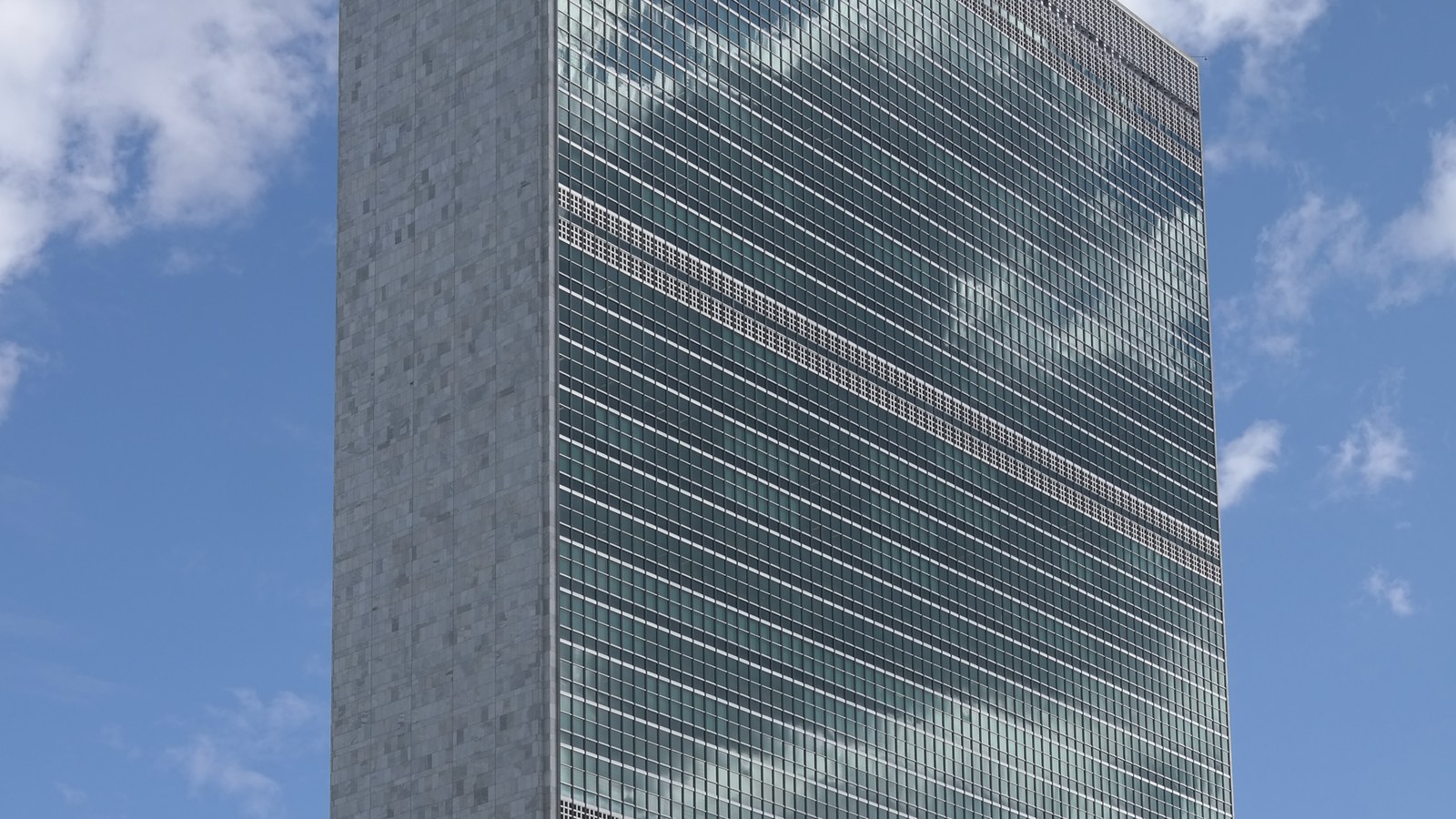
The United Nations Secretariat Building, New York, the place of adoption and of the later opening for signature. The city, not the signing room. Wikimedia Commons, free licence.
For context: Terrorist Financing Convention. The text: UN, International Convention for the Suppression of the Financing of Terrorism.











0 Comments
No comments on this article yet. Be the first!