


On 29 March 1632, at Saint-Germain-en-Laye, Louis XIII, King of France, and Charles I, King of England, conclude the treaty for the restitution of New France, Acadia and Canada, and of the ships and merchandise taken on either side. On the Most Christian side, the power is that of de Bullion, counsellor in the councils of state and privy, and of Bouthillier, counsellor and secretary of the king’s commands. On the British side, Isaac Wake, knight and ambassador. The same day a separate treaty restores commerce; that is not this one.
Article I: Lumague or Vanelly give surety, in the king’s name and in their own, immediately after signature, to pay within two months, in Paris, to Wake or whom he shall appoint, 64,246 livres 4 sous 3 deniers tournois for the goods of the ship Jacques and 69,896 livres 9 sous 2 deniers for the Benediction, at the king’s rate; within fifteen days the two ships, now at Dieppe, with cordage, cannon, munitions, rigging, gear and victuals found on arrival, shall be restored to the ambassador; anything missing, in ready money. Article II: as to the Bride or Espouse, the sums of the Calais sale — wines, goods, the hull, cannon, munitions — and the rest of the cargo at capture, on the footing of the last sale there; the same surety, the same term.
Article III: Wake, in the British king’s name, promises to restore all the places occupied in New France, Acadia and Canada by subjects of His Majesty of Great Britain, and to cause them to withdraw. Upon signature he delivers to the French commissioners the power of restitution and the orders to those who command at Port-Royal, the fort of Quebec and Cape Breton, that the places and fort be handed over, eight days after notice, to those the Most Christian King shall appoint; the eight days to remove their arms, baggage, merchandise, gold, silver, utensils and everything belonging to them. After those eight days, three weeks to go aboard their ships, with arms, munitions, baggage, furs and all their goods, and to withdraw to England, without remaining in the country. General de Caen shall pay for fitting out a ship of two hundred or two hundred and fifty tons, outward and return, according to the custom of England; for honest unsold merchandise remaining in English hands, satisfaction on the spot, at the cost in England plus thirty per cent, for sea risk and carriage.
Article IV: the places shall be restored in the same state as at the capture, without demolition of what then existed. Article V: the arms and munitions in Champlain’s deposition, with the merchandise and utensils found at Quebec at the capture, shall be restored, in kind or in value, according to the deposition, in the fort, to the French; anything short of each kind, Philippes Burlamachy shall pay to whom the Most Christian King shall order, excepting knives, beaver and the proceeds of debts taken by the English, for which satisfaction has already been given to General de Caen. Article VI: Burlamachy, for Great Britain and in his own name, shall pay de Caen, within two months, 82,700 livres tournois for all the peltries, knives, debts of the Indians and other goods of his found in the fort of Quebec in 1629. Article VII: the barque Hélène, rigging, cannon, munitions, according to the memorial proved before the English Council, shall be restored in England.
Article VIII: in the habitation of Quebec, de Caen shall have back the casks of biscuit, barrels of pitch, prunes, raisins, flour and other trade goods and victuals that were in the barque at the capture in 1629, together with his goods unloaded and left the previous year at Quebec, on the river Saint Lawrence. Article IX: Burlamachy shall pay in Paris, in the same term, 1,602 livres tournois for the ships Gabriel of Saint-Gilles, Sainte-Anne of Le Havre, Trinité of Les Sables-d’Olonne, Saint-Laurent of Saint-Malo and Cap du Ciel of Calais, according to the English Admiralty inventories; likewise for the advice-boat of Captain Bontemps’s associates, as sold or valued; likewise for the vessel given by Bontemps to the English who recrossed. Article X: from the sums to be restored shall be deducted entry duties, the keeping of the goods, repairs of the ships, and namely 1,200 livres for de Caen’s entry duties and 1,200 livres for the victuals supplied to the French on their return in 1629.
Article XI: if at the taking of the ships anything listed in the inventories was taken but omitted from the sale or valuation records, or anything not in the inventories, the interested parties may proceed by the ordinary ways of justice against those proved guilty, jointly and severally, the solvent for the insolvent; without seeking redress by reprisals or letters of marque, by sea or by land. For the execution of the foregoing, all necessary letters and decrees shall be issued on both sides within fifteen days.
The text, after Dumont, Corps universel, volume 6, and the Mercure François, volume XVIII. This is not the Treaty of Susa of 24 April 1629, which had closed the Anglo-French war before the Kirke brothers took Quebec, on 19 July 1629. It is not the Treaty of Saint-Germain of 1919, with Austria.
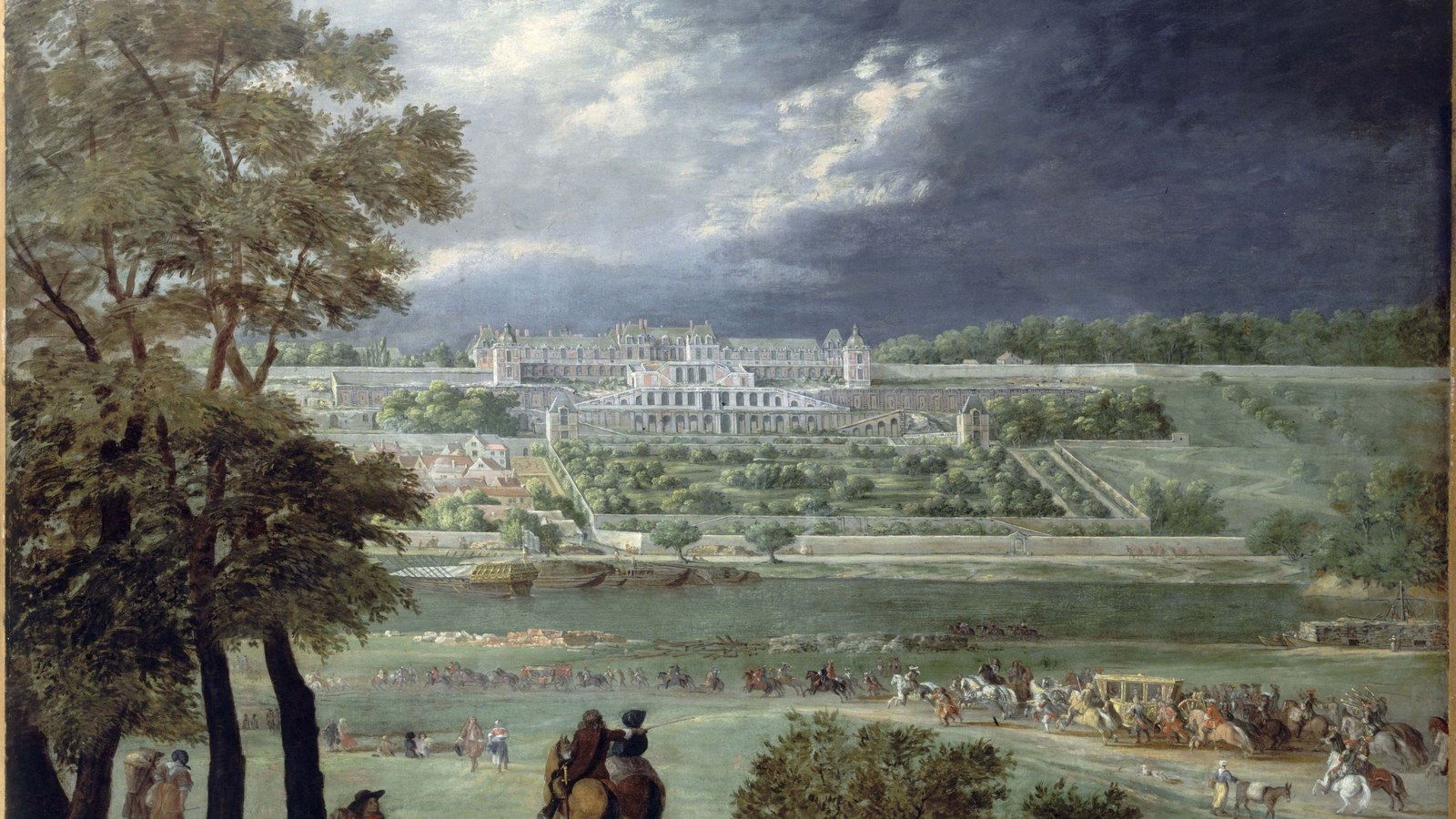
Image: Adam Frans van der Meulen, New Château at Saint-Germain-en-Laye, 1664–1665, public domain, Musée Carnavalet / Wikimedia Commons. Cropped to 16:9.
Source consulted: Treaty of Saint-Germain-en-Laye (1632). Treaty text: Digithèque MJP: Treaty of Saint-Germain, 29 March 1632 (Dumont / Mercure François).











0 Comments
No comments on this article yet. Be the first!