


On 14 December 1960 the General Conference of the United Nations Educational, Scientific and Cultural Organization, meeting in Paris at its eleventh session (14 November–15 December), adopts the Convention against Discrimination in Education. The depositary is the Director-General of UNESCO. The authentic texts are English, French, Russian and Spanish. The same session also adopts a recommendation to Member States.
Article 1 defines discrimination as any distinction, exclusion, limitation or preference based on race, colour, sex, language, religion, political or other opinion, national or social origin, economic condition or birth, which has the purpose or effect of nullifying or impairing equality of treatment in education. In particular: depriving a person or group of access to education of any type or at any level; limiting them to education of an inferior standard; establishing or maintaining separate systems or institutions, subject to Article 2; inflicting conditions incompatible with human dignity. “Education” covers all types and levels, access, standard and quality, and the conditions under which it is given.
Article 2, where a state permits them, treats three situations as not constituting discrimination. Separate systems for the two sexes, if they offer equivalent access, teaching staff of the same standard, premises and equipment of the same quality, and the same or equivalent courses. Separate systems on religious or linguistic grounds, if they match the wishes of parents or guardians, attendance is optional and the education meets standards laid down by the competent authorities. Private institutions, if their object is not to exclude any group but to add facilities to those of the public authorities, and if they conform to those standards.
Article 3 requires states parties to abrogate any statutory provisions and administrative instructions that involve discrimination, to ensure, by legislation where necessary, that admission is free of discrimination, not to allow differences of treatment among nationals in fees, scholarships and permits for study abroad except on merit or need, not to allow public assistance to institutions to turn on the group to which pupils belong, and to give foreign nationals resident in the territory the same access to education as their own nationals.
Article 4 requires a national policy for equality of opportunity: make primary education free and compulsory; make secondary education in its different forms generally available and accessible; make higher education equally accessible on the basis of individual capacity; assure compliance with the legal duty to attend school. Equivalent standards in all public institutions of the same level. Education for persons who have not received or completed primary schooling. Training for the teaching profession without discrimination.
Article 5 directs education to the full development of the human personality, respect for human rights, understanding among nations and the maintenance of peace. Parents may choose institutions other than those maintained by the public authorities, provided they meet minimum standards, and religious or moral education in conformity with their convictions; no person is to be compelled to receive religious instruction inconsistent with those convictions. Members of national minorities may carry on their own educational activities, including schools and, depending on national policy, the use or teaching of their own language, subject to three limits: the right must not prevent participation in the culture of the community as a whole or prejudice national sovereignty; the standard must not be lower than the general standard; attendance must be optional. Article 9 permits no reservation.
The Convention enters into force on 22 May 1962, three months after the third instrument of ratification, acceptance or accession: France (11 September 1961), Israel (22 September 1961), the Central African Republic (22 February 1962). Registration with the United Nations: 29 May 1962, No. 6193, United Nations Treaty Series, vol. 429. Romania deposits its ratification on 9 July 1964 (Decree 149/1964); for Bucharest it takes effect on 9 October 1964. The Protocol Instituting a Conciliation and Good Offices Commission is adopted on 10 December 1962. States parties report periodically to the General Conference. Disputes not settled by negotiation may, at the request of the parties, go to the International Court of Justice. More than a hundred states are parties.
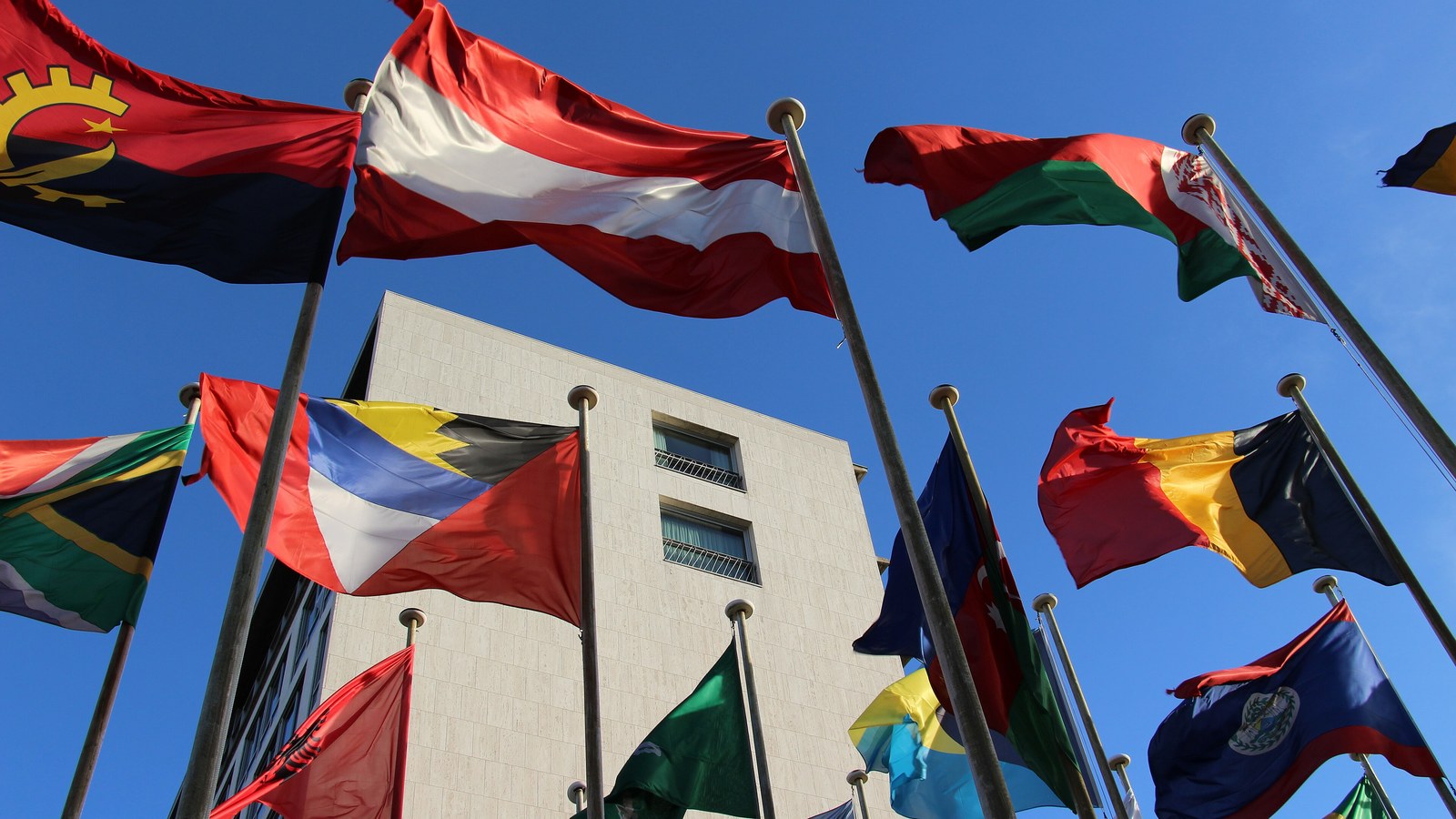
Image: Fred Romero, UNESCO headquarters, Place de Fontenoy, Paris, 9 November 2015, CC BY 2.0, Wikimedia Commons. Cropped to 16:9.
Source consulted: Convention against Discrimination in Education. Treaty text: Convention against Discrimination in Education (UNESCO Legal Affairs).











0 Comments
No comments on this article yet. Be the first!