


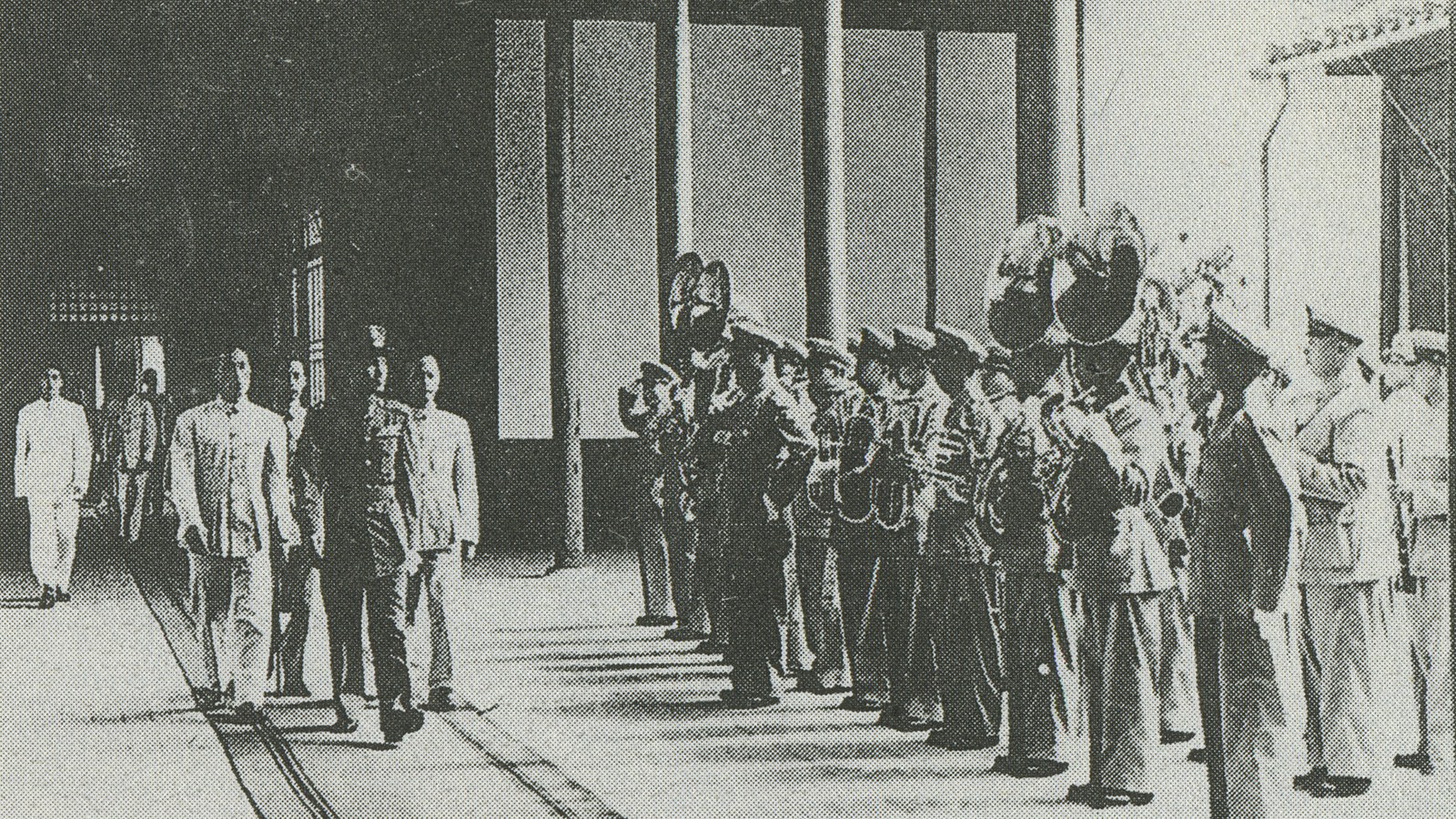
On 4 November 1946, at Nanking, the plenipotentiaries of the Republic of China — Wang Shih-chieh, Minister for Foreign Affairs, and Wang Hua-cheng, Director of the Treaty Department — and of the United States — J. Leighton Stuart, Ambassador Extraordinary, and Robert Lacy Smyth, Consul General at Tientsin — signed the Treaty of Friendship, Commerce and Navigation. Two copies, Chinese and English, equally authentic. The Chinese date is the fourth day of the eleventh month of the thirty-fifth year of the Republic. It is not the Treaty of Wanghia of 1844, not the Treaty of 11 January 1943 for the Relinquishment of Extraterritorial Rights, and not an act of the People’s Republic.
Article I: constant peace and firm and lasting friendship; duly accredited diplomats, on a basis of reciprocity, with the immunities of generally recognized international law. Article II: nationals of either Party may enter, reside, travel and carry on trade throughout the other’s territories, without travel documents other than valid passports or official identification; commercial, manufacturing, scientific, educational, religious and philanthropic activities, and every profession not reserved exclusively to the host’s nationals; treatment no less favorable than that accorded to any third country. Immigration statutes remain, but may not put bilateral traders on terms less favorable than those given a third country; section 3 of the United States Immigration Act of 5 February 1917, delimiting geographic zones, shall not be construed as preventing admission of Chinese persons and persons of Chinese descent.
Articles III–V: juridical status of corporations and associations, branches, national treatment within host law and MFN vis-à-vis third countries; organization and participation, including mining on public lands only to the extent of reciprocity; if either Party later accords mineral-exploration and exploitation rights to a third country, it shall accord them to the other. Article VI: protection of persons and property, prompt trial, just and effective compensation for taking, access to courts, full faith and credit for written arbitration. Article VIII: immovable property under host law and MFN, except where a United States state, territory or possession does not grant Chinese nationals the same terms; Article IV of the 1943 treaty is not modified.
Article IX: inventions, trademarks, trade names, literary and artistic works. Article XII: liberty of conscience, worship and schools, cemeteries. Article XIV: exemption from compulsory military or naval service under the other’s jurisdiction, save when both Parties are concurrently in hostilities against the same third country. In the Bevans text the treaty applies to all areas under either Party’s sovereignty except the Panama Canal Zone; disputes not settled by diplomacy go to the International Court of Justice or other peaceful means. It supersedes, so far as still in force, Wanghia, Tientsin, Burlingame and the other listed instruments, but does not affect the 1943 treaty.
Article XXX: the treaty enters into force on the day ratifications are exchanged, for five years, then year by year unless one year’s notice is given. China ratified on 11 November 1946. The United States Senate gave advice and consent, with a reservation and understandings, on 2 June 1948; the President ratified on 8 November 1948. Ratifications were exchanged at Nanking on 30 November 1948; force from that day. UN registration No. 359, UNTS vol. 25, p. 69; TIAS 1871; 63 Stat. 1299.
A protocol of the same day accompanies the treaty. The notes of 29 November 1948 are later. This is not Washington’s 1979 recognition of the People’s Republic.
Nanking, 1946. Wikimedia Commons, public domain. Not confirmed as the signing room.
For context: Treaty of Friendship, Commerce and Navigation between the United States of America and the Republic of China. The text: UNTS vol. 25, p. 69.











0 Comments
No comments on this article yet. Be the first!