
The World Health Organization and the Government of Japan brought representatives of seven countries in the WHO Western Pacific Region to Tokyo to discuss two tools that need to work together: choosing the right diagnostic test and using antimicrobial medicines responsibly. The joint news release of 16 September 2026 describes a three-day workshop, not the launch of a new antibiotic and not a solution to antimicrobial resistance.
Delegates came from Cambodia, Indonesia, Japan, the Lao People’s Democratic Republic, Malaysia, the Philippines and Viet Nam. The workshop was convened by the AMR Clinical Reference Center at the Japan Institute for Health Security, a WHO collaborating centre, and co-hosted by the WHO Regional Office for the Western Pacific. The focus was clinical diagnostic stewardship and antimicrobial stewardship: the right test, for the right patient, at the right time, followed by correct interpretation and treatment choice.
WHO defines antimicrobial resistance as the situation in which bacteria, viruses, fungi or parasites no longer respond to the medicines meant to stop them. Antibiotics are the best-known example, but they do not exhaust the problem. An antimicrobial may target other classes of microorganism; reducing AMR to “antibiotic resistance” alone narrows the discussion.
For clinicians the issue is practical. Without an appropriate test, treatment can be delayed, too broad or simply wrong. Prescribing antibiotics when they are not needed adds selection pressure on bacteria. The message is not to refuse antibiotics: they remain essential when clinically indicated. The concern is unnecessary or inappropriate use.
In June 2026 WHO Western Pacific published a practical manual on strengthening clinical diagnostic stewardship in the region. The 47-page document is intended as a capacity-building resource, especially in lower-resource settings, and links diagnosis to antimicrobial use and infection prevention. The Tokyo workshop built on that framework rather than replacing it.
Each participating country set priority actions suited to its own context, at national, hospital and primary-care levels. WHO outlined the technical support it can provide to carry those plans forward. The release does not announce a treaty, nor a numerical target for an immediate cut in resistance.
Laboratories remain a fragile link. Clinicians cannot match treatment to a pathogen and its susceptibility if relevant tests, reliable results and trained staff are missing. Comparing experience among the seven countries is aimed at those obstacles, from access to diagnostics to feeding laboratory results into treatment decisions.
Antimicrobial resistance has for years been treated as a global public-health threat, though its impact differs between regions and health systems. The Tokyo initiative intervenes at the point where diagnosis and prescribing decisions are made. This article does not offer individual medical advice: treatment of an infection belongs with health professionals, based on each patient’s circumstances.
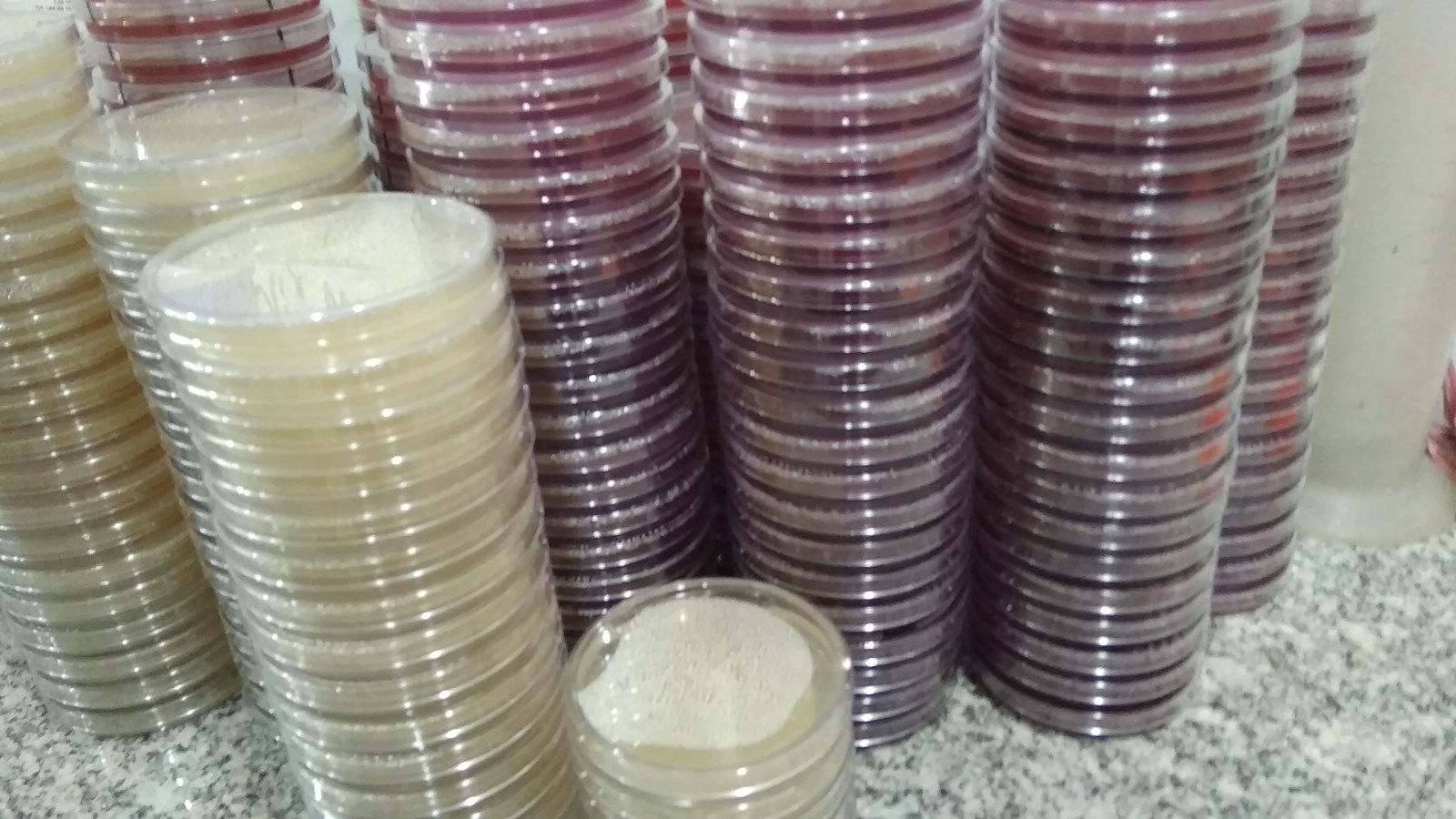
Photo: Ajay Kumar Chaurasiya, Wikimedia Commons, CC BY-SA 4.0. Mueller-Hinton and MacConkey agar plates. A laboratory photograph, not from the WHO/Japan Tokyo workshop. Cropped to 16:9.
Source consulted: Fighting antimicrobial resistance through better patient care (WHO Western Pacific); Strengthening clinical diagnostic stewardship in the Western Pacific Region: a practical manual.





0 Comments
No comments on this article yet. Be the first!