
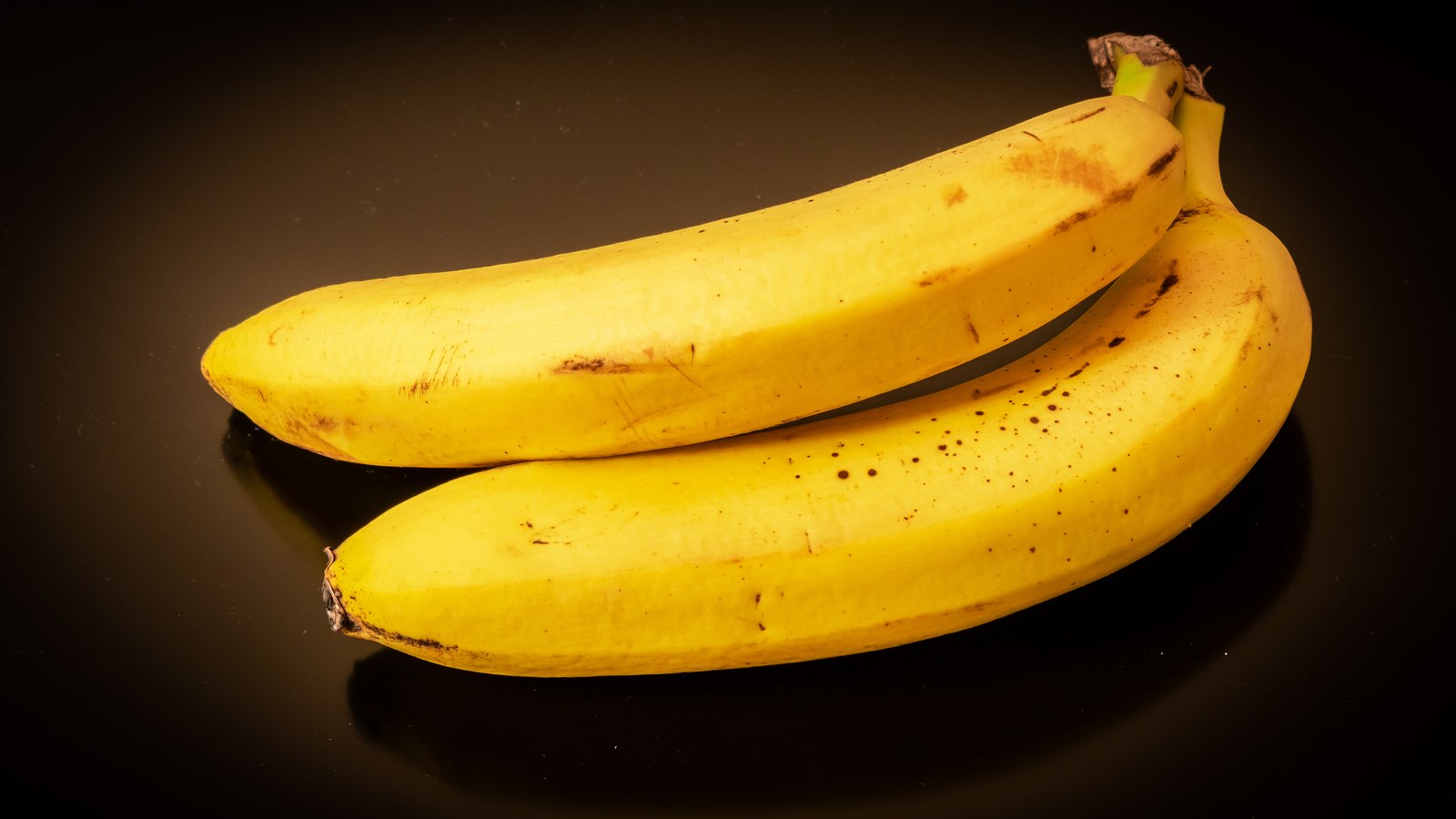
The banana is a climacteric fruit: it keeps ripening after harvest. Respiration rises for a time, and ethylene, a gaseous hormone, coordinates softening, the conversion of starch into sugars and the loss of green chlorophyll in the peel, which leaves yellow pigments visible.
When cell membranes break down — through ripening, bruising or cutting — enzymes such as polyphenol oxidase meet phenolic compounds and oxygen. Brown pigments form. A bruised patch darkens faster than the rest.
Apples, pears and avocados also release ethylene; kept beside bananas, they speed ripening. To slow it, separate the fruit in a cool, dry, ventilated place. Tight plastic traps moisture.
Once the flesh is where you want it, the refrigerator can slow changes inside. The peel may brown quickly in the cold while the interior often remains usable. Green bananas should not be chilled too early: cold can disrupt normal ripening.
Brown spots do not automatically mean spoilage. A very ripe banana works in a smoothie or in baking. A fermented smell, mould, leaking liquid or an abnormal texture are reasons to discard it.
The process can be slowed, not stopped. Ripening continues while living cells and ethylene remain.
Image: Krzysztof Golik, bananas. Wikimedia Commons, CC BY-SA 4.0. Cropped to 16:9. Licence. Original file.
Sources consulted: UC Davis — Banana: Recommendations for Maintaining Postharvest Quality; Encyclopaedia Britannica — Ethylene (plant hormone).










0 Comments
No comments on this article yet. Be the first!