
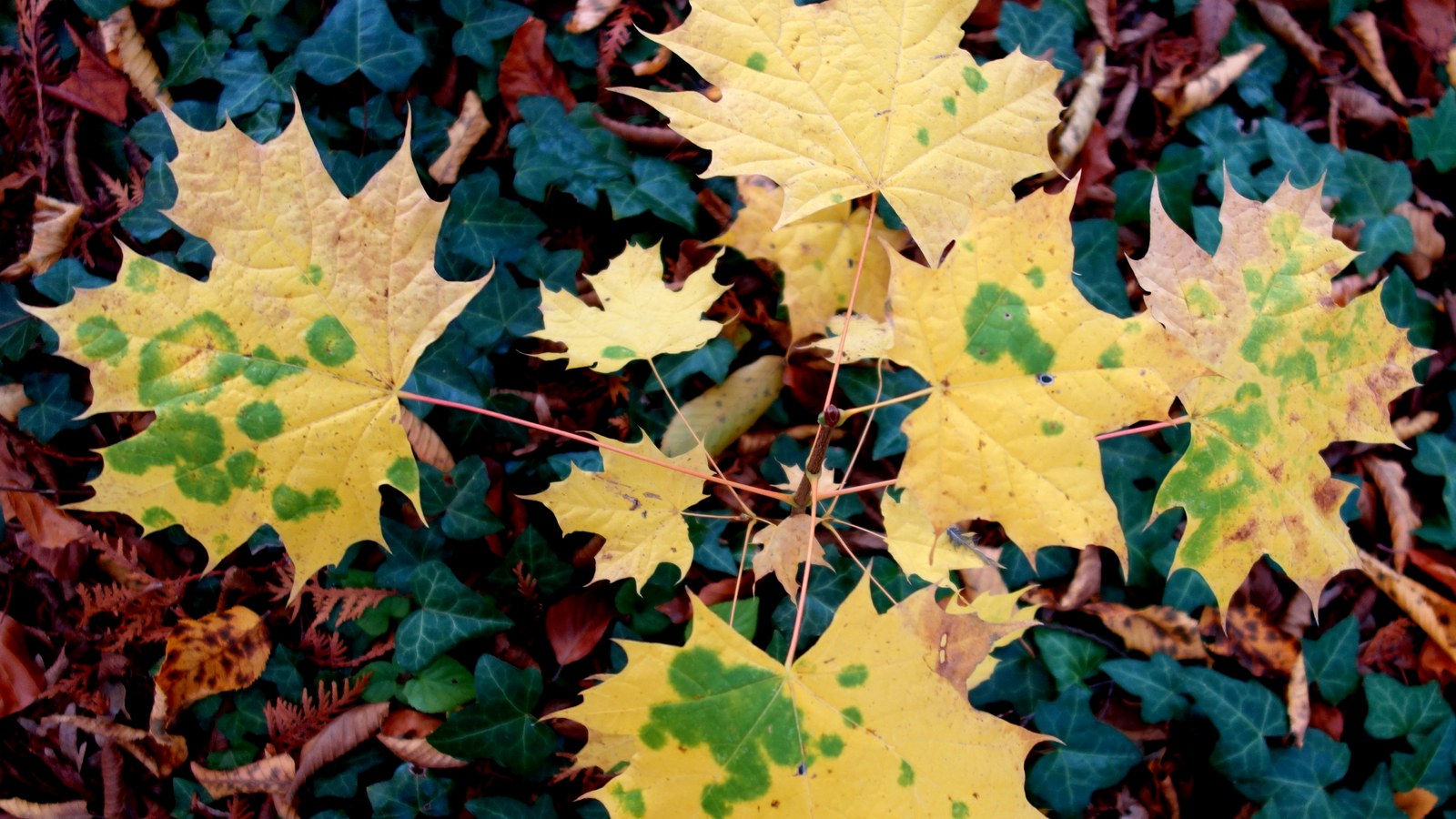
A leaf looks green in May through August because it holds chlorophyll, the pigment that captures light for photosynthesis. The molecule absorbs mainly red and blue; green is reflected, so that is the colour the eye sees.
Chlorophyll breaks down all the time. During the growing season a tree replaces it. As days shorten, temperate deciduous trees slow production. Nitrogen and other resources are withdrawn from the leaf, and the green fades.
Yellow and orange were already there. Carotenoids and xanthophylls help harvest light and protect the photosynthetic machinery, but in summer they are masked by more abundant chlorophyll. When that fades, the warm colours show.
Red and purple are not usually hidden all year. Many species make anthocyanins in autumn from sugars left in the leaf. Their exact roles are still studied; they may help protect tissue from light and stress. Maples, dogwoods and sumacs often owe their reds to these pigments.
Weather changes the display; it does not invent it. Sunny days and cool nights without a hard freeze can intensify red. Drought, wind or an early frost may speed leaf fall or mute the colours. Species differ: some stay yellow; oaks often turn brown.
A separation layer forms at the base of the leaf stalk. After useful substances are recovered, the leaf falls and the scar is sealed. Colour change is the visible stage of a conservation process, not an ornament detached from biology.
Conifers generally keep green needles in winter. This account describes temperate deciduous trees; timing and intensity vary by species and region.
Image: Mabit1, maple leaves in autumn. Wikimedia Commons, CC BY-SA 4.0. Cropped to 16:9. Licence. Original file.
Sources consulted: NOAA NESDIS — Why Do Leaves Change Color?; SUNY ESF — Why Leaves Change Color.







0 Comments
No comments on this article yet. Be the first!