


The London Convention of 13 August 1814 gave the Netherlands back Java and the rest of the East Indies, but it did not cut the jealousy. In 1819 Stamford Raffles took Singapore from the Sultan of Johor; The Hague said the act was void, that the sultanate lay in the Dutch sphere. Talks began on 20 July 1820, between Castlereagh and Hendrik Fagel; on 5 August they stopped. They resumed in December 1823, once London understood the commercial price of the island. The treaty, in the name of the Most Holy and Undivided Trinity, was signed on 17 March 1824, in London.
For Great Britain: George Canning, Foreign Secretary, and Charles Watkin Williams Wynn, President of the Board of Control for India. For the Netherlands: Baron Hendrik Fagel, ambassador, and Anton Reinhard Falck, minister for the colonies. British ratification, 30 April; Dutch, 2 June; exchange, still in London, on 8 June. The factories were to be handed over on 1 March 1825.
Article I opens the archipelago, India and Ceylon to trade on a most-favoured-nation footing, subject to local regulations. Article II caps duties: no more than double those paid by the nation of the port; where the port charges nothing, the other pays no more than 6 per cent. Article III bars treaties with Eastern princes that would shut out the other party’s trade. Article V: piracy is to be repressed, with no asylum and no sale of plunder. Article VI: no new settlement on the islands without orders from Europe.
The Moluccas — Amboyna, Banda, Ternate — stay, by Article VII, outside the freedom of trade until The Hague drops the spice monopoly. Article VIII: the Netherlands cedes all its establishments on the Indian continent. Article IX: Great Britain cedes Fort Marlborough (Bencoolen, now Bengkulu) and everything it holds on Sumatra; it will make no treaties with the princes there. Article X: the Netherlands cedes the town and fort of Malacca and undertakes not to settle on the Malay Peninsula.
Article XI: London withdraws its objections to the occupation of Billiton (Belitung). Article XII: The Hague withdraws its objections to Singapore; the British will not settle on the Carimon Isles, Batam, Bintan, Lingga or the islands south of the Singapore Strait. Article XV: none of these possessions may pass to a third power; if one party abandons one, the right of occupation passes to the other. Article XVI closes the Java accounts, after the convention of 24 June 1817, with £100,000, to be paid in London before the end of 1825.
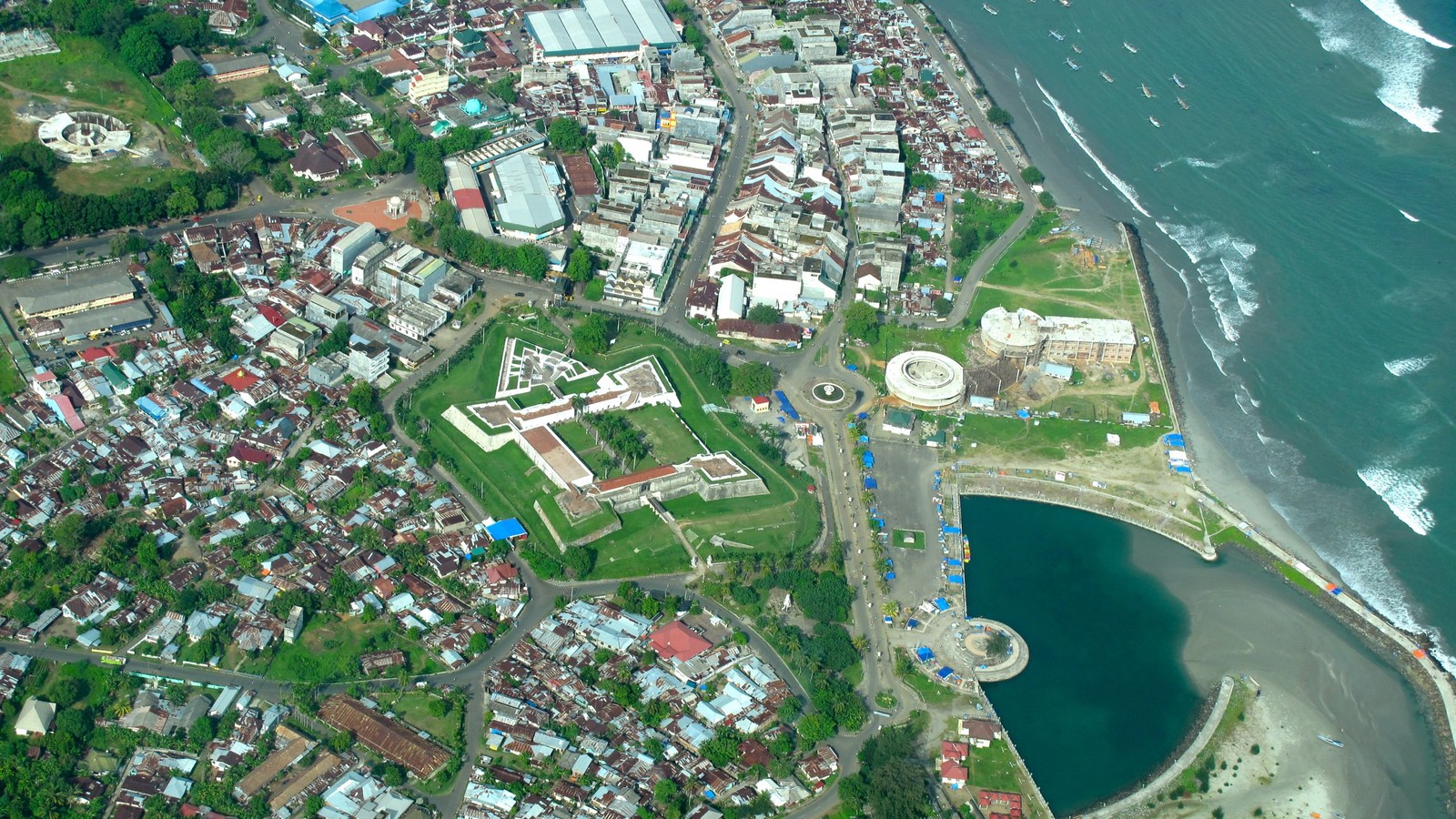
The line thus drawn — peninsula and Singapore British, Sumatra and the islands to the south Dutch — became, a century later, the border between Malaysia, Singapore and Indonesia. Malay, spoken along the strait, split into variants as well. The cover is Fort Marlborough at Bengkulu, seen from above: the factory in Article IX, not the Johor partition map, which is too small on Commons.
Sources: Anglo-Dutch Treaty of 1824; Treaty between Great Britain and The Netherlands, respecting Territory and Commerce in the East Indies.








0 Comments
No comments on this article yet. Be the first!