


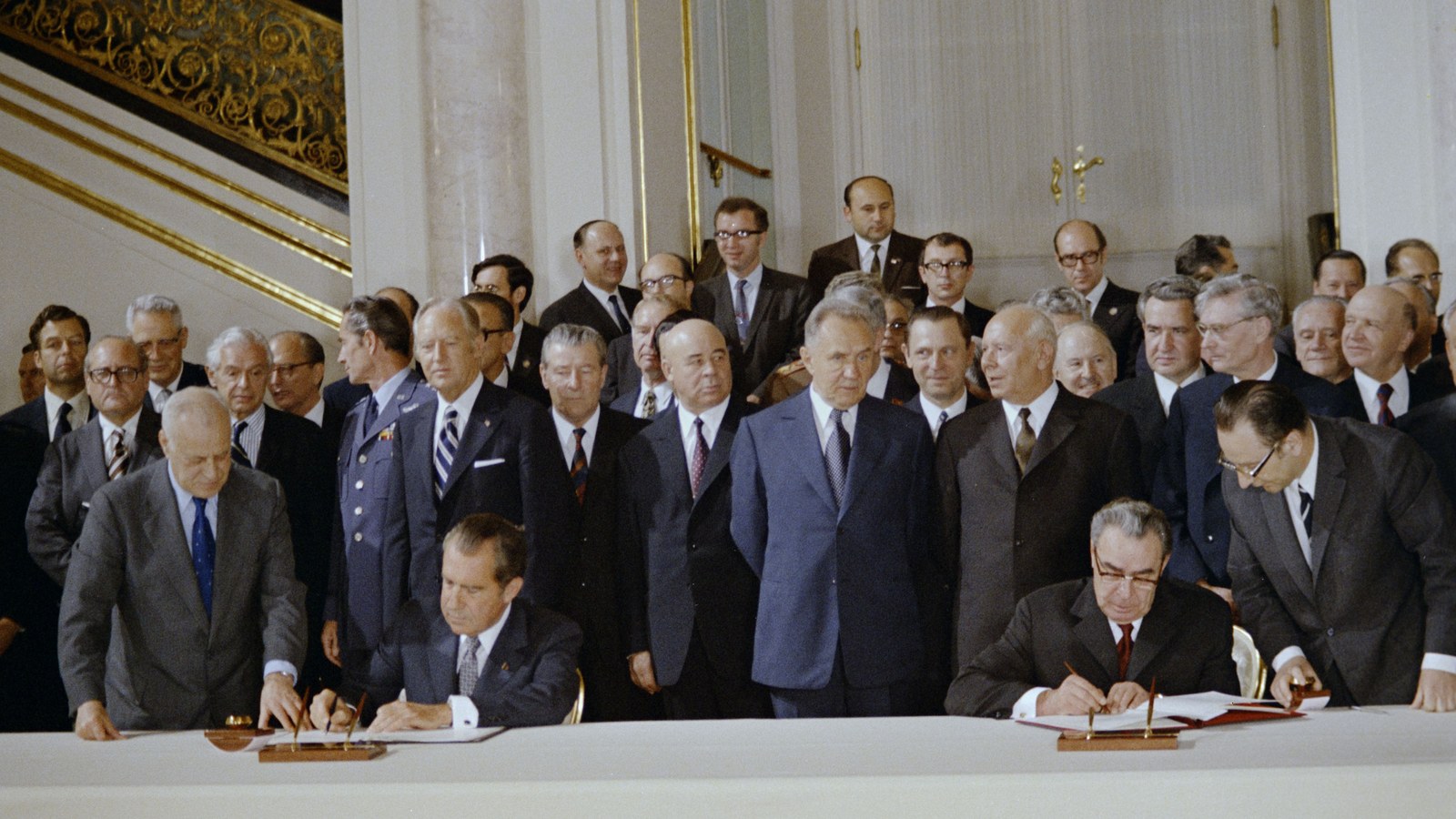
On 26 May 1972, in Moscow, the United States and the Soviet Union sign the Anti-Ballistic Missile (ABM) Treaty — a pillar of détente-era arms control alongside SALT I.
The treaty sharply limits strategic missile defences, on the premise that extensive defence would spur an offensive race. Each side could keep a restricted number of ABM sites; later amendments narrowed options further.
The SALT I talks (1969–1972) culminated in Nixon’s Moscow visit. ABM entered into force on 3 October 1972.
The United States withdrew unilaterally in 2002, citing missile threats from non-Soviet actors, clearing the way for national missile-defence systems.
For the strategic balance, ABM symbolised acceptance of mutual assured destruction (MAD) as a Cold War stabiliser.
The official text appears in U.S. and Soviet/Russian diplomatic archives.
The ABM Treaty of 26 May 1972 remains the classic reference for limiting strategic missile defences.
Image: Moscow 1972; Wikimedia Commons. Cropped to 16:9.
Source consulted: Anti-Ballistic Missile Treaty. Treaty text: Treaty Between the United States of America and the Union of Soviet Socialist Republics on the Limitation of Anti-Ballistic Missile Systems (State.gov).











0 Comments
No comments on this article yet. Be the first!