


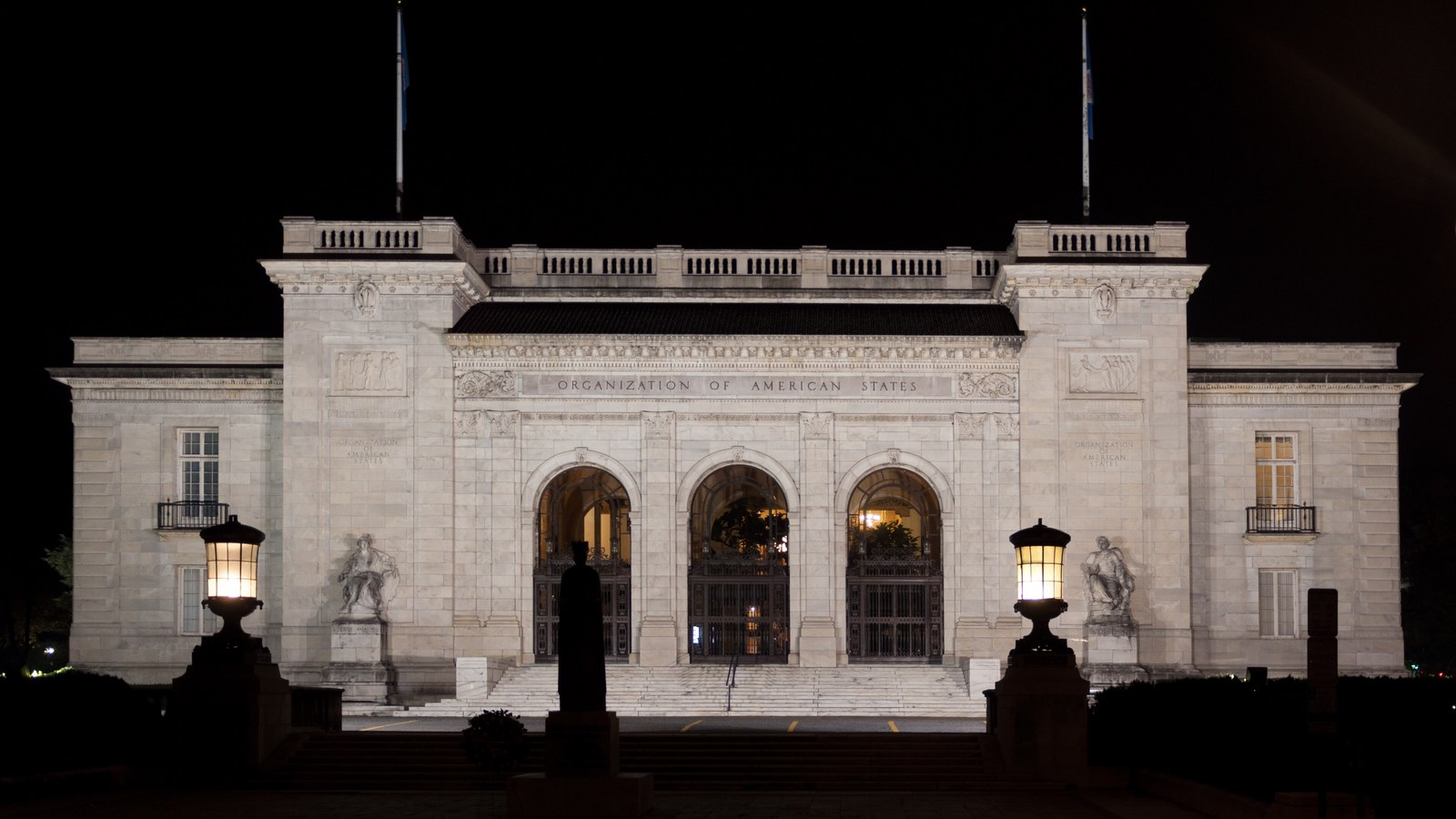
On 7 February 1923, at Washington, Guatemala, El Salvador, Honduras, Nicaragua and Costa Rica signed the General Treaty of Peace and Amity. The text published in Nicaragua's La Gaceta is in Spanish. Article 20: the original, signed by all the plenipotentiaries, remains in the archives of the Pan American Union in Washington; the secretary general of the Conference transmits authentic copies. The United States is not a party: Charles E. Hughes and Sumner Welles took part in the deliberations at the invitation of the five republics. Delegates included Francisco Sanchez Latour and Marcial Prem; Francisco Martinez Suarez and J. Gustavo Guerrero; Alberto Ucles, Salvador Cordova and Raul Toledo Lopez; Emiliano Chamorro, Adolfo Cardenas and Maximo H. Zepeda; Alfredo Gonzalez Flores and J. Rafael Oreamuno.
The Conference on Central American Affairs opened on 4 December 1922. Article 1: peace is the primary duty; disputes are to be settled under the conventions, signed the same day, establishing an International Central American Tribunal and International Commissions of Inquiry — distinct instruments. The convention with the United States on commissions of inquiry, also that day, is another act: Washington signed it, not this treaty.
Article 2: the parties will not recognize a government that comes to power by a coup or revolution against a recognized government until the freely elected representation of the people has reorganized the country constitutionally; nor then, if the president, vice-president or designate is a leader of the coup, a relative of such a leader, or held a secretaryship or high military command in the six months before. Article 4: no intervention, in a civil war, for or against the government of the country where the conflict takes place. Article 14: no intervention in the internal politics of another Central American republic, and a ban on organizing revolutionary work from one's own territory. This is not a recognition or intervention handbook.
Article 5: the principle of non-reelection of the president and vice-president, with an obligation to seek constitutional reform where reelection is still allowed. Article 15: no secret pacts among the parties; any agreement is to be published in the official gazette. Article 16: earlier treaties from Central American conferences, including those of Washington of 1907, are repealed when this treaty is approved and exchanged. The same-day convention on the limitation of armaments is a separate instrument.
Article 17: the treaty enters into force for the states that have ratified it once at least three signatories have ratified. Article 19: exchange of ratifications by communications to the Government of Costa Rica. Costa Rica's Attorney-General's office: Nicaragua ratified on 15 March 1923, Guatemala on 24 May 1924; Nicaraguan Legislative Decree No. 3, executed by Diego M. Chamorro, is dated 15 March 1923. Article 18: remains in force until 1 January 1934, notwithstanding earlier denunciation; thereafter until one year after notice of denunciation. Wikipedia attributes the non-recognition clause to Article 1 — it is Article 2 — and sometimes names the League or the Court as depositary; Article 20 places the original in the Pan American Union.
FRUS 1932: the United States, though not a party, followed the treaty's principles as policy toward new Central American governments until denunciations in the region. Wikipedia infobox heads of state are not the signatories on the instrument: the plenipotentiaries named above signed.
Cover: the Pan American Union building in Washington, the depositary in Article 20 — not the signing room. Wikimedia Commons, free licence.
For context: 1923 Central American Treaty of Peace and Amity. The text: Tratado General de Paz y Amistad.






0 Comments
No comments on this article yet. Be the first!