


In Geneva, on 19 February 1925, the Second Opium Conference (League of Nations) adopts and signs the International Opium Convention, with related Protocol. The instrument is executed in a single copy deposited in the archives of the Secretariat of the League of Nations. The official texts are English and French. The Convention supplements the Hague Convention of 23 January 1912; it enters into force on 25 September 1928 and is registered in the League of Nations Treaty Series, volume 81, No. 1845.
The preamble notes that application of the Hague Convention has produced results of great value, but that the contraband trade in and abuse of the substances to which it applies still continue on a great scale; that such trade and abuse cannot be effectually suppressed except by a more effective limitation of production or manufacture and closer control of the international trade; and that such limitation and control require the close co-operation of all the Contracting Parties.
The Convention introduces a statistical control system supervised by the Permanent Central Opium Board (PCOB), a treaty-mandated body theoretically independent but partly linked to the League of Nations, which begins operating in 1928. It narrows and clarifies legal measures on opium, morphine and cocaine and places extracts and tinctures of cannabis (Indian hemp) under international control.
On Egypt’s proposal, with support from Italy and South Africa, extension of controls to hashish is debated; India and other countries object, citing social and religious customs. The compromise bans exportation of Indian hemp to countries that have prohibited its use and requires import certificates stating that the shipment is required exclusively for medical or scientific purposes, together with effective control to prevent illicit international traffic in Indian hemp and especially in the resin.
The Protocol signed the same day is a distinct instrument from the Agreement concerning the Manufacture of, Internal Trade in and Use of Prepared Opium, signed at Geneva on 11 February 1925; the two texts have different scopes and must not be confused. After the Second World War, mandates are transferred to the United Nations and WHO; the 1912 and 1925 Conventions are superseded by the 1961 Single Convention on Narcotic Drugs, which merges the PCOB and the Drug Supervisory Body into the INCB.
The present text concerns the Convention of 19 February 1925 at Geneva, not the Prepared Opium Agreement of 11 February 1925 and not the 1912 Hague Convention.
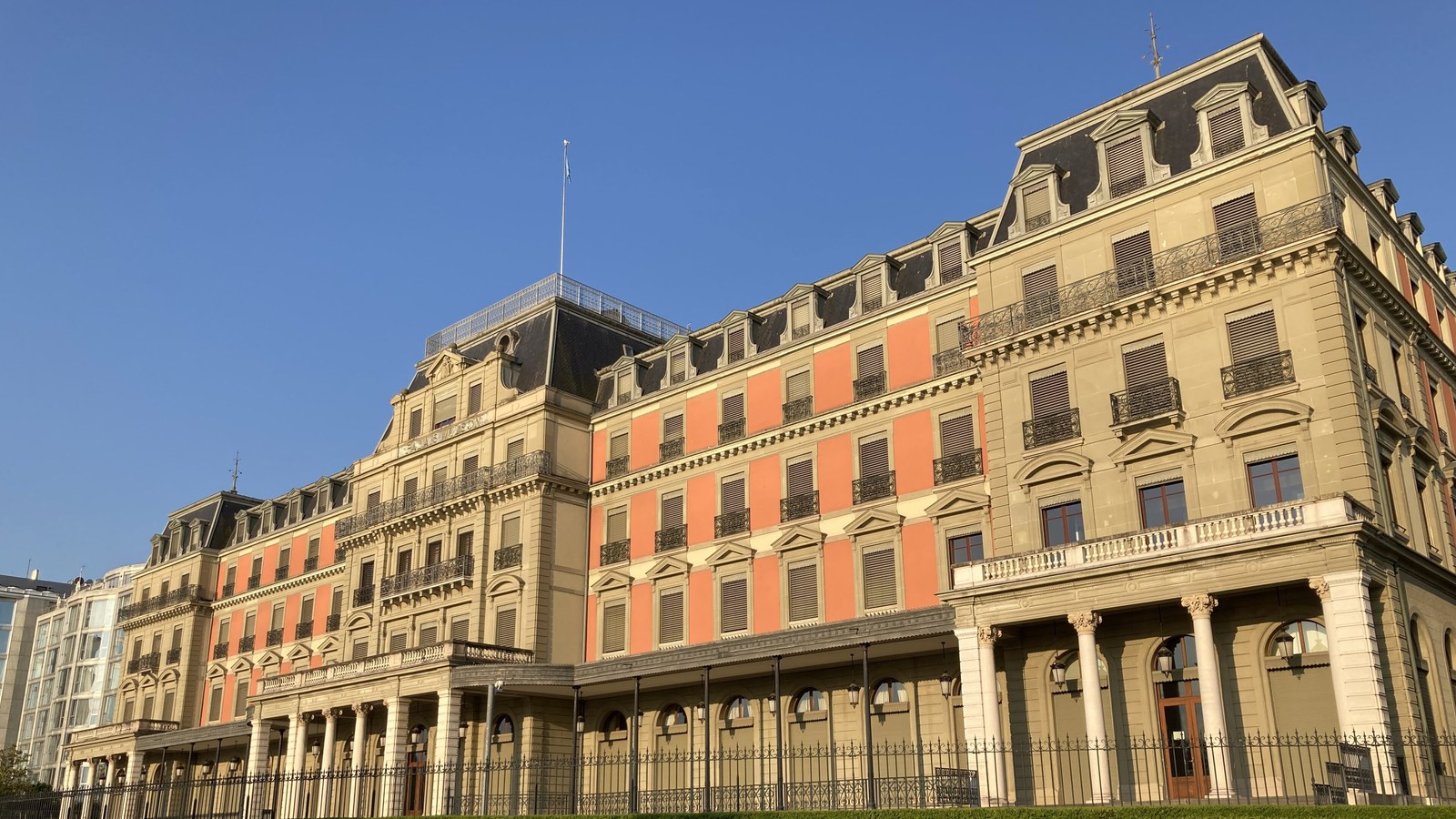
Image: Palais Wilson, Geneva; CC BY-SA 4.0, Wikimedia Commons. Cropped to 16:9.
Source consulted: Second International Opium Convention. Treaty text: International Opium Convention, Geneva, 19 February 1925 (ATS 1928 No. 5).











0 Comments
No comments on this article yet. Be the first!