


In New York (Manhattan), on 30 March 1961, the United Nations Conference on Narcotic Drugs adopts the Single Convention on Narcotic Drugs, 1961. The depositary is the UN Secretary-General; the languages are Arabic, Chinese, English, French, Russian and Spanish. It enters into force on 13 December 1964 (after 40 ratifications); the 1972 amending Protocol enters into force on 8 August 1975.
The Convention consolidates earlier League of Nations drug treaties, creates four Schedules of substances and establishes the International Narcotics Control Board. Article 44 terminates the predecessor instruments it replaces. It controls cultivation, production, supply, trade and transport of narcotic drugs, reserving medical and scientific use.
For the first time cannabis is expressly brought under international control, alongside the opium poppy and the coca bush, with plant provisions embedded in the treaty text that cannot be removed by ordinary rescheduling. Negotiations (73 states, over eight weeks) pit raw-material producers, industrial manufacturing states and the Soviet bloc over the strength of supra-national control.
At documentation the amended version has 186 parties. It is supplemented by the 1971 Psychotropic Substances Convention and the 1988 Illicit Traffic Convention — the three form the UN drug-control framework.
UNODC publishes the official text; parties must enact domestic implementing legislation, the Convention not being self-executing.
The Single Convention on Narcotic Drugs of 30 March 1961 remains the cornerstone of the international narcotic-drug control regime.
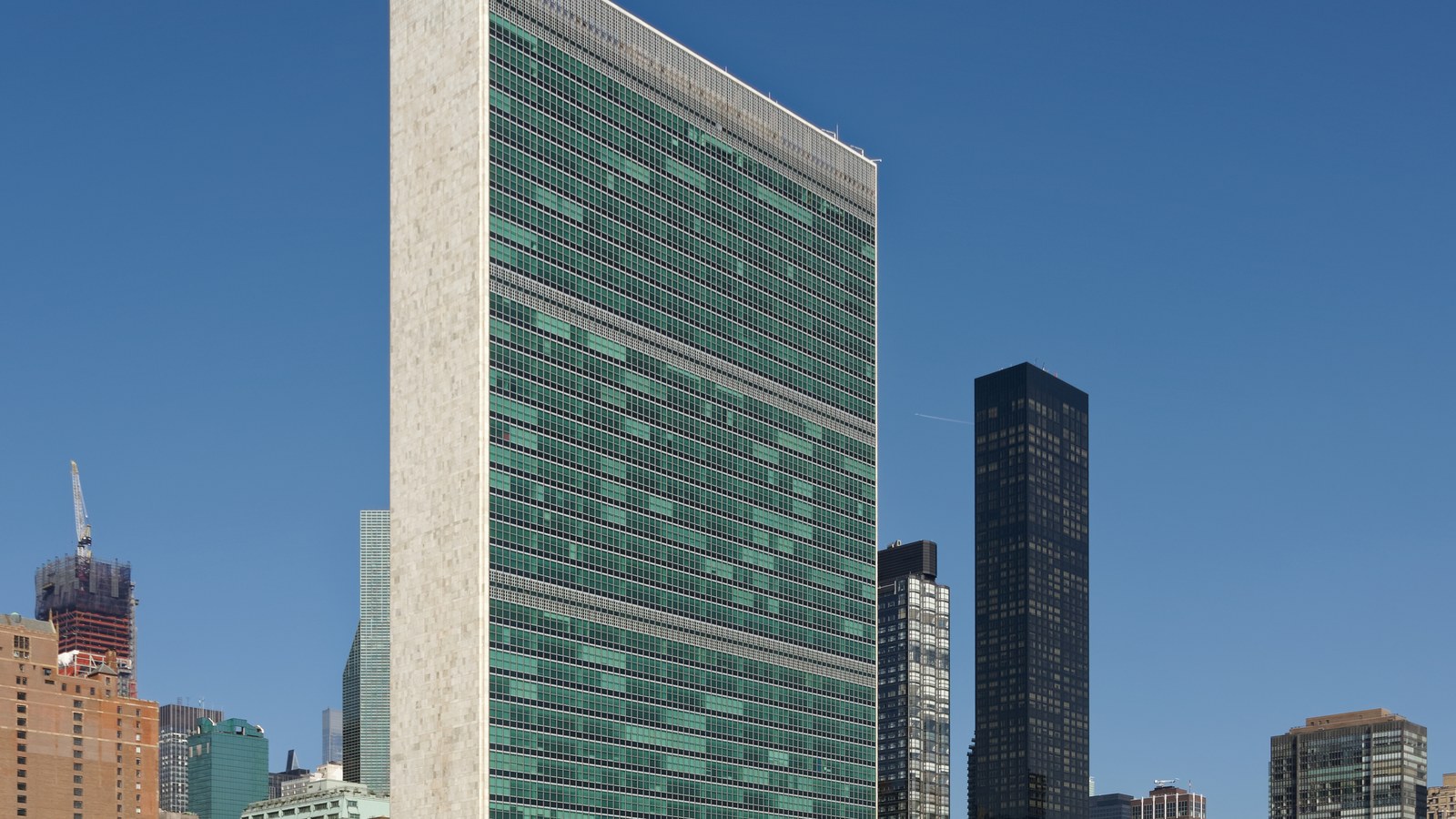
Image: UN headquarters; Wikimedia Commons. Cropped to 16:9.
Source consulted: Single Convention on Narcotic Drugs. Treaty text: Single Convention on Narcotic Drugs, 1961 (UNODC).











0 Comments
No comments on this article yet. Be the first!