


At Lake Success, New York, on 21 March 1950, the Convention for the Suppression of the Traffic in Persons and of the Exploitation of the Prostitution of Others opens for signature, after approval by the UN General Assembly in resolution 317 (IV) of 2 December 1949. The depositary is the UN Secretary-General.
The preamble declares prostitution and the accompanying traffic incompatible with human dignity. Article 1 requires parties to punish anyone who procures, entices or leads away another person for prostitution, even with that person’s consent, and anyone who exploits the prostitution of another. Article 2 covers keeping a brothel or renting premises for prostitution.
The Convention supersedes earlier “white slave traffic” instruments, uses race- and gender-neutral language, and covers domestic as well as cross-border trafficking. Article 6 requires abolition of special registration of prostitutes; Article 20 requires supervision of employment agencies; Article 22 allows disputes to be referred to the ICJ.
It enters into force on 25 July 1951 after two ratifications. At documentation: 25 signatories and 82 parties. Many States decline ratification because of the “even with the consent” clause where voluntary prostitution is legal and regulated.
The Trafficking Protocol (2000) to the UN Convention against Transnational Organized Crime later redefines “trafficking” and attracts wider ratification without formally repealing the 1949–1950 instrument.
The Convention of 21 March 1950 remains the classic UN treaty that treats forced prostitution and exploitation as trafficking offences, in universal language and without requiring a border crossing.
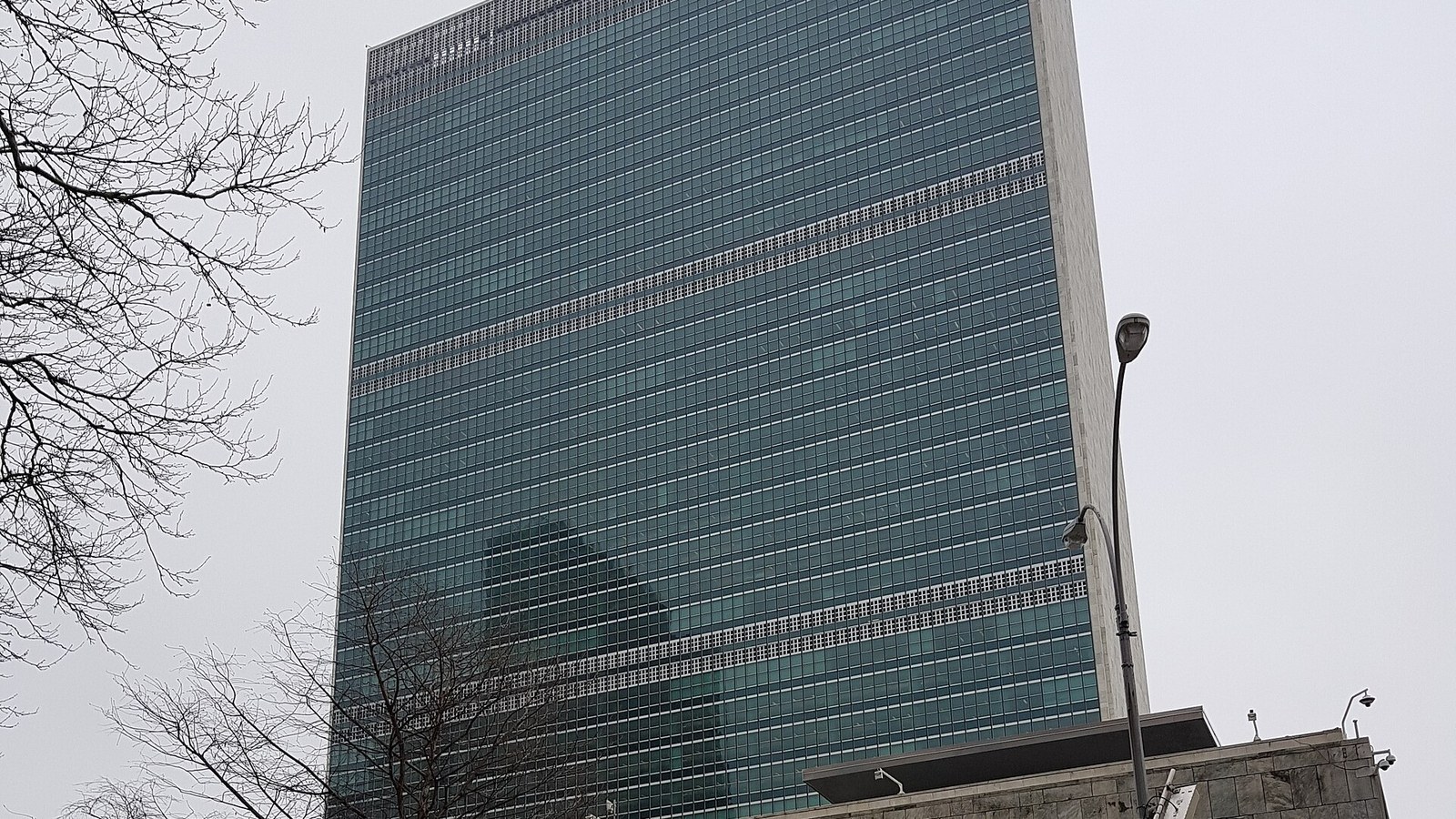
Image: UN headquarters; Wikimedia Commons. Cropped to 16:9.
Source consulted: Convention for the Suppression of the Traffic in Persons. Treaty text: Convention for the Suppression of the Traffic in Persons (UN Treaty Collection).











0 Comments
No comments on this article yet. Be the first!