
18 September 2026 marks 153 years since Jay Cooke & Company suspended payments. Federal Reserve History ties the news to 18 September 1873 and to financing of the Northern Pacific Railway. It is not the “sole cause” of a world crisis: European markets had already shaken in the spring, in Vienna.
Cooke’s house had made its name selling wartime bonds during the Civil War. It later committed heavily to railroad bonds. Railway expansion needed enormous capital; newer projects no longer paid the expected returns, and European investors pulled back from some American holdings.
When the bank could no longer meet its obligations, confidence broke quickly. Withdrawals, asset sales and brokerage failures followed. On the same Federal Reserve account, the New York Stock Exchange closed on 20 September, for the first time in its history, and stayed shut for ten days.
The effects left Wall Street. Railway firms halted work, credit tightened and unemployment rose. Historians often speak of a Long Depression, but they debate duration and intensity from country to country. Today’s recession categories should not be applied mechanically to the nineteenth century.
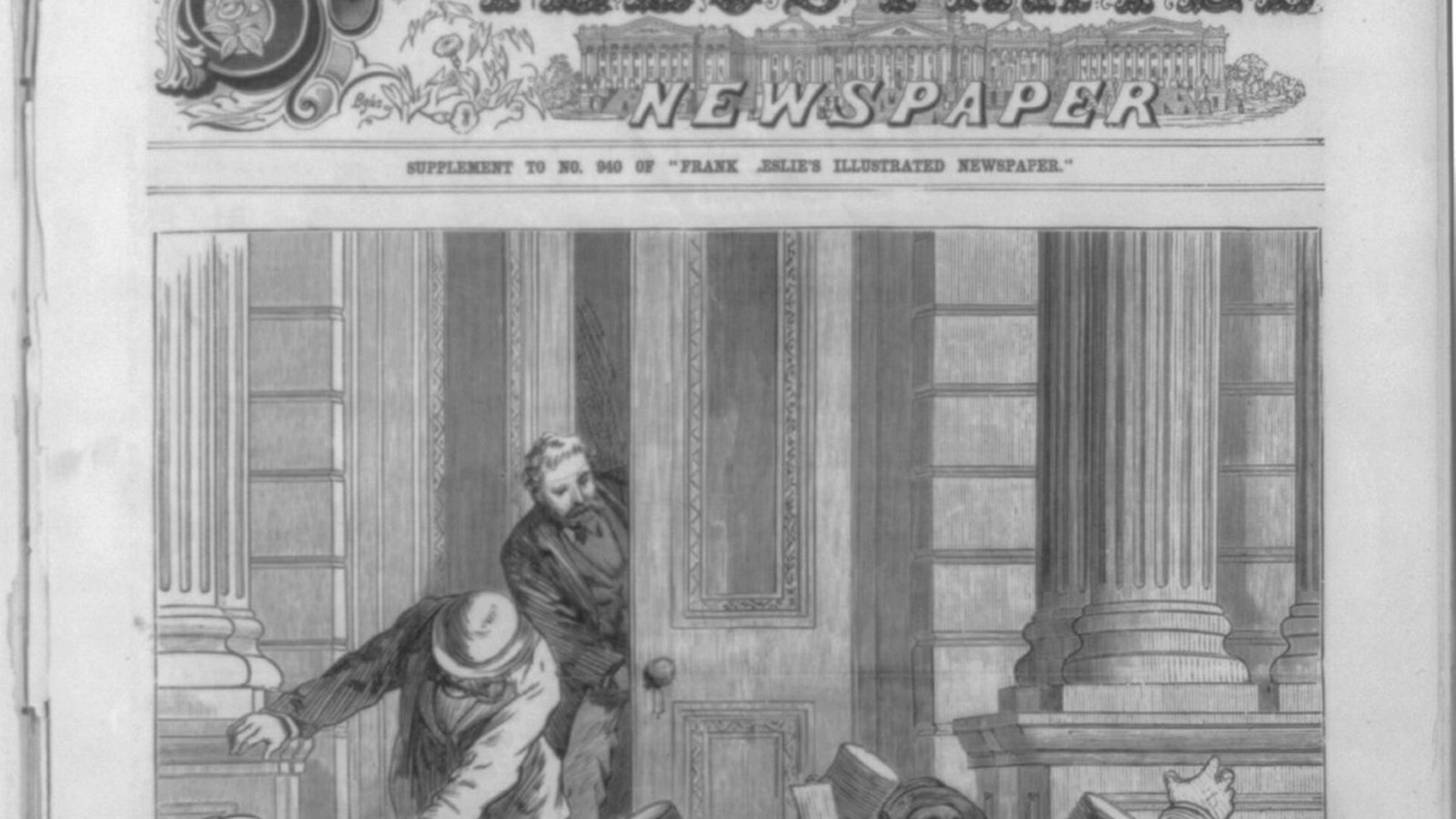
The Library of Congress holds press illustrations from October 1873 of the exchange being closed. They document the visual panic of the period, not a complete statistical balance sheet.
The anniversary shows how a transformative technology, debt and lost confidence can move from a symbol-firm through an entire economy. It does not turn one failure into a sufficient explanation.
One hundred and fifty-three years later, the reference dates remain 18 September 1873 for Cooke and 20 September for the exchange closure, according to Federal Reserve historiography.
Image: Library of Congress, Frank Leslie’s Illustrated Newspaper, exchange closing, 20 September 1873. Public domain. Cropped to 16:9.
Source consulted: Federal Reserve History — Banking Panics of the Gilded Age; Library of Congress — The Panic of 1873.






0 Comments
No comments on this article yet. Be the first!