
On 18 September 1850 the Fugitive Slave Act was enacted as part of the Compromise of 1850. At 176 years’ distance it remains one of the harshest federal statutes through which the United States defended slavery, not a technical border detail.
The act created stronger federal machinery for capturing people who had escaped slavery. Authorities in free states and, in some conditions, private citizens could be required to take part in detention and return. The statute’s phrase “fugitive slaves” reduced people to the status imposed by owners; this account speaks of people who fled slavery.
Those accused of being “fugitives” had no jury and could not testify in their own defence in the special procedure. The commissioners’ fee system was criticised because it paid more when a decision favoured the claimant.
The law also exposed free Black people to kidnapping on the basis of false claims. Families moved farther north, including into Canada. In Northern cities, protest, rescue and a strengthening of Underground Railroad networks followed.
Enforcement deepened the sectional conflict. The act was repealed in 1864 during the Civil War. Slavery was constitutionally prohibited by the Thirteenth Amendment, ratified in 1865.
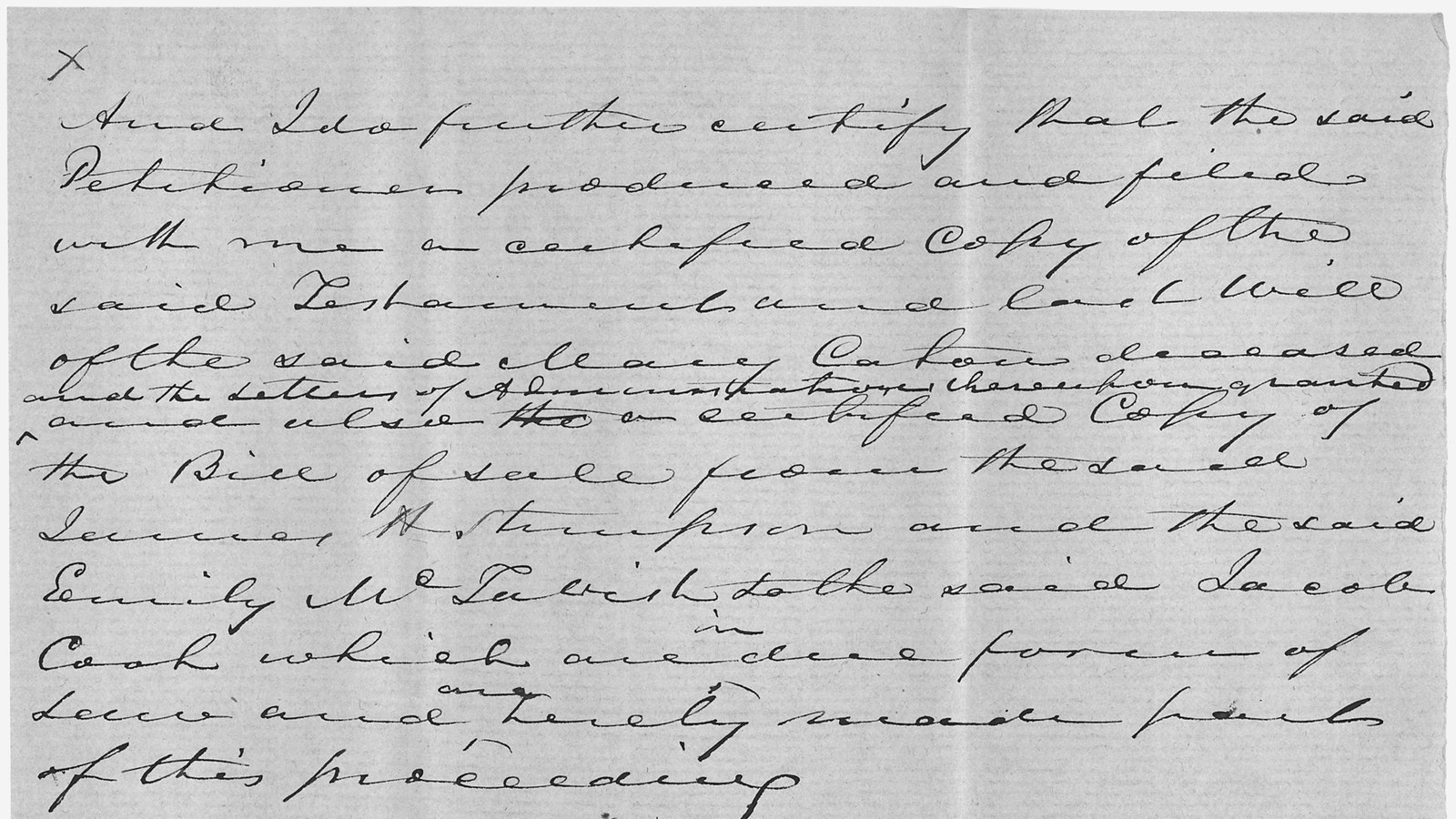
The National Archives hold petition papers and registers from the years of enforcement. The cover illustrates a petition book, not a capture scene and not a portrait of victims.
The anniversary does not “balance” the Compromise. It shows how federal institutions were used to deny people basic legal protections.
Image: U.S. National Archives / Wikimedia Commons, public domain. Jacob Cook’s original petition and related documentation, court record NARA 278794. A document from the years of enforcement, not a full facsimile of the 1850 act. Cropped to 16:9.
Source consulted: Fugitive Slave Act of 1850 | U.S. National Archives; Fugitive Slave Laws | Library of Congress; Fugitive Slave Act of 1850 | National Park Service.









0 Comments
No comments on this article yet. Be the first!