
Ursula von der Leyen said in her State of the Union address on 16 September 2026 that Europe cannot remain an industrial powerhouse if its energy prices remain structurally too high. The goal she stated is to double electricity’s share by 2040, which, according to the Commission, could cut the fossil-fuel import bill by €260 billion a year. Last year, she added, Europe installed more than 80 gigawatts of renewable capacity, but six times more capacity is still waiting to be connected to the grid.
A Reuters analysis published the same day argues, separately, that without a more unified energy market Europe risks falling behind in the AI race: weak interconnections, differing transmission fees and complicated permitting stop electricity moving to where industrial demand is emerging. Reuters cites the Commission’s estimate that about €584 billion is needed by 2030 to modernise and extend networks, and notes that a data centre can be built in roughly two years while a transmission connection can take up to seven. Those points are analysis, not an independent RoAdevăr measurement.
The wider trend is convergence: AI data centres, electric vehicles and industrial electrification raise demand for cheap, scalable and increasingly clean power. The issue is no longer only how much energy a country can produce, but whether it can reach the right place, on time and at a competitive price. Grids, storage, transformers and permitting thus become industrial infrastructure. Von der Leyen called for the grids package, faster investment and storage: “let’s make Europe’s future electric”.
For AI, access to chips remains essential, but without electricity, cooling and grid connections there is no computing capacity. The same logic applies to electrified factories. Related context: the debate over the pace of AI.
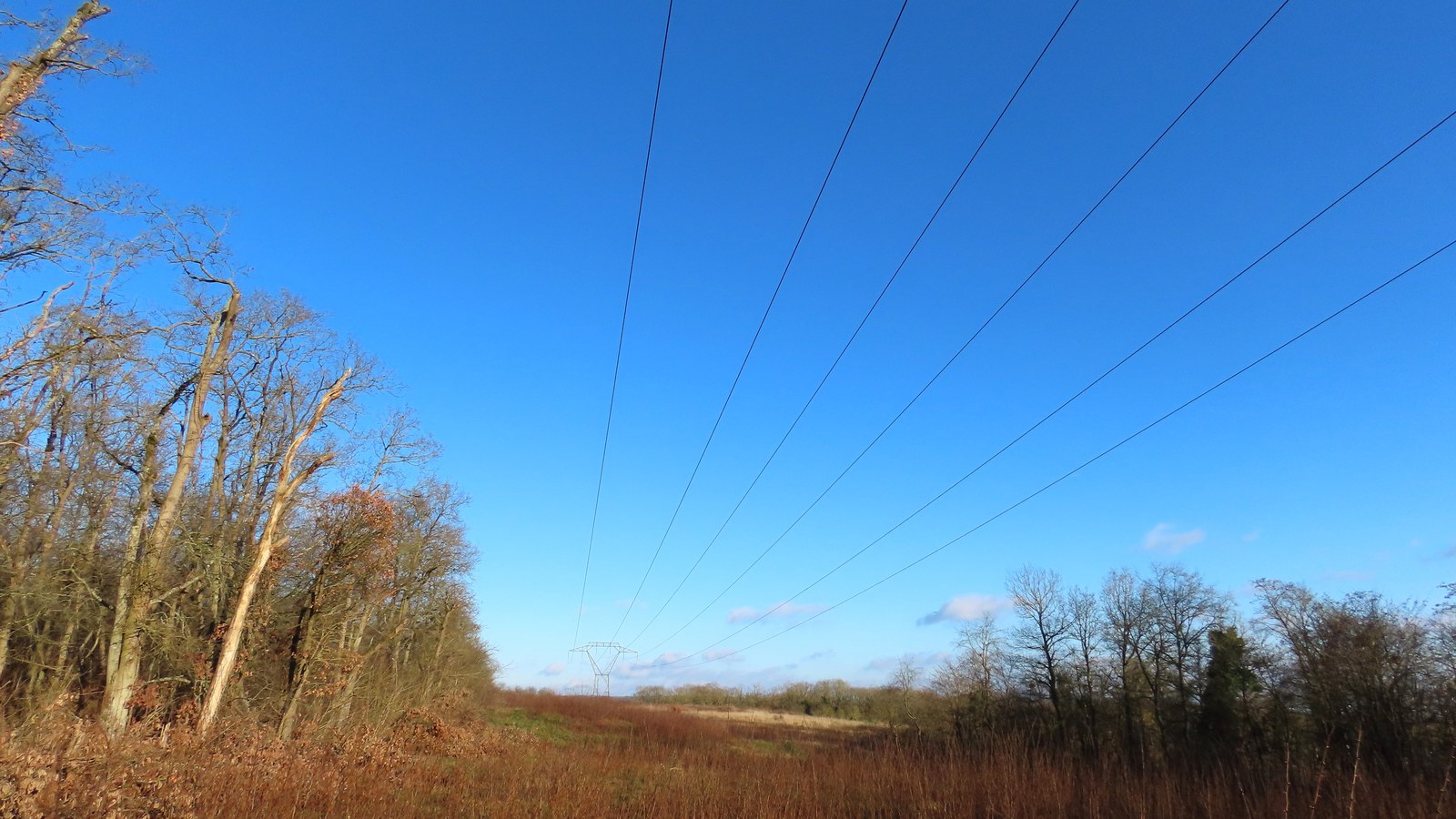
Image: Chabe01, Wikimedia Commons, CC BY-SA 4.0. High-voltage line at Plaine de Pierrelaye-Bessancourt, not a data centre. Cropped to 16:9.
Source consulted: 2026 State of the Union Address by President von der Leyen — energy and electrification (SPEECH/26/1868); Europe has no hope in AI race without a unified energy market (Reuters analysis, 16 September 2026).






0 Comments
No comments on this article yet. Be the first!