
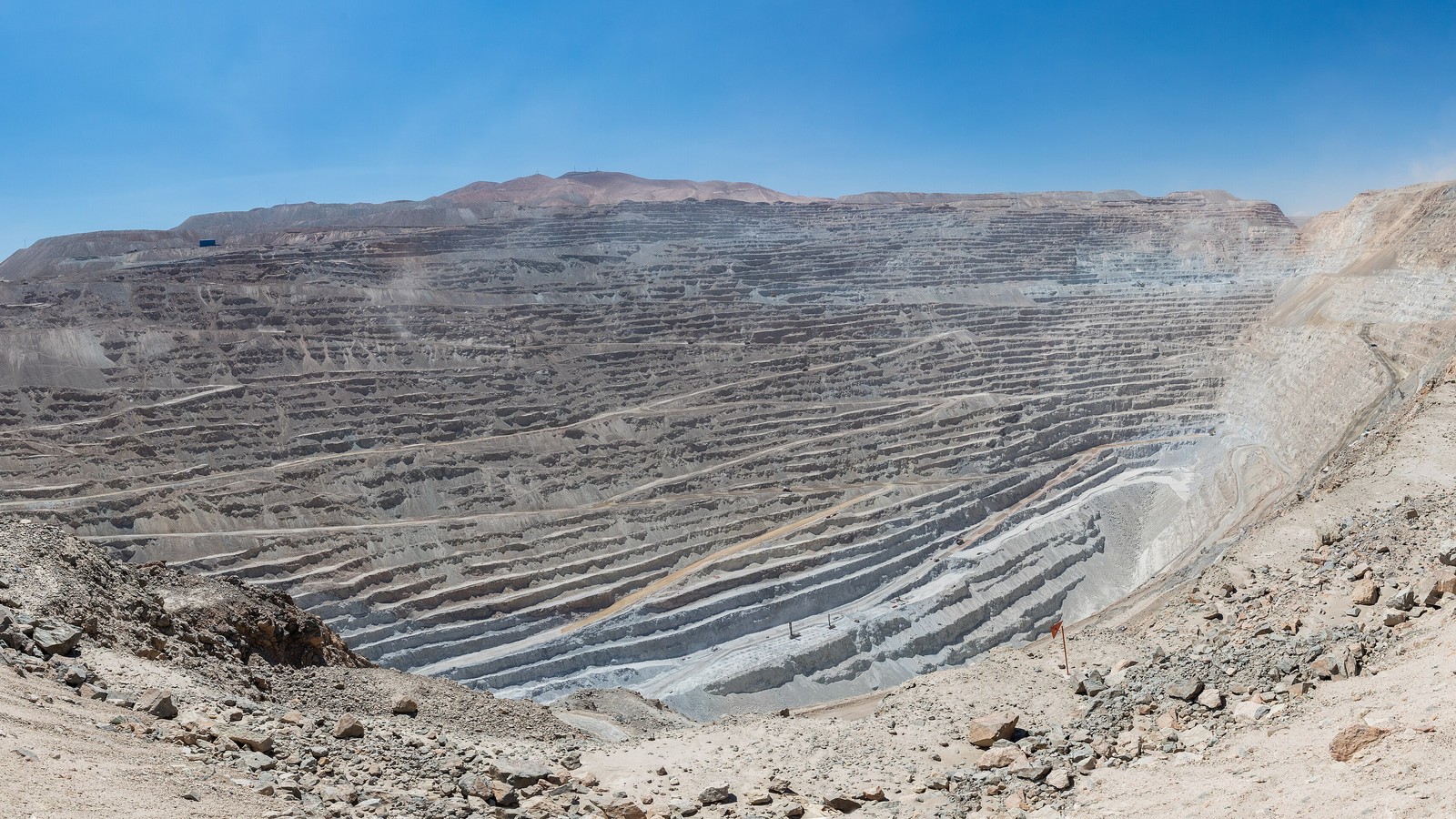
The European Commission held an online workshop on Friday, 11 September 2026, on mining and upstream extraction of critical raw materials. The International Platform on Sustainable Finance (IPSF) secretariat organised the session, which opened with the Directorate-General for Financial Stability, Financial Services and the Capital Markets Union (DG FISMA). The event has ended. No new rules were published and no conclusions paper has been posted. The agenda stayed technical: how extraction activities — particularly nickel, lithium and copper — can be defined, verified and treated inside sustainable-finance frameworks.
Critical raw materials are not a single mineral and they are not used only in batteries. They appear in energy-storage products, renewable-energy equipment, electronics and other industrial chains; some also have strategic uses in aerospace and defence. Rare earths are one subset of the field, not the whole list. Friday’s question was not whether Europe needs these materials. It was how to keep their strategic importance separate from an assessment of how they are actually mined.
The first session examined the boundaries of upstream activities in the value chain. That segment covers extraction and operations directly tied to obtaining the raw material. For sustainable-finance frameworks the boundary matters: it decides which projects can be screened under given criteria and which fall outside them. DG FISMA moderated. Speakers included a member of the EU Platform on Sustainable Finance and participants from mining and investment advisory.
The second session was listed in the programme as “What can actually be verified?” It covered data gaps, assurance and assessment at the mine site. Classifying an activity as sustainable requires information that can be checked against operating conditions, not corporate pledges alone. Speakers included the Mining Association of Canada and the European Bank for Reconstruction and Development, through its head of extractives environmental and social risk.
The third session looked at forward-looking criteria and possible ways to bring upstream CRM activities into sustainable-finance frameworks. Contributors included the Initiative for Responsible Mining Assurance, a member of the working group preparing the first edition of Brazil’s sustainable taxonomy, and the Australian Sustainable Finance Institute. The mix reflects a basic fact of supply: a large share of the minerals used by European industry is extracted outside the EU. Criteria used by European financiers can therefore affect projects elsewhere.
Access to finance is part of raw-materials strategy because a new mine can take large capital and years before production starts. Qualification under a sustainable-finance framework can change investor interest. It does not follow that a critical mineral is, by definition, extracted sustainably. Mining can affect biodiversity, water, land, emissions and communities. The workshop did not declare critical-raw-material mines sustainable and did not treat nickel, lithium or copper as automatic exceptions.
The IPSF is a forum for dialogue among authorities, not a body that issues binding standards. The official event page states that the meeting was by invitation, online, from 11:00 to 13:00 CEST, and that it sits in the platform’s transition-finance workstream on strategic sectors. After it closed, the Commission left the programme and a privacy notice on the site, not an outcomes report. Any effect on future criteria remains a possibility, not a legislative decision.
The Union still faces a double task: securing materials needed by the economy and by new technologies, including through supply chains less dependent on a small number of suppliers, and setting the conditions under which extraction can be compatible with sustainability objectives. Friday’s talks were a technical consultation on that balance, not the adoption of new mining rules.
Source consulted: Workshop on sustainable mining and extraction (upstream) of critical raw materials (CRMs) | European Commission
Image credit: Diego Delso, delso.photo, CC BY-SA 4.0. Illustrative photograph of the Chuquicamata copper mine near Calama, Chile, 1 February 2016. Copper is one of the materials named in the workshop programme; the image does not show a site assessed at the event and does not allege environmental harm at that operation. Source: Wikimedia Commons. Cropped to 16:9.

0 Comments
No comments on this article yet. Be the first!