
On 16 September Google announced its largest carbon-removal agreement, with Terradot, covering more than 200,000 hectares of rice farms in southern Brazil, including Rio Grande do Sul. The company will purchase one million metric tons of CO2e in methane abatement by 2030 and one million tons of permanent carbon dioxide removal by 2040. The credits are generated and verified separately.
The first component is alternate wetting and drying (AWD), which periodically drains flooded paddies and cuts methane. The second is spreading crushed volcanic rock; as it dissolves it reacts with carbon dioxide — enhanced rock weathering. Google presents the combination as a model that could later extend across Brazil’s 1.5 million hectares of rice and, further on, to India or Vietnam.
The scale is large, but climate credits require independent measurement, permanence and protection against double counting. The investment does not replace cuts in emissions from data centres and AI-related electricity use, a pressure already felt by large technology firms. Google has been an investor in Terradot since 2024.
If AWD and crushed rock can be demonstrated in the field at falling cost, the model has agricultural meaning, not only an accounting one. Until then the announcement should be read as a purchase commitment, not as a tonne already taken out of the atmosphere.
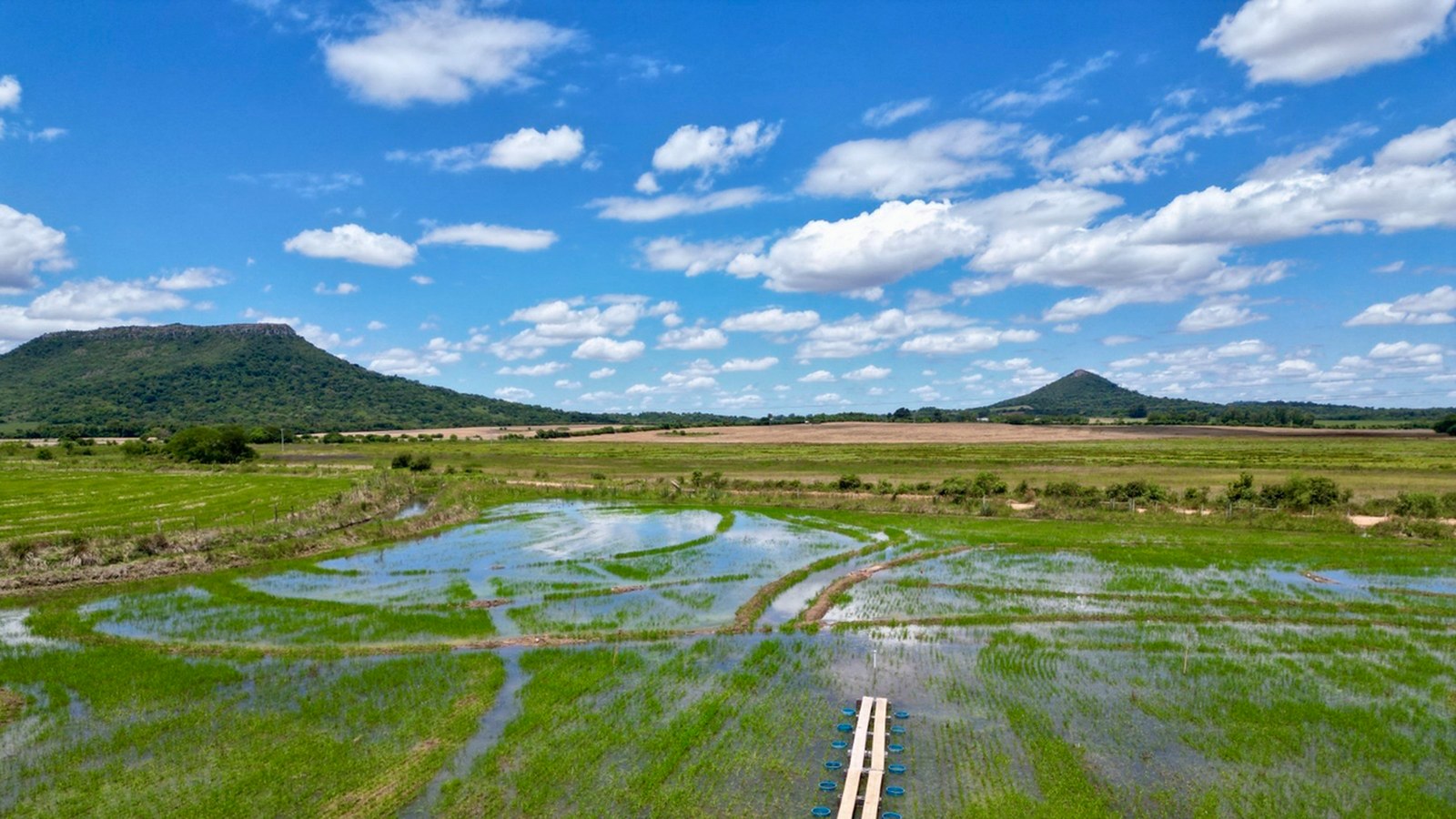
Photo: flooded rice fields from the Google/Terradot presentation. Credit Google Sustainability.
Source consulted: Google — Terradot superpollutants and carbon removal.









0 Comments
No comments on this article yet. Be the first!