
The United States Department of Justice announced on 11 September 2026 the first completed use of the special Alien Terrorist Removal Court (ATRC) process to remove an individual designated within the proceeding as an “alien terrorist”. According to the department, the person has already been removed, and the court’s order was unsealed after her return to her country of origin.
The Alien Terrorist Removal Court is a specialised structure created by Congress in 1996. It is not a new court established in 2026, and it does not replace the ordinary immigration-court system. Its jurisdiction is narrow: the federal government may seek the removal of certain foreign nationals when statutory conditions involving terrorist activity are met.
An ATRC proceeding is not equivalent to a criminal conviction for terrorism. The legal standards, objectives and consequences differ. In a criminal prosecution, the government seeks a conviction for an offence. In an ATRC proceeding, the central issue is whether the legal requirements for removing a person from the United States have been satisfied.
Who was removed, according to the DOJ
According to the Justice Department, the person removed is Nazira Haji Zada, 47, an Afghan national who had previously lived in Fort Worth, Texas. The order of judicial removal, issued on 20 August 2026 by Chief Judge Joan N. Ericksen, describes her as a native and citizen of Afghanistan, admitted to the United States as a lawful permanent resident on or about 27 March 2018.
The DOJ says Zada, with her lawyers — two federal public defenders — conceded that she is an “alien terrorist” for the purposes of the proceeding, waived appeal and is now permanently inadmissible to the United States. US authorities allege that she supported an ISIS-inspired plot to carry out a mass shooting on Election Day in 2024, for which her son, Abdullah Haji Zada, and son-in-law, Nasir Ahmad Tawhedi, were previously arrested and convicted. Those allegations about her role in the plot are the government’s account as presented in the press release; the concession in the ATRC proceeding is not automatically equivalent to a criminal conviction of her for terrorism.
The application to remove her, certified by Attorney General Todd Blanche, was filed on 15 July 2026. Zada appeared in open court on 30 July. The DOJ says the government used classified information in accordance with the ATRC statute and provided Zada and her lawyers with about half a terabyte of documents. The 20 August order was unsealed on 11 September after, according to the department, she had returned to her country of origin. The court ordered her removal to Afghanistan.
What the Alien Terrorist Removal Court is
Congress created the ATRC in 1996, during a period in which the United States was expanding its legal counterterrorism tools. It does not operate like an ordinary federal court handling a broad range of civil and criminal cases. It is staffed by US district judges confirmed under Article III of the Constitution and then appointed to the ATRC by the Chief Justice. The statutory basis is Title 8 of the United States Code, sections 1531 to 1537, together with removal provisions including 8 U.S.C. § 1227(a)(4)(B).
The mechanism was designed in part for circumstances in which the government maintains that information relevant to national security is classified. Federal law sets special procedures for how such information may be considered, provides paid counsel if necessary and allows an appeal to the US Court of Appeals for the District of Columbia Circuit. The existence of classified information does not by itself automatically permit someone’s removal: the government must follow the statutory process. The standard the DOJ cites for the ATRC is a preponderance of the evidence, not the standard applied in a criminal trial.
Most proceedings to remove foreign nationals take place in the regular immigration courts. The ATRC is a separate route reserved for circumstances specifically established by statute. What makes the 2026 announcement unusual, the DOJ said, is that no previous administration had used the court and that this was the first case ever brought before it.
Related criminal cases involving family members
According to the DOJ, Tawhedi and Abdullah Haji Zada were arrested on 7 October 2024 after purchasing firearms and ammunition from an undercover FBI employee. Abdullah, who was 17 at the time of his arrest, entered a guilty plea as an adult and was sentenced to 15 years in prison; as part of the plea, he stipulated to a judicial order of removal to Afghanistan after his term of incarceration. Tawhedi, 28, pleaded guilty on 13 June 2025 to two terrorism-related offences — including conspiring and attempting to provide material support to the Islamic State of Iraq and al-Sham (ISIS), a designated foreign terrorist organisation — and is awaiting sentencing. Those are criminal cases distinct from Nazira Haji Zada’s ATRC proceeding.
A precedent, not a new rule
Effective use of the mechanism may have implications beyond the individual case: a judicial structure that existed for nearly three decades with almost no practical use has now produced a removal order. A single case does not, however, establish that the ATRC will become a frequently used tool, and it does not mean ordinary immigration courts are being replaced. The longer-term importance will depend on court documents and on how the Justice Department uses the procedure in the future.
For now, the announcement marks an unusual moment in American immigration and national-security law: the first completed ATRC removal, according to the Department of Justice, through a specialised court created in 1996.
Source consulted: U.S. Department of Justice, Department of Justice Removes Alien Terrorist in First Use of United States Alien Terrorist Removal Court. Court documents: Alien Terrorist Removal Court.
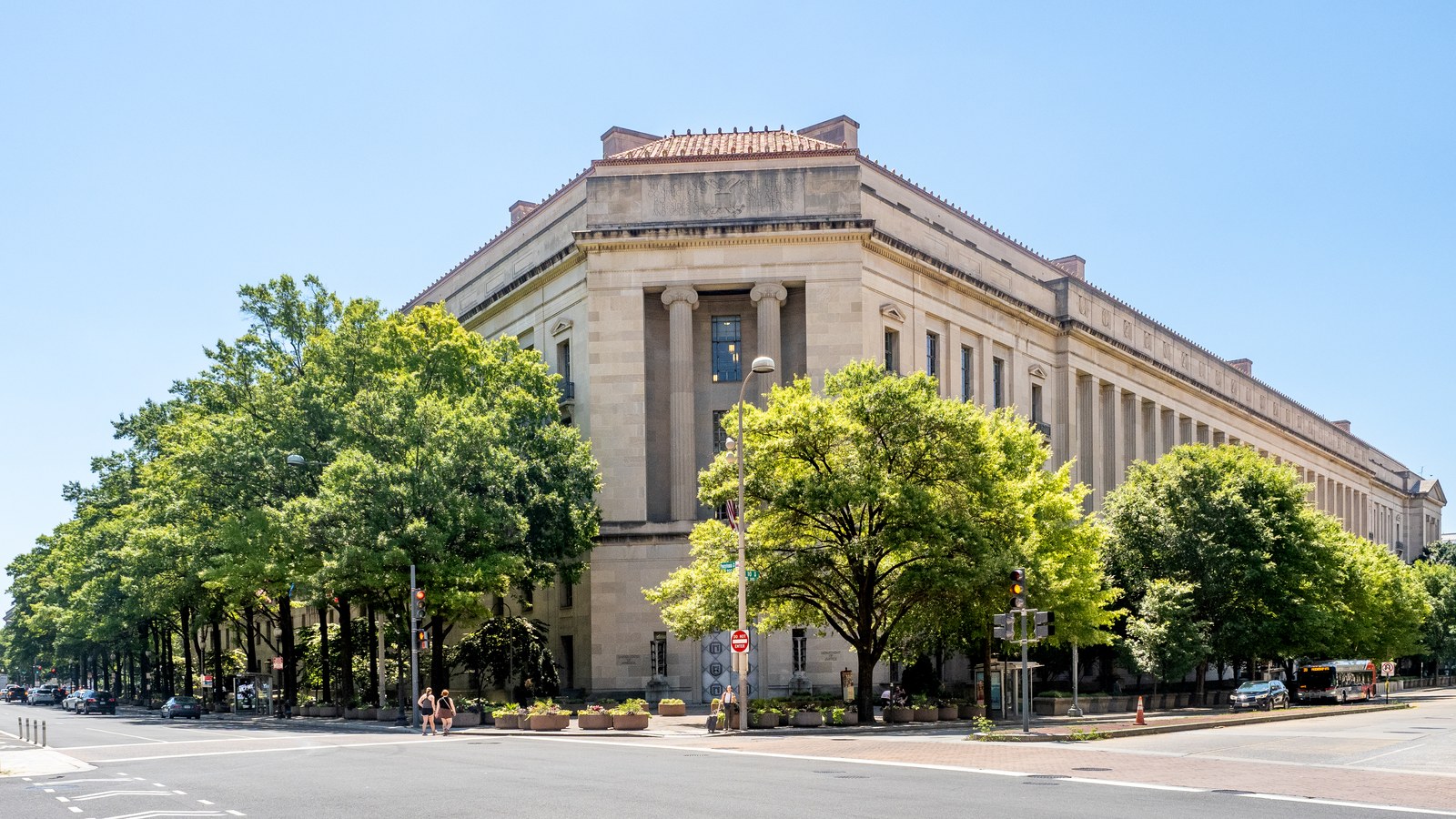
Photo: Ajay Suresh, Robert F. Kennedy Department of Justice Building, Washington, D.C., 21 June 2024. Flickr / Wikimedia Commons, CC BY 2.0.









0 Comments
No comments on this article yet. Be the first!