
On 16 September 1992, sterling went through one of the most dramatic days in modern British financial history. The day became known as Black Wednesday.
Today, 16 September 2026, marks 34 years since the United Kingdom suspended sterling’s participation in the European Exchange Rate Mechanism, or ERM.
The ERM had been established in 1979 to reduce exchange-rate variability among European currencies and promote monetary stability. The United Kingdom joined in 1990. Membership required sterling to remain within an agreed range against other participating currencies.
By the early 1990s, however, the British economy was in a difficult position. Economic activity was weak, while the monetary conditions required to defend sterling increasingly conflicted with domestic economic needs. At the same time, German reunification contributed to high German interest rates, and the Deutsche Mark exerted strong influence over the ERM system.
Pressure on sterling intensified sharply in September 1992. Investors increasingly doubted whether the level required by the ERM could be sustained, and selling of sterling accelerated.
On 16 September, the British authorities intervened heavily in the foreign-exchange market, buying sterling in an attempt to keep it within the ERM limits. The Bank of England records that official intervention failed to move sterling away from the floor of the mechanism.
The Government also turned to interest rates. The minimum lending rate was raised to 12%, and a further increase to 15% for the following day was announced. The 15% rate was never implemented.
Despite the intervention, market pressure continued. On the evening of 16 September, the British Government announced the suspension of sterling’s participation in the ERM.
The Bank of England describes the episode as the moment the UK crashed out of the mechanism and estimates that the effort to support sterling cost HM Treasury more than £3 billion.
The event is often associated with investor George Soros, whose fund made a very large profit from positions against sterling. Reducing the entire episode to the actions of one investor, however, would be misleading. Pressure on sterling reflected macroeconomic tensions and the positioning of many participants across global financial markets.
Leaving the ERM was immediately regarded as a major defeat for the Government’s economic policy. Over the longer term, however, the departure changed Britain’s monetary framework. Sterling was able to float more freely, while policymakers gained greater scope to set interest rates according to domestic economic conditions.
After Black Wednesday, British monetary policy gradually moved towards an inflation-targeting framework. The relationship between the Treasury and the Bank of England evolved, and in 1997 the central bank received operational independence over interest-rate decisions.
Black Wednesday also became a central episode in the history of Britain’s relationship with European monetary integration. The ERM had been regarded as a step towards greater monetary convergence in Europe. Britain did not subsequently re-enter the mechanism in preparation for adopting the euro and retained sterling.
The event should not be reduced to the claim that one trader “broke the pound”. The foreign-exchange market was enormous, and the economic tensions and ERM constraints existed independently of any single fund.
Thirty-four years later, Black Wednesday remains a case study in the limits of defending an exchange rate when the monetary policy required to maintain it conflicts with domestic economic conditions.
On 16 September 1992, the Government intervened in currency markets, raised the minimum lending rate to 12% and announced a rise to 15%. By the end of the day, however, Britain had suspended sterling’s ERM membership. The 15% rate never took effect.
Black Wednesday was a day of losses and turmoil, but also a turning point. It reshaped British monetary policy and remains one of the clearest modern examples of the pressure financial markets can exert on a fixed or semi-fixed exchange-rate regime.
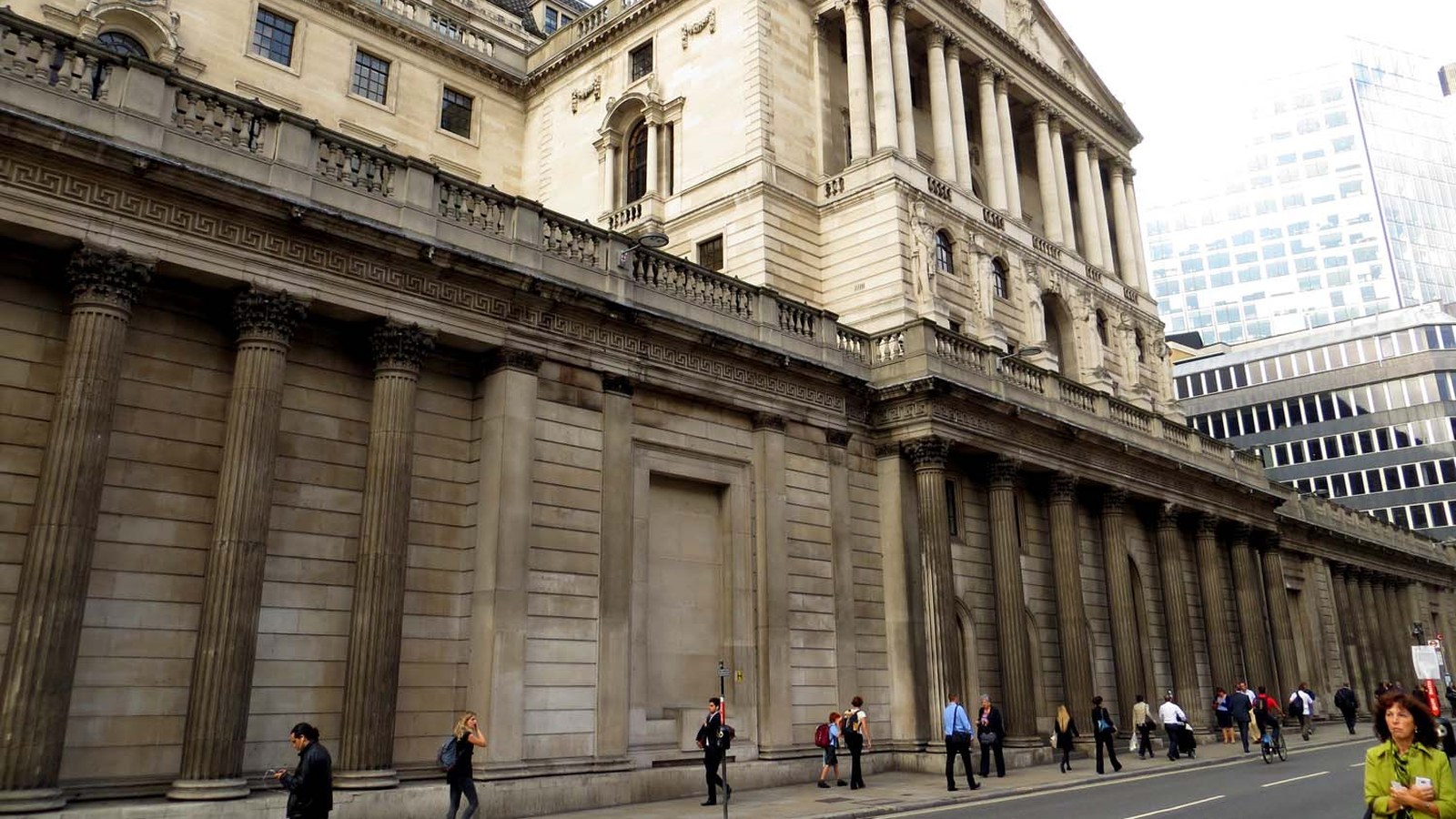
Photo: Geograph.org.uk (image 3898549), CC BY-SA 2.0. The Bank of England on Threadneedle Street, London. A contemporary photograph of the building, not a picture from 16 September 1992. Cropped to 16:9.
Source consulted: History | Bank of England.






0 Comments
No comments on this article yet. Be the first!