
Oil prices rose sharply on Monday, 14 September 2026, after a fresh round of attacks that hit energy infrastructure in Saudi Arabia, shipping in the Gulf and the outlook for oil-route security. At Reuters prices as of 0924 GMT, Brent crude futures were up $3.43, or 3.3%, at $108.04 a barrel, while West Texas Intermediate (WTI) was up $3.49, or 3.5%, at $103.54. The quotes are intraday and can move quickly.
The rise does not have a single cause. The market is reacting at once to new strikes on Saudi Arabia, the shutdown of a strategic pipeline, incidents involving ships in the Gulf, tension in the Strait of Hormuz, pressure around Bab el-Mandeb and the postponement of a regional diplomatic meeting. Together they have raised fears about supply, shipping safety, insurance costs and alternative routes.
The East-West pipeline, shut after a drone attack
One of the most important elements is Saudi Arabia’s East-West Pipeline, which carries oil from the east of the country to Yanbu on the Red Sea. Its role is strategic: it lets Riyadh export some crude without using the Strait of Hormuz. Reuters, citing Saudi officials, says the pipeline was temporarily shut after a drone attack. We do not assign responsibility here to a named group: the main source describes a drone attack confirmed by Saudi authorities, not a single publicly verified claim of responsibility for this pipeline.
The shutdown is sensitive precisely because Hormuz is already under strain. If the pipeline does not return to service quickly, Saudi Arabia may struggle to keep export volumes through the Red Sea. Reuters, citing buyers and traders, says a prolonged outage could put at risk up to 4% of global oil supply. There is no confirmation that 4% of the world’s oil “has disappeared”; it is a conditional risk if the interruption continues.
Industry sources cited by Reuters estimate that stocks at Yanbu could support exports for about five to seven days. That is an operational estimate, not a guaranteed timetable. The stocks are not full and will run out without the pipeline restarting, the same sources said.
Houthis, Hormuz and a vessel struck
Tensions also rose after further attacks linked to Houthi forces. Reuters notes that the Iran-aligned group reached the strategic island of Perim on Friday, near Bab el-Mandeb, and is seeking to tighten its hold on that route. We do not say the Houthis fully control Bab el-Mandeb: their presence in the area increases pressure on a strategic lane. Separately, strikes on targets in southern Saudi Arabia have been reported; we distinguish what the Houthis have claimed from what Saudi authorities have attributed.
The Strait of Hormuz remains one of the world’s most important energy shipping routes. According to the EIA, in 2024 and the first half of 2025 flows through Hormuz were equivalent to about a fifth of global petroleum-liquids consumption and about a quarter of seaborne oil trade. 2026 volumes are harder to measure amid the disruptions; we do not treat the historical share as the current transit figure.
The British maritime security agency UKMTO said on Sunday that a commercial vessel was struck by a projectile in the Strait of Hormuz, causing a fire. The crew was evacuated. Separately, Iran said an Iranian commercial vessel was hit off its coast: one dead and four crew wounded, according to the Reuters reports consulted. The two incidents are not treated here as one. Tensions among Iran, the United States, Gulf states and groups aligned with Tehran have already affected shipping: military risk, insurance premia, crew costs and alternative routes.
Prices were already high. Transport matters, not just production
The new gains follow a week in which, Reuters says, oil rose by about 9%, with Brent again above $100 a barrel for the first time since July and hitting a high since May around $110. The $100 threshold has no absolute technical meaning, but it has psychological and economic weight: it can affect petrol, diesel, air and road transport, industrial production, agriculture and petrochemicals. Dearer oil can lift transport and production costs, energy bills and goods prices, keeping inflation higher and complicating central-bank decisions.
The price does not depend only on how much oil is produced. It also depends on whether it can be moved, by which route, at what cost and at what level of risk. A closed pipeline or an unsafe strait can move the market even if the crude still exists physically. Saudi Arabia uses the East-West Pipeline precisely to reduce dependence on Hormuz. If Hormuz is unsafe and the pipeline is down, options shrink at the same time. That is why the market reaction has been sharp.
The dollar, rates and diplomacy
Markets are also watching the Federal Reserve this week. Reuters reported that rate markets on Monday implied about a 90% chance of a hike on Wednesday, according to CME Group’s FedWatch tool. That is not a guaranteed decision: it is the probability priced into markets. Higher oil adds to the problem, because dearer energy can feed inflation. Bond yields have again moved towards multi-year highs on the back of energy prices.
The US dollar strengthened. Reuters said the dollar index rose on Monday towards a two-week high, while the euro and the pound came under pressure. Investors often buy the dollar in periods of geopolitical tension and risk aversion. Energy problems overlap with falls linked to AI-sector warnings, rising yields and rate expectations. The Saudi stock market has also been hit by fears over energy infrastructure; we do not publish index or company percentages without an updated Reuters quote.
Diplomacy took a blow in parallel. A meeting planned for Monday in Oman between Iran and Gulf Arab states, to discuss security in the Strait of Hormuz, was postponed. Omani foreign minister Badr Albusaidi announced the delay on Sunday. The talks were meant to find a formula for securing maritime traffic. The postponement tells markets there is still no quick diplomatic solution.
RoAdevăr has previously written about oil-price moves linked to Iran and about talks on a possible deal over the Strait of Hormuz.
In the coming days the market will watch repairs to the East-West Pipeline, exports from Yanbu, further attacks on infrastructure, traffic through Hormuz and Bab el-Mandeb, any resumption of talks and Saudi Arabia’s response. The move above $107 is not just a reaction to a single strike. Several key routes of global energy trade are under pressure at once. Investors are not watching the oil price alone: they are watching pipelines, ports, ships, straits and diplomacy.
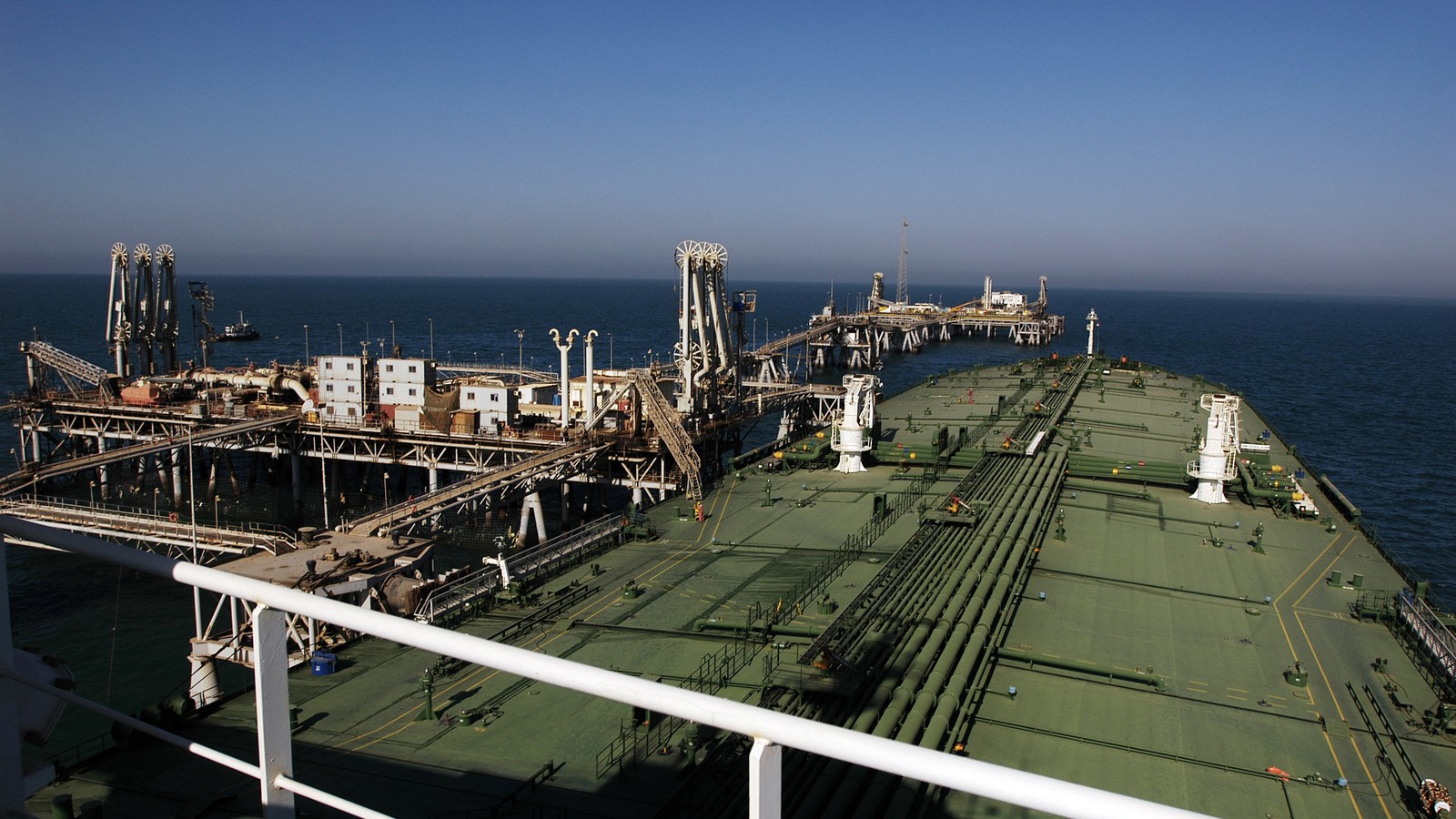
Photo: an oil tanker loading at the Al Basrah Oil Terminal (ABOT) in the Persian Gulf, 11 November 2005. US Navy photograph, public domain via Wikimedia Commons. This is not a picture of the Saudi East-West pipeline and does not show Monday’s events.
Source consulted: Reuters — oil prices; East-West pipeline; postponement of the Oman meeting; dollar and markets; EIA: Strait of Hormuz.






0 Comments
No comments on this article yet. Be the first!