
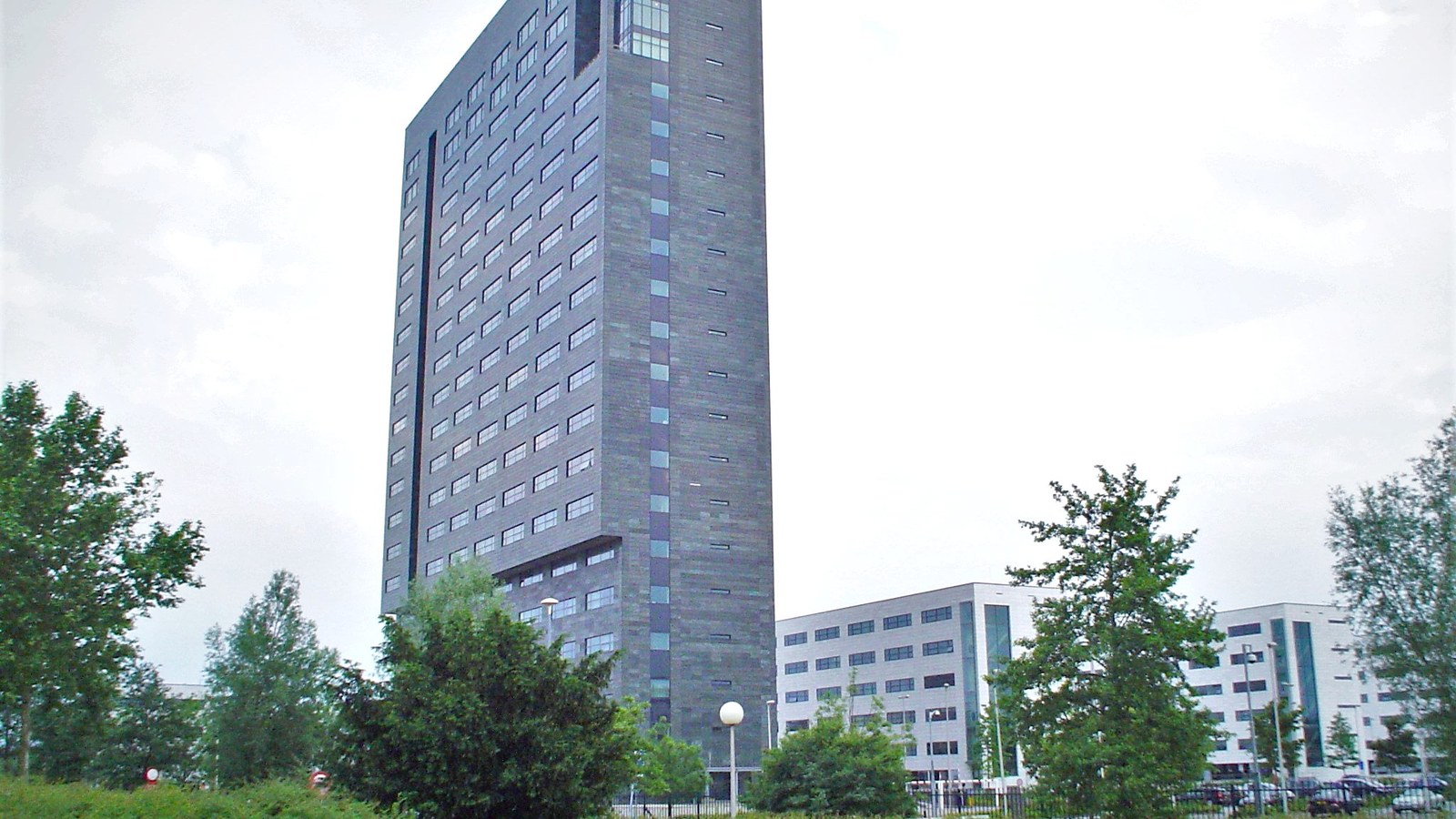
ASML is strengthening its near-unique position at the centre of the global semiconductor industry. The Dutch maker of chipmaking equipment — not of chips themselves — is seeing clearer adoption of the next High-NA EUV generation, systems Reuters puts at about $400 million each. Intel is already using them, while TSMC, Samsung Electronics and SK Hynix have set dates to bring the technology into production. High Numerical Aperture EUV lithography is meant to enable still more advanced chips as demand for AI processors continues to surge.
What ASML is, and why EUV matters
ASML builds lithography systems: machines that project extremely small patterns onto silicon wafers in semiconductor plants. The smaller and more precise those patterns, the more chipmakers can shrink transistors, raise efficiency, speed processors and pack denser memory. The company is the only one that mass-produces commercial EUV (Extreme Ultraviolet Lithography) systems for the most advanced processes. Reuters cites a JPMorgan estimate that ASML held about 94% of the global lithography-equipment market in 2025 — not of all chipmaking kit. In EUV its commercial position has been a monopoly since the late 2010s.
High-NA: smaller features, not chips that are 40% faster
The next generation is High-NA EUV. The main difference from today’s EUV systems (the NXE platform, numerical aperture 0.33) is a larger numerical aperture: 0.55 on the EXE platform, according to ASML. Reuters notes that High-NA can print features about 40% smaller than current EUV systems. That figure refers to the size of structures that can be drawn on the wafer, not to chip speed. ASML says, on the TWINSCAN EXE:5000 page, that 8 nm resolution lets chipmakers print, in a single exposure, features 1.7 times smaller and transistor densities 2.9 times higher than on NXE systems, and that some layers can move from multiple patterning to a single exposure.
The price is huge. Reuters estimates about $400 million for a High-NA system, against about $200 million for a current top-end EUV tool — roughly double. A modern fab can cost tens of billions of dollars; in that setting the cost of one machine is judged by density, process steps, yield and the nodes it unlocks, not by the sticker price alone.
TSMC, Intel, Samsung and SK Hynix
TSMC, the world’s largest independent chipmaker, had been cautious about High-NA because of cost and could for a time keep using existing EUV plus techniques such as multiple patterning. Reuters says that stance has changed: TSMC has committed to using the technology from 2030. It makes chips for Apple, Nvidia and other large customers; that does not mean all of those chips will automatically be made with High-NA. Adoption will depend on process, generation, cost and requirements.
Intel was the first major backer. It received some of the first High-NA systems. In July 2026 Intel Foundry and ASML said a subset of Intel Core Ultra Series 3 processors, code-named Panther Lake, are in high-volume production on Intel 18A using High-NA on selected layers. On Tuesday Intel said, according to Reuters, that it has already processed more than a million wafers with the tools. Intel Foundry notes that the figure spans tool certification, testing, research and development, and volume production on selected layers — not “a million commercial chips” as a separate count.
Samsung said it will start memory-chip production with High-NA tools in 2028, earlier than the market expected, according to an analyst quoted by Reuters. SK Hynix, also a memory specialist, said it will use High-NA from 2028 as well. Micron has ordered tools but has not set a production date. HBM (High Bandwidth Memory), used alongside GPUs and AI accelerators, is one of the reasons for the haste. ASML does not make GPUs, AI processors or memory; it makes the equipment without which those chips cannot be manufactured at the most advanced nodes.
Demand, rivals and geopolitics
Reuters reports that ASML’s current EUV systems are all but sold out through 2027, driven by AI, data centres, smartphones and advanced memory. An EUV system is among the most complex machines ever built in series: light source, vacuum, mechatronics, software and precision optics. The key optics partner is Carl Zeiss SMT; in EUV, light is not focused with conventional lenses but with special mirrors. In DUV, ASML competes with Nikon and Canon; neither currently sells a comparable EUV system.
China is investing in its own kit. Reuters reported on 28 July 2026, citing a source, that Chinese industry had begun production of domestic immersion DUV systems — progress, but still well short of EUV and High-NA. The United States and the Dutch government have restricted exports of certain equipment to China: ASML cannot sell its most advanced EUV systems to Chinese customers, but it continues to sell other categories within licence limits. Reuters noted that China accounted for about 16% of ASML’s net sales in the first half of the year. A company in the Netherlands thus remains critical for the United States, Taiwan, South Korea, Europe and Japan.
Gradual adoption, not an instant replacement
High-NA will not instantly replace current EUV. Existing systems will stay in use for chip generations, more mature processes and applications where a $400 million tool is not justified. If High-NA does become the standard for the most advanced nodes, the industry’s dependence on ASML may deepen. The race for artificial intelligence is not only among model laboratories; behind it sits the race for chips. TSMC, Intel, Samsung and SK Hynix compete in many segments, but for the next lithography generation they converge on the same technology. Broader AI-policy context: artificial intelligence’s critical phase in Europe; Britain’s rules for AI in healthcare.
Source consulted: ASML extends chipmaking dominance as customers embrace High NA (Reuters, 14 September 2026). Roadmap: ASML to work with major chipmakers to use latest tools for larger chips (Reuters, 8 September 2026). Specifications: TWINSCAN EXE:5000 (ASML). Intel / Panther Lake: Intel Foundry and ASML Accelerate Industry Readiness for High-NA EUV.








0 Comments
No comments on this article yet. Be the first!